Venue package vs. itemized quote: compare the same event at several headcounts
A per-person venue package and an itemized room quote may look comparable while buying different things. One may include lunch, a general-session projector and a defined access window; the other may price every room, technician and meal separately. The useful question is which written offer covers your actual event at plausible attendance levels. This guide and editable worksheet keep scope, billing basis and unanswered terms visible before a booking decision.
Boletolibre editorial team
Published
Describe one event before comparing prices
Write the event date, programme hours, setup and removal windows, expected low/base/high attendance, room layout, number of breakouts and any overnight guests. State the attendee tasks the site must support: accessible arrival, check-in, simultaneous sessions, meals and any hybrid participation. Give both venues the same version of this brief. If one quote assumes 40 delegates and another 70, there is no meaningful price winner yet. Keep required services separate from optional upgrades, and ask for a revised written offer when the scope changes.
A venue package is a set of inclusions with its own conditions, not a universal bundle. Babson College currently describes a complete meeting package with lodging and meals, a modified version without dinner, and a day version without the overnight stay and full breakfast buffet. Its breakout rooms are additional. Emory Conference Center Hotel publishes a day meeting package with a general-session room and a breakout-room allowance tied to attendee count. Those two primary descriptions show why a label such as “day package” cannot replace the actual specification.[1][2]
Normalize the room, food and production scope
Use the worksheet below to mark each requirement Included, Separately priced, Conditional, Excluded or Unconfirmed in each offer. A projector in the main room is not automatically one in every breakout. “Wi-Fi included” does not establish a dedicated production connection or on-site network support. A lunch line does not establish service for crew, speakers or guests with different arrival patterns. Ask who pays for the must-have work that is outside the bundle; do not assign it an invented zero cost.
| Requirement | Package question | Itemized question |
|---|---|---|
| Rooms and access | Which named rooms, layouts and access hours are included? | What is the rental period and price for each room? |
| Food and service | Which meals, breaks, counts and service styles are included? | What is the comparable meal and staffing specification? |
| AV and internet | Which equipment, operator hours and connection support are included? | What must be hired or staffed separately? |
| Setup and removal | Are resets, early access, cleaning and load-out included? | Which labor and access charges apply? |
| Guest rooms | Which nights, occupancy basis and meals are covered? | Are lodging and meeting costs counted once? |
Compare the operational result, not the marketing name. Babson specifies an AV package for the general-session room and separately available additional options. Emory states quantities for certain standard AV items and specific day-package windows. A production-intensive programme may need additions under either offer. Request a dated quote for your exact agenda rather than treating a published package page as a binding price.[1][2]
Find the billable count and minimum commitment
Record four different numbers: forecast participants, minimum billable count, final guaranteed count and actual arrivals. Ask which number controls room, catering, package and service charges on each day. Some terms can require paying for a guarantee even when fewer people arrive; some itemized lines can also have minimums. Ask when a guaranteed count may be changed and what happens if additional participants appear. Do not calculate a package as rate times actual arrivals until the written offer says actual arrivals are the billing basis.
For a multi-day event, use separate rows for each date if rates, attendance or rooms change. For a mixed group, distinguish local participants from people with lodging; do not buy a residential package for everyone by assumption. Check whether staff, speakers, sponsor guests and complimentary attendees count toward each minimum. Keep the confirmed billable definition next to the quote version so later ticket-sales updates do not silently change the calculation.
Run several headcount scenarios, not one advertised rate
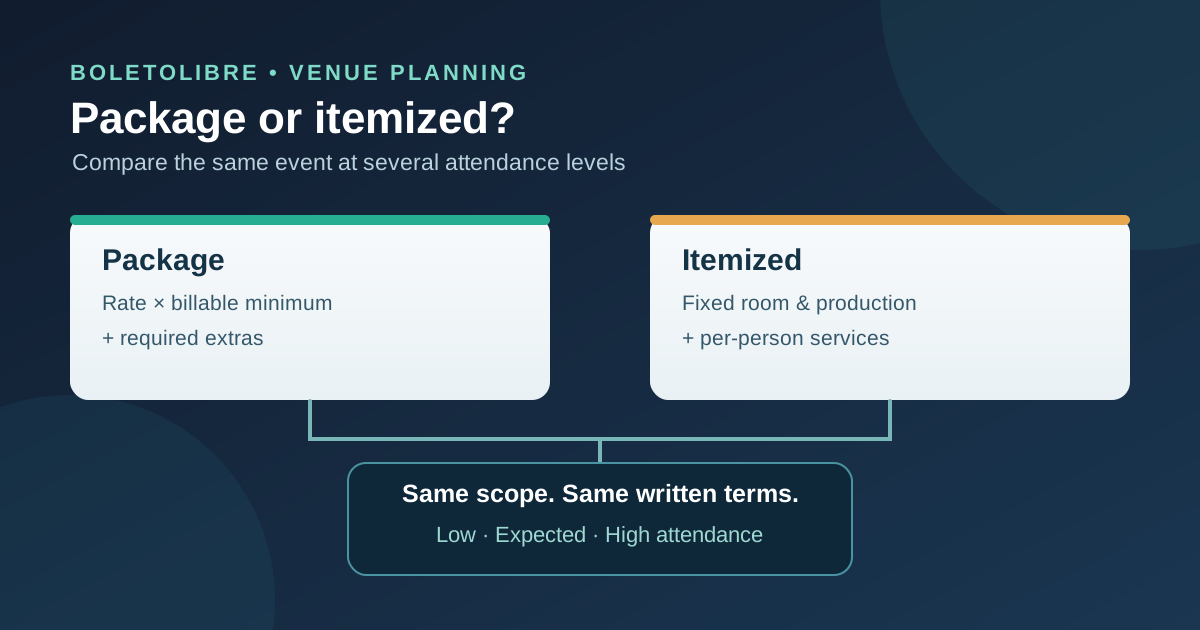
The comparison worksheet uses a deliberately simple starting equation: package base = package rate × the greater of forecast count and the agreed minimum. Itemized base = fixed room/production charges + per-person charges × the applicable billable count. Add every required extra, fee and tax according to the written quote, then compare final totals on the same scope and currency. The formula is a planning model, not a contract interpretation. If taxes are applied to different bases or a minimum is measured by day, enter the quoted final figure or ask the venue for a complete estimate instead of guessing.
Run a low, expected and high attendance case. For each, show package and itemized totals, the scope differences still unresolved, and the effect of an extra breakout or longer access. A single break-even headcount can mislead when a minimum creates a flat charge below its threshold. If the two models cross more than once, the decision can change at both a low and a high count. The useful output is a small scenario table with assumptions, not a universal claim that packages save money.
| Illustrative count | Package: 90 per person, minimum 45 | Itemized: 2,400 fixed + 35 per person |
|---|---|---|
| 30 | 4,050 | 3,450 |
| 45 | 4,050 | 3,975 |
| 60 | 5,400 | 4,500 |
The figures above are an original arithmetic example only. They assume both offers cover exactly the same needs and all mandatory charges are already included. In this particular example the itemized offer is lower at all three shown counts; that is not a recommendation for a real venue. Replace every input with current written offers and add the missing services before comparing. If a quote is unclear, mark the result provisional.
Test the changes most likely to alter the quote
Move the agenda through the booked window: technical check, doors, programme, reset, catering, teardown and departure. A “half-day” rate may not cover an early production call or a lunch after the room period. Ask what additional room time, second-room use, AV operation, connectivity, cleaning and food service cost. A package can be easy to administer and still require expensive additions; an itemized quote can look flexible while containing nonrefundable room time or catering guarantees.
Ask whether an unused inclusion can be removed, exchanged or credited; never subtract its imagined value yourself. Ask whether external caterers or technicians are allowed and whether the venue charges for coordination, access or utilities. Compare deposit dates and cancellation or postponement terms as a separate decision from price. Those terms are venue- and contract-specific. The worksheet asks for the exact clause or written clarification so a finance or legal reviewer can assess it without relying on a blog rule.
Download the venue quote comparison worksheet
Download the editable venue package comparison worksheet (Markdown, English)
The original worksheet has a common event brief, side-by-side inclusion matrix, three attendance scenarios, open-questions log and decision record. Duplicate it for each venue pair and link the actual proposals. Write “unconfirmed” rather than inventing an inclusion, rate or tax treatment. The small worked example is fictional. It teaches how to vary a billable count; it is not a benchmark for venue pricing.
Approve a comparable choice and publish only confirmed facts
Before selecting a venue, ask the owner to sign off the same-scope comparison, unresolved risks, current quote version, capacity and access fit, total at realistic attendance, cash timing and any specialist review. If the cheaper offer omits a necessary breakout, accessible route or production support, it is not yet comparable. Preserve the rejected offer and clarification trail so a later scope change can be priced cleanly. Once the venue is confirmed, update the public event location and arrival information. If you publish ticket information on Boletolibre.com, make sure that public venue information matches the approved booking; keep commercial quote details in private organizer records.
Questions to ask the venue
- Which named rooms, layouts, access windows and services does this rate cover for our actual programme?
- What is the minimum billable count, and when does a final attendance guarantee become fixed?
- Which essential AV, internet, catering, labor, setup and removal items are outside the base rate?
- Which mandatory fees and taxes apply, on what base, and are they already in the quoted total?
- What changes in the bill if attendance is lower, a breakout is added or the event finishes later?
- Can you provide a dated total for the low, expected and high attendance cases and identify any assumptions?
Ask for answers in the proposal or an attached clarification. A spoken assurance is hard to reconcile with a later invoice. If a term affects legal obligations, tax treatment or event safety, obtain the appropriate local professional review before approval.
Sources and further reading
- Meeting Package OptionsBabson College · Accessed
- Event Planning Resources and Meeting PackagesEmory Conference Center Hotel · Accessed