International name and address fields for event registration
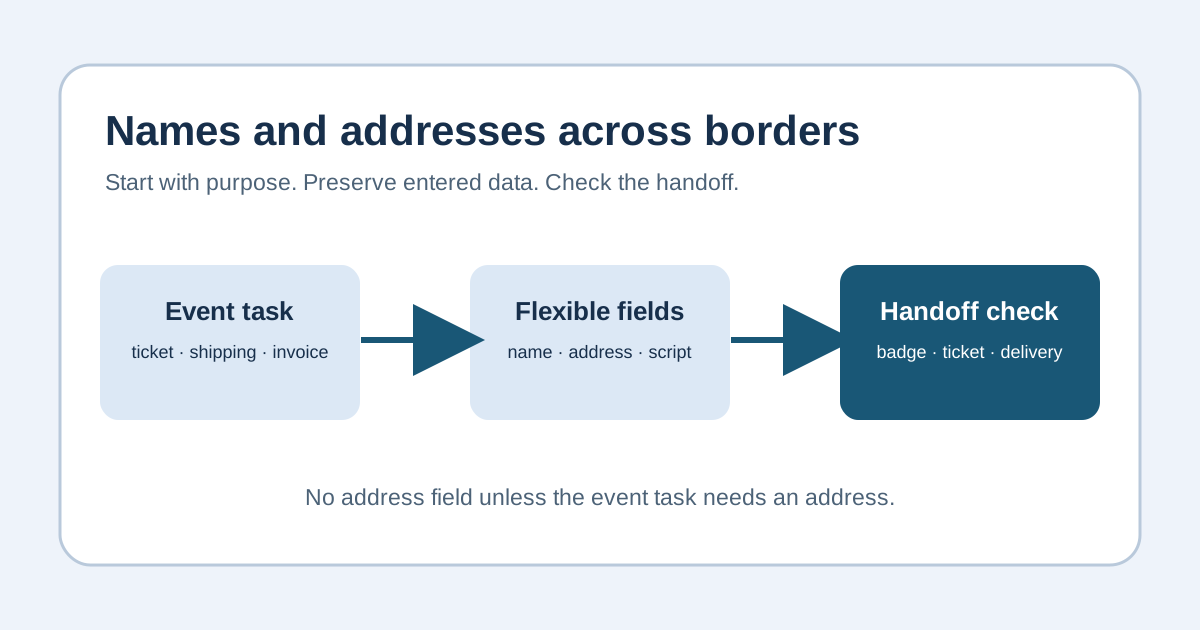
An international attendee may need a ticket name, badge name, shipping address or invoice address—but those are different purposes. Start by asking which data the event actually needs. This original field audit worksheet helps the organizer and form owner choose labels, validation and downstream use without assuming that everyone has a two-part Latin name or a US-style street address.
Boletolibre editorial team
Published
Download the field-purpose worksheet
Download the field-purpose worksheet (Markdown)
The worksheet separates attendee display name, legal or identification name only if genuinely required, payer details and delivery address. For each field record purpose, owner, required status, format rule and downstream consumer. A translated label does not fix an overly rigid data model.[1][2]
Ask for an address only when there is a task
A digital ticket may need an attendee name and email but no postal address. A merchandise shipment, printed credential delivery or invoice can justify a different address. Ask only for the address tied to that task, identify whether it belongs to attendee or payer, and keep billing requirements separate from the badge. Do not copy a shipping form onto every registration.[1]
Let people enter names as they use them
W3C notes that people may have one name, multiple family names or a different order, and that a single full-name field can be simpler when separate parts are not necessary. Preserve the attendee-entered script, spacing and case in tickets, badges and confirmations. If a provider requires split fields or a second script, explain why, show an example and provide a correction route rather than silently rearranging the name.[1][2]
Design address fields for country variation
W3C documents that address components, order and postal-code formats vary by country; some addresses have no street number or postal code. Let country selection guide labels and field requirements when appropriate, allow adequate address lines and non-Latin characters, and avoid a numeric-only or fixed-length postal-code rule for all countries. Do not assume a venue address should be translated as if it were an attendee mailing address: show the venue’s official local form plus a clear map or directions link.[1][2]
Test the full handoff, not just the form
Use fictional test records for each supported country/script. Submit the form and inspect confirmation, ticket, badge, export, shipping label and support view where applicable. Check that a long name is not truncated, an optional postal code stays optional, and the displayed address can be read by the intended local recipient. Assign each failure an owner and retest. The existing multilingual registration QA guide covers the broader journey; this worksheet decides the fields first.[1][2]
Sources and further reading
- Address formats around the worldW3C Internationalization · Accessed
- Personal names around the worldW3C Internationalization · Accessed