What is a ticket presale? Access, availability and early-bird pricing
A ticket presale is an earlier buying window for an eligible audience before the wider general sale. It describes who can shop and when; the offer’s own terms determine availability, any ticket hold and the price.
Boletolibre editorial team
Published
Access, a hold and a purchase are different
A code, membership, eligible card or advance signup may open the earlier window; not every presale uses a code. Access alone does not guarantee a purchase or establish a reservation. Ticketmaster’s documented artist-signup program, for example, lets people participate without guaranteeing tickets.[1][2]
A different offer can work differently: Ticketmaster’s Reserved by Spotify description says tickets are held during the recipient’s offer window. That specific hold is not a completed purchase or a rule for all presales. Read what is held, when the hold expires and what you must do to buy.[1]
Separate audience, sale window and price
Presale describes earlier access; general sale is the wider buying stage, still subject to conditions and availability. Early-bird describes an incentive for buying early, often a discount limited by time or quantity. An offer can combine both, but presale access alone does not mean a lower price. This distinction compares the providers’ descriptions, rather than imposing one universal sales format.[1][4]
One fictional budget, two snapshots
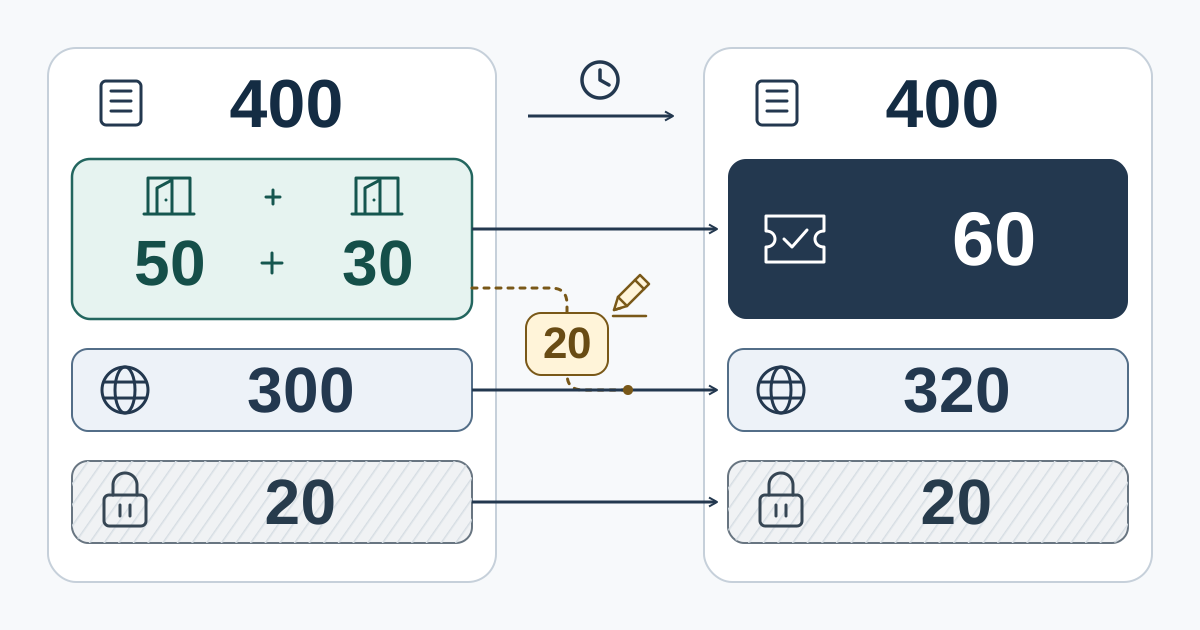
Assume an organizer plans 400 admissions and explicitly offers no buyer-specific presale holds. This is a sales-allocation exercise, not a calculation of legal venue capacity or a demonstration of any platform’s features. The image reads left to right.
Initially: 50 for members + 30 for partners + 300 for general sale + 20 held for operational or complimentary use = 400. The gates show early allocations, not numbers of eligible people; the globe marks general sale and the lock the separate operational hold.
After 40 member and 20 partner admissions sell, 60 are sold and 20 early admissions remain unsold. The organizer chooses to transfer those 20 to general sale, giving 60 sold + 320 general + 20 held = 400. The dotted pencil branch marks that decision: transfer is not automatic. Neither snapshot promises a ticket to an eligible buyer.
Keep the same fictional USD 30 base price in both sale windows: earlier access need not be a discount. Any later early-bird tranche would come from the existing allocation, not be added to the 400. Actual sale quantities, types and timing depend on the event.[1]
What to check before you buy
- Use the official event or seller link; check eligibility, signup deadline, sale time and time zone.
- Read whether access merely allows shopping or includes an explicit hold, its expiry and purchase requirements.
- Check the full price, purchase limits, admission and transfer conditions, and cancellation or refund terms.
Ticketmaster’s Standard Purchase Policy is a US-facing primary-ticket example of those conditions, not a statement of rights worldwide. An exhausted presale allocation does not prove the whole event is sold out; nor does it promise a later release. Check the event’s actual availability instead of treating access confirmation as purchase confirmation.[1][3]
Sources and further reading
- How ticket presales work, including Reserved by SpotifyTicketmaster · Accessed
- Artist-presale signup: access and ticket availabilityTicketmaster Help · Accessed
- Standard Purchase Policy — US-facing primary ticketsTicketmaster · Accessed
- Early-bird registration: incentives and limitsEventbrite · Accessed