Conference breakout-room reset and handoff checklist
Room B has just hosted a seated panel; its next booking is a small-group workshop. The first session can end on time while the room remains wrong for the next one. This checklist helps the organizer, venue and room team describe the change, make it, verify it and release the room. The approved venue plan and programme control the layout, work window and specialist checks.
Boletolibre editorial team
Published
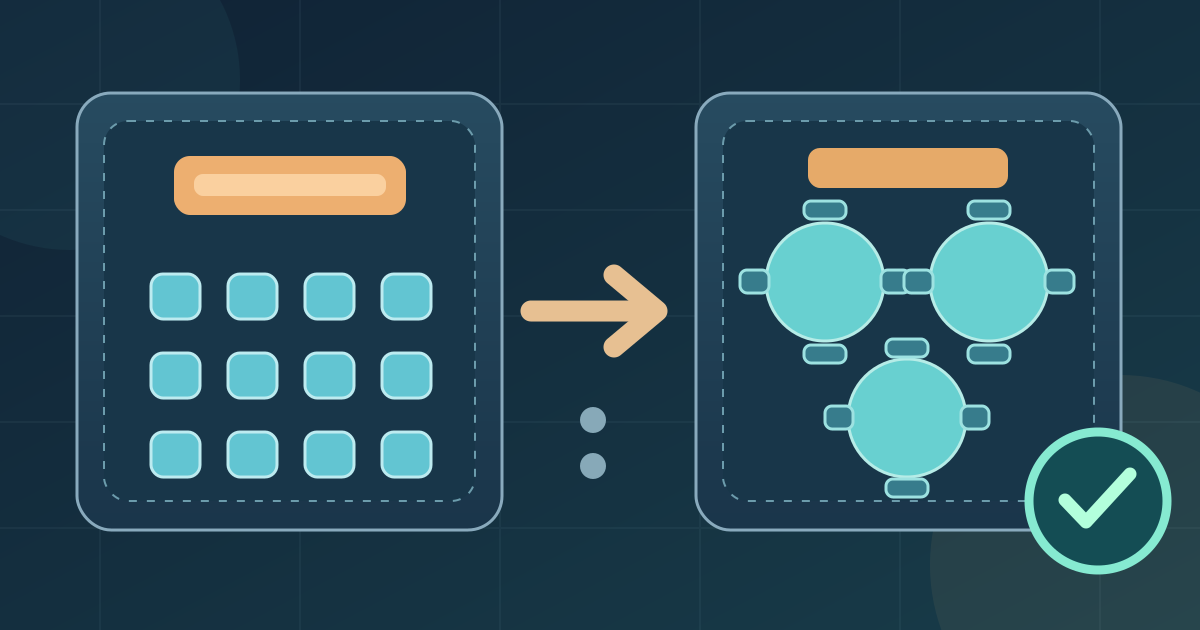
Copy the room-by-room handoff sheet
Download the editable breakout-room reset and handoff sheet (Markdown, English)
Copy the English worksheet for each room change, even when the same room is used repeatedly. Enter room and session IDs, programme revision, approved setup reference, local times and named contacts. The sheet separates previous and next state, task owners, verifier and release decision. Empty fields are questions to confirm with the venue and programme team, never default instructions.
Describe the next room state before the first session ends
Use the current programme, booking and venue-approved layout to define the next state. A panel-to-workshop change may alter tables, chairs, presenter position, display source, microphones, signage and materials. “Workshop ready” gives an incoming lead too little to verify. Michigan’s conference checklist calls for confirming room arrangements and reviewing setup and AV needs; make those items specific to this room.[2]
Record what stays, too. A display or approved access arrangement may serve both sessions, while the previous speaker’s slides and cards should leave. Refer uncertain changes to the named owner. This worksheet points to the approved site and technical plans; it does not replace their review.
- Previous and next setup: plan or photo revision.
- Next format: presenter position, furniture, session identity and materials.
- Dependencies: audience exit, access window, reset crew and verifier.
Give the outgoing and incoming leads different jobs
The outgoing lead records the previous session’s actual end, remaining items and defects. They hand over the room’s real state; closing their session does not make the next configuration ready. The incoming lead compares the reset room with its approved next state and records the release decision. Name an event or venue owner for changes neither lead may approve.
Assign furniture, AV, signage and materials to the teams that actually handle them. The AV operator tests the intended input and microphone path; a powered screen alone proves little. Colorado Boulder’s venue guidance gives a concrete example of furniture return, defect reporting and cleanup coordination. The local venue defines responsibilities here.[3]
- Outgoing lead: close, remaining items and defects.
- Reset owners: a name for each task, not “staff.”
- Incoming verifier: compare, request corrections and decide status.
- Decision contact: resolve a delayed or altered setup.
Reset in an order that preserves the next session’s setup
After the previous audience exits under the event plan, clear only the prior session’s assigned materials. Route found belongings through the venue process. Move furniture to the next approved pattern, place materials and update room identification. If catering or cleaning turnover is needed, its supplier or venue lead confirms completion before the room is released.
Colorado Boulder’s reset checklist uses a reference layout, cleared materials and technology return as concrete checks. Adapt those checks to the next booking, which may differ from the room’s morning layout. Note equipment removed from the room so the incoming team does not report it missing.[1]
- Clear prior signs, cards, slides, handouts and assigned waste.
- Set the next furniture pattern, presenter location and materials.
- Have the operator test the correct display and microphone path.
- Compare counts or presence of items needed for the new format.
Have the incoming lead verify the room before release
Walk the room against the next-state reference before admitting the next audience. Check layout, presenter position, AV signal, session identity and materials. Ask the responsible operator to demonstrate an uncertain test; “looks fine” is not a technical pass. Michigan recommends setup and AV review, while Colorado Boulder describes reporting AV and furniture defects. Record the verifier’s name, time and actual result.[2][3]
Mark an inapplicable check N/A with a reason rather than leaving it blank. Have the designated venue or access owner verify any approved access arrangement; this sheet cannot certify accessibility or emergency readiness. Tell the chair and door team the room status through the event’s agreed channel. Their run sheet and programme cues remain separate records.
Choose ready, conditional or hold with a named owner
Ready means the agreed next state is verified. Conditional means an authorized owner accepts a nonblocking difference with a fix owner and review time. Hold means the room is not released; the event lead directs a waiting or update message. A failed AV input, unapproved layout or missing essential material should not become “ready” just because the clock is moving.
For each exception, record the observation, affected session, fix owner, decision owner and next check. Route changes to public timing, seating or programme details to their communication owners. The room team reports facts rather than inventing a schedule. Specialist decisions remain with the venue or qualified owner, not this generic worksheet.
- Layout differs: correct it or seek an authorized alternative.
- AV fails: operator diagnoses; owner selects a tested fallback.
- Materials missing: ask whether an approved substitute exists.
- Previous session overruns: update the handoff time and next lead.
Close the handoff and preserve the useful record
Record the plan revision, actual release time, decision and open exception on the completed sheet. Tell the next chair and door team only what they need to run the session. Carry unresolved defects into the venue handover with an owner, so temporary crew changes do not erase them.
In Room B, the outgoing panel lead notes a microphone fault and removes panel cards. The reset team places workshop tables and exercise sheets. The operator tests the planned microphone; it still fails. The incoming lead marks hold. Production approves and tests an alternate, updates the record and tells the chair. The incoming lead verifies the actual setup before the door team gets a ready message. This is a decision trail, not a promise of spare equipment at every venue.
Sources and further reading
- CTL E390 Room Reset & Cleanup ChecklistUniversity of Colorado Boulder Center for Teaching & Learning · Accessed
- Checklist for ConferencesUniversity of Michigan Conference & Event Services · Accessed
- Conference Rooms: User Rules and ResponsibilitiesUniversity of Colorado Boulder SEEC · Accessed