Event venue shift handover checklist and editable log
A rota tells you who is scheduled; a handover tells the incoming team what has changed and what they now own. For an event venue, that can mean a moved entrance, an unresolved ticketing issue, an AV fault or a guest request that spans shifts. The leading result for “event venue shift handover checklist” offers an event-operations checklist, while another venue shift-report template records staff, equipment and follow-ups. The editable logs below focus on the transfer itself: outgoing preparation, a two-way conversation and incoming verification.
Boletolibre editorial team
Published
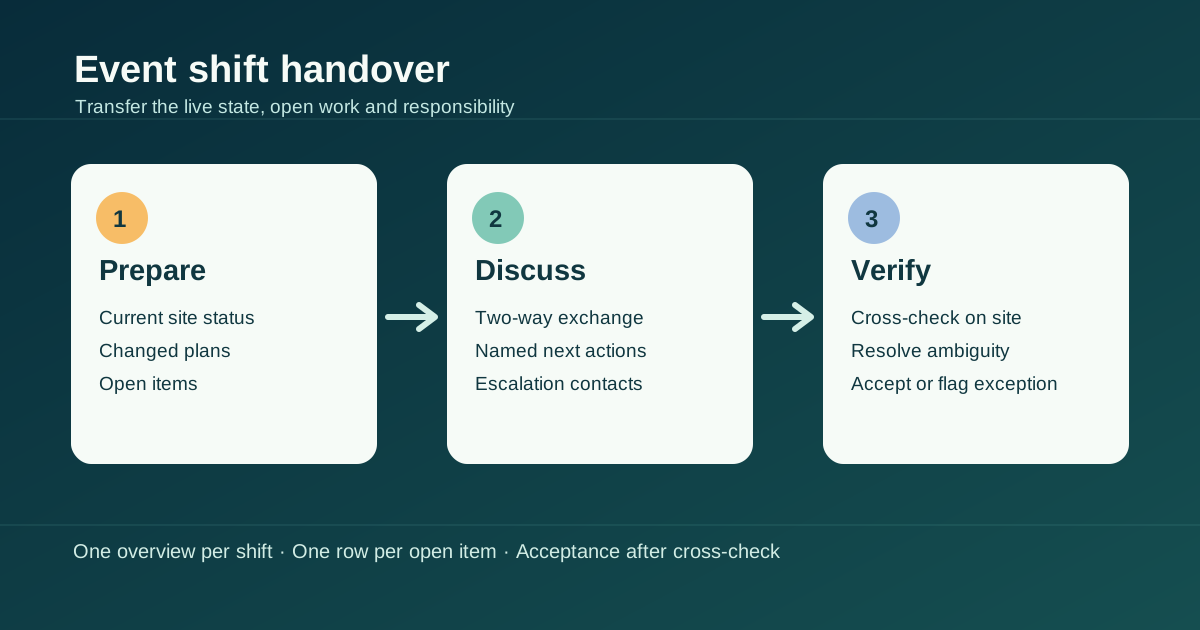
Prepare the outgoing record before the shift changes
Use the current run of show, venue map, incident channel and work orders as sources. Write the event, site or zone, handover time, outgoing and incoming leads, and document versions in the overview CSV. Then list each material change or unresolved matter in the open-items CSV. Separate verified facts from proposed actions: “Gate B closed per duty manager at 17:10” is more useful than “gate problem.” Do not put sensitive attendee or medical details into a widely shared log; link to the approved restricted record and pass only what the next team needs.[2][3]
- What is open, closed, paused or awaiting a decision now?
- Which plan, route, capacity or supplier timing changed, and who approved it?
- Which guest, safety, technical or equipment issue still needs attention?
Walk the handover together and name the next action
The outgoing lead should brief the incoming lead in a two-way exchange, preferably at the relevant site or control point. Start with urgent safety or service exceptions, then status by zone, upcoming run-of-show cues, equipment and contractor interfaces. For each open item, agree one receiver, a specific next action, a due or review time, and the escalation contact if it cannot be resolved. If a hazard or incident needs immediate action, use the venue’s approved escalation procedure now; a CSV row is not an incident response.[2]
The checklist can be adapted across registration, front of house, AV, catering, cleaning and security. Do not assume one supervisor can accept another provider’s technical or licensed duty. Record each provider’s responsible contact and handoff boundary. MelloList’s leading event-venue page highlights these departments, but the local team must define actual authority and acceptance.[1]
Let the incoming lead cross-check before accepting
The incoming person should compare the handover with the live map, run of show, task board and relevant equipment or zone state. Ask a clarifying question where an owner, status or time is ambiguous. Mark an item accepted only after the receiver understands it and any required specialist has confirmed their part. Record the acceptance time and unresolved exceptions in the overview CSV. HSE describes effective handover as outgoing preparation, two-way communication and incoming cross-checking; it gives no universal duration.[2]
- Can the incoming lead state the next public milestone and decision owner?
- Can they identify every open item and who will act next?
- Have changed routes, controls and equipment states been checked against current records?
Download and reuse the two editable logs
The overview CSV records the transfer once per shift or zone. The open-items CSV records one row per change, issue or follow-up, including source/check time, owner, next action, review time and receiver acknowledgement. Both contain prompts, not fictional approvals. Keep the completed files in the venue’s controlled workspace; restrict access to sensitive incident references, identify the current version and carry only unresolved rows into the next shift. A handover log complements the rota and pre-shift staff briefing; it does not replace either.
Sources and further reading
- Event Venue Shift Handover ChecklistMelloList · Accessed
- Shift handoverUK Health and Safety Executive · Accessed
- LPA Shift ReportMitti by SafetyCulture · Accessed