Event ad creative A/B test plan and results template
Changing an ad headline during ticket sales is easy; learning whether it helped registrations is harder. This event-specific plan gives you a hypothesis, launch gate and result log for short ticket windows, changing availability and external checkout paths. It does not promise a winning variant or substitute for the ad platform’s experiment controls.
Boletolibre editorial team
Published
Start with one attendee decision and one creative change
Download the original experiment brief and result log (Markdown)
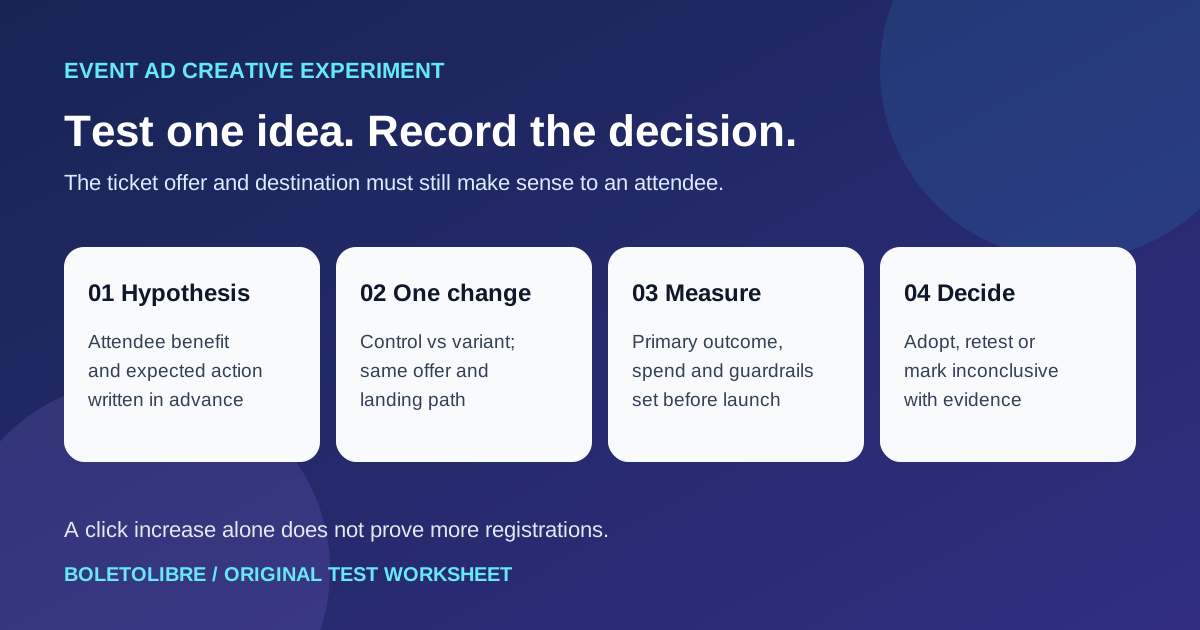
Write a falsifiable hypothesis: “For people considering this workshop, a headline naming the practical outcome may lead to more completed registrations than a generic urgency headline.” Keep the audience, offer, date, price, landing page and destination equivalent. Change one principal creative element, such as headline, image or video opening. An altered ticket price or different target audience tests a different proposition, not the creative alone. Record control, variant, owner and creative approval before launch.[2][1]
Choose the outcome and limits before looking at results
Prefer completed registrations or purchases when tracking and volume are reliable. If the checkout is hosted elsewhere, establish whether a completion event is actually visible; a click or landing-page view is a diagnostic measure, not a sale. Set one primary outcome and guardrails for spend, misleading claims, registration quality and visitor complaints. Name the measurement source and what would make the result inconclusive. Google recommends a clear hypothesis and limited metrics chosen in advance.[2]
Make the comparison as fair as the platform permits
Use a supported experiment or ad-variation method when available, rather than silently changing a live ad and calling the before/after difference an A/B test. Google Ads says its traffic or budget split does not guarantee equal exposure because of auction, bids and budget. Record the actual allocation, delivery period, audience, placement, budget and material changes. Recheck both public destinations, ticket availability, accessibility and event facts at launch. Pause or annotate the comparison if tickets sell out, the landing page changes or tracking breaks.[3][2]
Interpret evidence without inventing a winner
Compare the preselected outcome and guardrails, then inspect spend and delivered exposure. A higher click count can reflect greater delivery or curiosity without more registrations. If traffic is thin or one variant had very different delivery, mark the result exploratory or inconclusive. Choose adopt, retest, revise or stop; state why and link the evidence. Keep the next question separate so later campaigns do not inherit an untested assumption. There is no universal test budget, duration or guaranteed return for an event.[2][3]
Use the brief and log as a handoff
The downloadable sheet has fields for hypothesis, control, variant, audience, offer, landing and checkout links, experiment method, spend ceiling, stop rule, primary metric, guardrails, delivery, results and decision. It is an original event-organizer worksheet; platform settings and consent requirements still need review by the campaign owner.[2]
Sources and further reading
- Ad Creative A/B Testing: Complete Guide and TemplatesAdCreativeKit · Accessed
- Test with confidence with the Experiments pageGoogle Ads Help · Accessed
- About custom experimentsGoogle Ads Help · Accessed
- Measure the impact of your ad creativeMeta Blueprint · Accessed