Event crew call sheet template: align arrivals, roles and changes
A crew call sheet answers the questions a rota alone cannot: where does each person report, when is the local call, who receives them, which production phase depends on their work, and how will a change reach them? The editable template below joins those decisions in one controlled event-day document. It is for crew coordination, not an attendee schedule or a replacement for the venue’s approved safety plan.
Boletolibre editorial team
Published
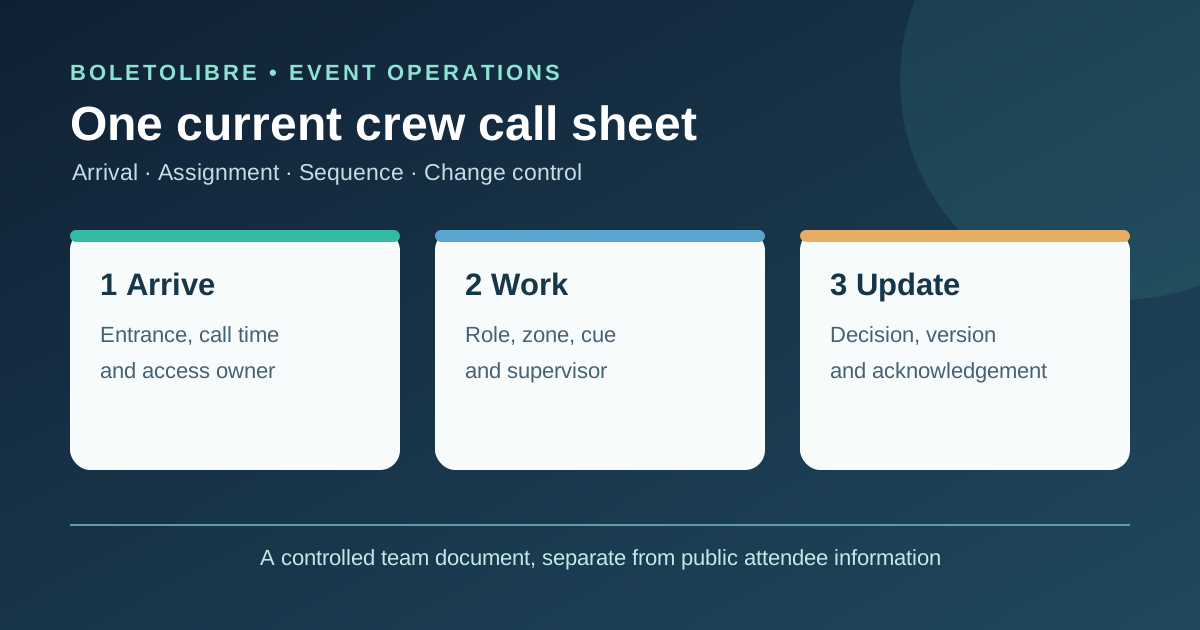
Download and assign an owner
Download the editable event crew call sheet (Markdown)
Download the editable sheet and copy it for each event date. Record the venue, local time zone, version, issue time, production lead and current site-plan reference. Have one person approve and distribute changes; a file called “final” is not a version control method.
Separate arrival from task start
A reporting time, task start and public doors time are different. State the exact entrance and address, transport or unloading instruction, check-in owner and access credential. Check the route on the actual site, including an accessible reporting route. Do not assume every crew member uses the loading gate.
Link each call to a role and cue
For each person or role record team, zone, supervisor, call time, task, handoff and release. Map production phases from load-in through technical checks, show and load-out with a prerequisite and completion signal. HSE advises organizers to coordinate work phases and communicate relevant information to contractors; the sheet makes that handoff visible, but specialist work remains with qualified people.[1]
Protect the restricted contact copy
A broadly shared copy can use a role or staff ID and a team contact route. Keep personal phone numbers in a restricted annex only when needed. Share that annex with the people who must reach the crew, not every recipient of the public programme. The ICO’s data-minimisation principle is a useful check on which personal details belong in each copy; local privacy requirements still need review.[2]
Publish one controlled version
Put the version and issue time in the header and in the distribution message. Keep the prior version for the event record, but label it superseded. If parking, call time, entrance, zone or cue changes, update the source sheet, name the decision owner and send the affected teams the changed fields. Do not let parallel chat threads become competing schedules.
Confirm receipt and handle changes
Ask each team lead to confirm receipt and any open question. Acknowledgement means they have the current instructions; it does not prove competence or acceptance of new employment terms. A delay or absence should have an owner who decides the revised assignment and tells dependent teams. Safety-critical changes follow the venue’s approved plan and trained leads.
Keep attendee information in its own channel
The public event page should show confirmed arrival and access information for attendees, not private crew doors, phone numbers or vehicle details. When a venue or timetable change affects attendees, update that approved public source and the crew sheet together. If the organizer uses Boletolibre.com for the event page, keep ticket-holder directions current there while storing the operational call sheet in the team’s restricted workspace.
Sources and further reading
- Managing an eventUK Health and Safety Executive · Accessed
- Data minimisationInformation Commissioner’s Office · Accessed