Event load-in and load-out schedule template
The show schedule says when guests arrive and what happens on stage. A load-in and load-out schedule says when the venue gives access, which vehicle or crew uses a route, what must finish before the next supplier can work, and how the site is returned. Google’s leading logistics checklist covers the whole event; this guide narrows that work to the build and breakdown window, with a CSV you can share with the venue and every supplier.
Boletolibre editorial team
Published
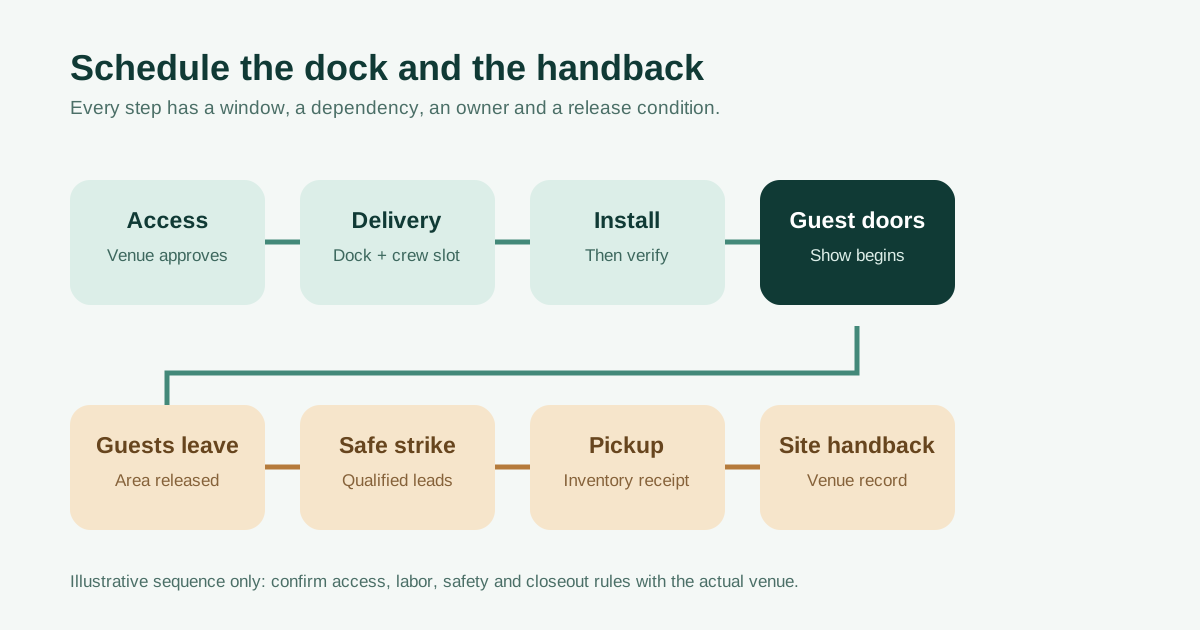
Confirm the venue’s access envelope
Get written confirmation of first access, last exit, loading bay and freight lift hours, vehicle limits, parking or staging rules, noise restrictions, security check-in, storage and who opens the doors. Check the site layout for pedestrian and vehicle separation and the exact route to each install area. Ask suppliers what they will bring, vehicle size, unloading needs, crew count and estimated work duration. A requested slot is not a venue-approved slot; record both in separate columns. If access is shared with other events, coordinate with the venue rather than assuming an empty dock.
- Written access and handback windows.
- Dock, lift, vehicle and crew restrictions.
- Route and storage confirmed against the site plan.
Work backward from immovable moments
Start with the approved guest-doors time and the venue’s final handback deadline. Work backward to room clearance, technical tests, complete installation, deliveries, crew induction and first access. Give each task a predecessor and a release condition: for example, a stage delivery cannot occupy a dock until the preceding truck clears it; guest doors cannot open until approved room checks and removal of build materials. Allow a realistic buffer where the venue and suppliers agree it is needed, rather than filling every minute. The first organic logistics guide likewise works backward from show-critical moments, but your actual durations come from your own team and site.[1]
- Room-clearance and technical-check milestones.
- Dependencies and named release conditions.
- Buffers agreed with the parties who own them.
Book delivery and installation slots with dependencies
Use one row per delivery, pickup or handover in the downloadable CSV. Name the supplier, owner, requested and approved local-time windows, vehicle/dock slot, route, storage destination, predecessor, release condition and current status. Make a separate appointment for a supplier that needs two trucks or a return trip. Send the current version to security and dock staff, not only to the producer. Ask who may change a slot and how a late driver reports the delay. Record any time-zone or overnight date crossing explicitly. The CSV’s rows are prompts, not pre-approved times.
- One appointment row per vehicle or handover.
- Requested and approved times kept separate.
- One owner and escalation route per slot.
Plan the strike before the event opens
Before doors open, confirm when guest areas become available for breakdown, which systems must remain live, who authorizes power-down and which specialists supervise dismantling. Sequence inventory, packing, dock release, collection, waste removal and the final sweep. Do not send a vehicle into an occupied pedestrian route just because the performance ended. Lichfield District Council’s event-plan guidance calls for an overview of both build and break phases and a timetable showing how the site will be restored. Local venue and safety rules control the actual method, not this worksheet.[2]
- Guest-area release before strike.
- Qualified leads for technical power-down and dismantling.
- Pickup, waste and final sweep included.
Close with a documented site handback
Use a handback record with the venue contact: every supplier has removed its property or has a written pickup exception, waste and temporary signage are cleared, keys and access cards returned, agreed condition photographed if permitted, and any damage or outstanding work recorded. Keep pickup receipts and note actual finish times against the plan. If a late collection threatens the handback deadline, escalate to the named venue decision-maker while there is still time to agree a safe alternative. The schedule closes only when the site is accepted, not when guests leave.
- Venue walk-through and condition record.
- Pickup receipts and unresolved exceptions.
- Actual finish and accepted handback time.
Sources and further reading
- Event Logistics Planning Checklist That WorksGeoEvent · Accessed
- Write an event management plan: Venue and site designLichfield District Council · Accessed