Event email marketing consent checklist: audit a list before sending
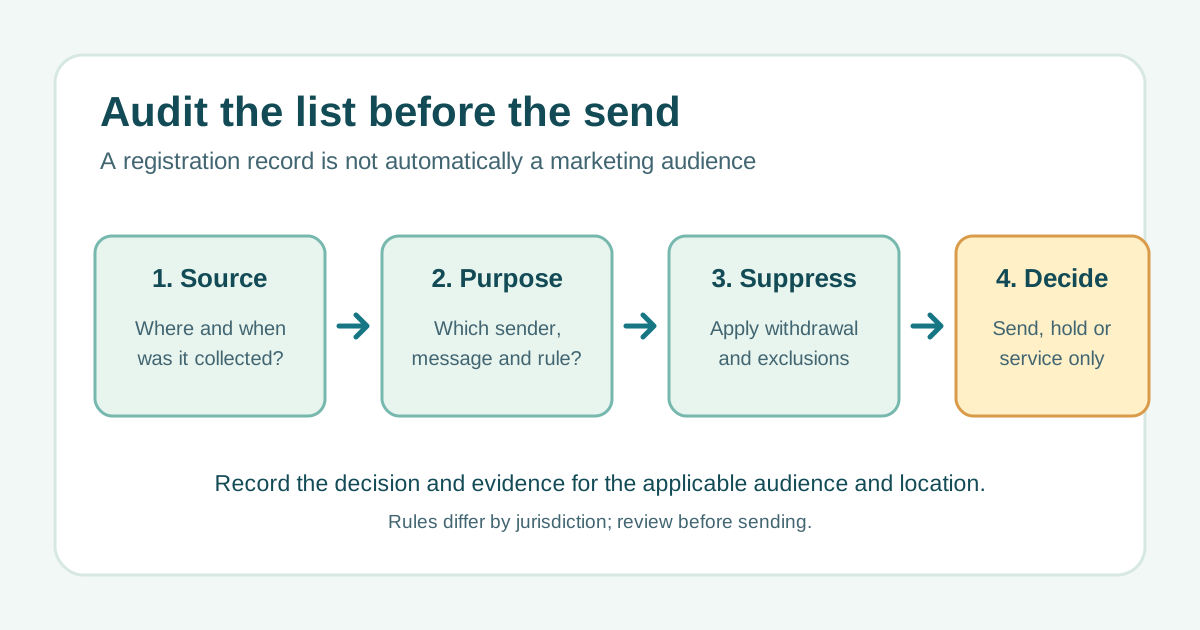
An event registration file, a past-attendee export and a newsletter signup are different sources. Before using any of them for promotion, record how the addresses were collected, what people were told and which rules apply to this audience. The leading Google result for “event email marketing consent checklist” shows collection points such as checkout and event forms. This guide adds an editable source-by-source audit so organizers can hold an uncertain list instead of assuming every attendee agreed to future marketing.
Boletolibre editorial team
Published
Download the list-source audit
The CSV contains eight example collection points and blank review fields. Enter the sender, purpose shown, audience country or region, permission basis or exception reviewed under applicable rules, evidence location, withdrawal and suppression path, owner and send/hold decision. Do not put individual email addresses in this planning worksheet; keep recipient-level records in the system that controls sending.
Trace each list back to its collection point
Inspect the exact form, checkout step, QR signup or partner handoff that supplied the contacts. Save the version of the wording people saw, the date or event, and the responsible sender. If a partner provides a file, a promise that the contacts are “opted in” is not enough to show the purpose and sender covered your campaign. The leading guide recommends a clear, separate marketing choice at event registration rather than hiding it in checkout or general terms.[1]
- Standalone newsletter form: record what updates were promised.
- Ticket checkout: distinguish ticket delivery from optional future promotion.
- Past-attendee or partner file: verify origin and scope before importing.
- Waitlist: do not assume a ticket availability request covers unrelated marketing.
Review the rules for the audience and message
There is no single worldwide opt-in rule. The UK ICO explains consent and conditional “soft opt-in” routes under the UK electronic-marketing rules; the US FTC’s CAN-SPAM guide sets requirements for commercial messages and opt-outs. Those are different regimes, and other countries have their own rules. Determine the applicable requirements for the sender, recipient and campaign with appropriate local review, then record the basis in the audit. Do not treat this checklist as a legal ruling.[2][3]
Prove withdrawal and suppression work
Before every promotional send, apply current unsubscribe, objection and other suppression records from all relevant systems. Test the unsubscribe path and make sure an export cannot re-add someone who opted out. The FTC guide, for example, requires a clear way to opt out of US commercial email and prompt honoring of requests; the ICO also addresses withdrawal and opposition in its UK guidance. A service email about an actual ticket or material event change should be assessed separately from a promotion, with its own purpose and recipient rules.[3][2]
Record a send, hold or service-only decision
Assign a person to review each source and date that decision. Hold a list when origin, permitted purpose, recipient location or suppression state is unknown; resolve the gap before campaign import. After approval, use the event email communication map to select the message and stop rule. Recheck when the campaign changes sender, purpose or audience. The audit is deliberately blank where a real organization must supply evidence: it cannot certify compliance by itself.
Sources and further reading
- How to Collect Consent for Email MarketingLINK Mobility · Accessed
- Guidance on direct marketing using electronic mailUK Information Commissioner’s Office · Accessed
- CAN-SPAM Act: A Compliance Guide for BusinessUS Federal Trade Commission · Accessed