Event harassment reporting procedure template for attendees
An event code of conduct is incomplete if people cannot find a safe way to raise a concern. This template separates the attendee-facing route from the trained response team’s work. Adapt it with the venue, safeguarding and legal leads before publication; it does not replace emergency services or a jurisdiction-specific policy.
Boletolibre editorial team
Published
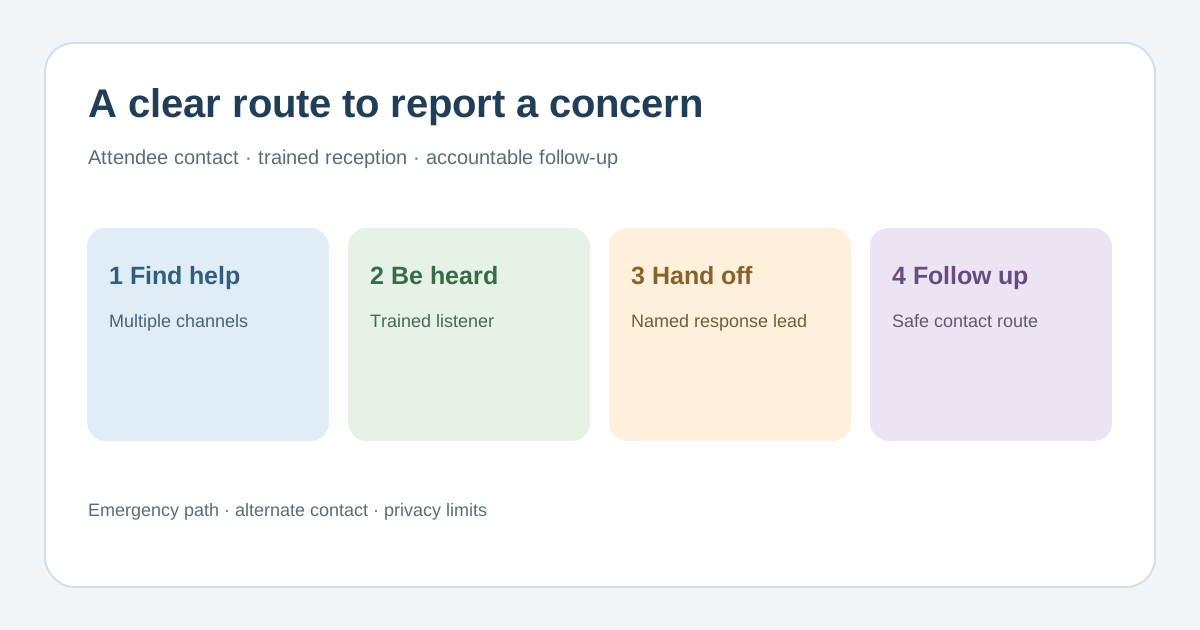
Make the route visible and usable
Download the editable event reporting route and contact card (Markdown, English)
Put the same current contact route on the event site, in pre-event information and at the venue. Offer a private in-person contact and a tested remote channel so a person can choose how to report, including after leaving. Explain who monitors each channel, when, and how to reach an alternate if the named contact is involved. Use the actual local emergency route for immediate danger.[1][2]
Train the first person who hears the concern
A volunteer or staff member should know how to listen without interrogating, move to a private place when feasible, check immediate safety needs and connect the person with the designated response lead. Do not promise total secrecy or a particular outcome. Ask what contact method is safe and what information may be shared with whom; document only what is needed for the handoff.[3][2]
Assign response and conflict-of-interest ownership
Name a primary and alternate lead, their reachable contact and what happens if a report concerns either of them. Keep the initial listener distinct from the people who assess next steps where possible. Record receipt, immediate support or referral, decision owner, next contact point and status in restricted records. Follow applicable venue, safeguarding and legal obligations rather than copying another event’s sanctions.[3]
Test the attendee card before doors open
Ask someone unfamiliar with the team to find the route on mobile and at the venue. Test email or form delivery and staff coverage, including a late or post-event report. Confirm the card states what happens next, privacy limits, an alternate contact and an accessible way to request help. Recheck after staffing or venue changes.[1][3]
Sources and further reading
- Attendee Procedure for Incident HandlingC++Now · Accessed
- Attendee procedure for incident handlingOpen Source Initiative · Accessed
- Code of Conduct Reporting Process for IEEE VISIEEE VIS 2026 · Accessed