Event petty cash and change float: issue and reconciliation template
A change float for making sales change and a petty-cash fund for approved incidental purchases serve different purposes. Put each in a named custodian’s hands, record every handoff, then close it against a physical count and its own records. The leading Google result is a one-page petty-cash form; this original worksheet adds the event-day issue, transfer and return steps and keeps ticket revenue out of the float calculation.
Boletolibre editorial team
Published
Choose the fund and approve its use
Download the cash issue and reconciliation worksheet (Markdown, English)
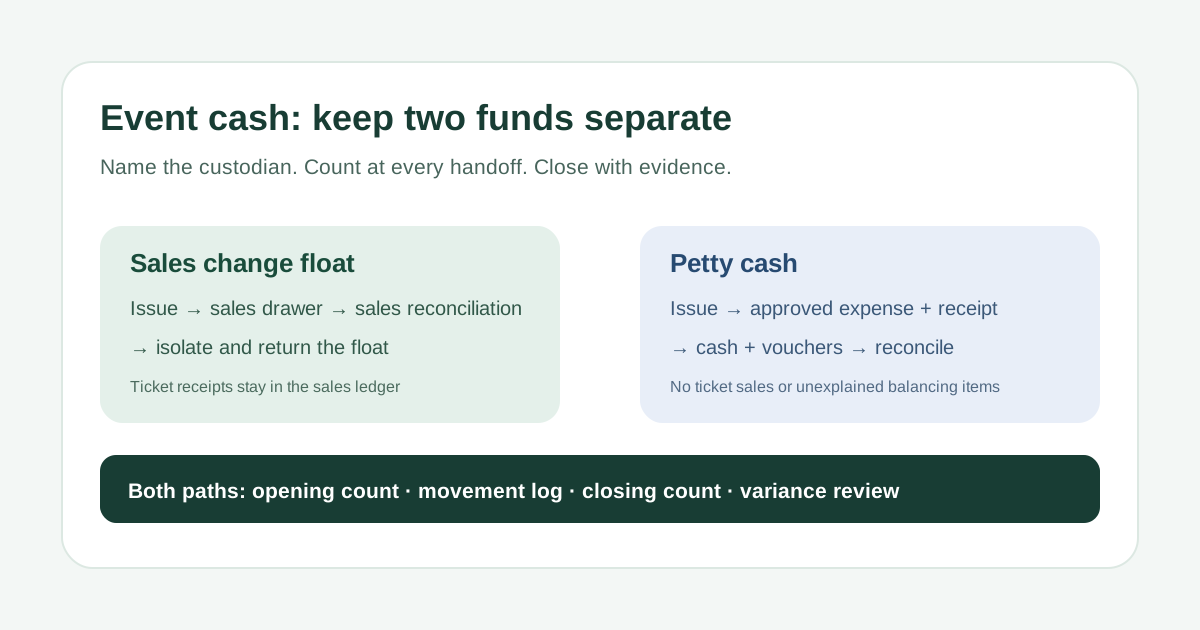
Decide whether this is a sales change float, a petty-cash fund for pre-approved small purchases, or two separately labeled funds. Use separate boxes and records. Record the event, currency, starting amount, allowed purpose, spending authority, custody location and finance reviewer. A change float is not a spending budget. Vanderbilt’s institutional worksheet explicitly separates change funds from petty-cash spending; apply your own organization’s approved cash policy rather than treating that university rule as universal.[3]
Issue cash to a named custodian
Count the opening notes and coins by denomination with the person receiving the fund. Both issuer and custodian sign the amount, date and time. Note any sealed bag number or box ID and who holds the key or access. For a staff shift or a move to another desk, count again and record outgoing and incoming custodians. Do not leave cash in an unowned shared drawer. The first organic WPI form and Penn State’s reconciliation form both make custodian, counted cash and reviewer visible.[1][2]
Record each movement while the event runs
For petty cash, list each authorized payment with date, amount, purpose, voucher or receipt reference and approver. Track authorized top-ups or withdrawals separately; do not silently alter the starting fund. For a sales change float, record any transfer of cash to the sales cashier with amount, time, recipient and reference. Ticket receipts, refunds and card payments belong in their own sales/payment reconciliation; they are not petty-cash expenses or an unexplained change in the float.
Count and reconcile at handback
At handback, count actual notes and coins, total accepted petty-cash receipts, and document any authorized fund changes. On a fixed petty-cash fund, counted cash plus supported expenses should account for the entrusted amount, subject to your finance team’s treatment of replenishments in transit. For a change float used in a ticket drawer, reconcile the full drawer to ticket sales first, then identify and return the float; closing drawer cash is not automatically the float. Count with the receiver and record the actual amount transferred. The editable worksheet includes separate count and exception fields for both paths.[1][2][3]
Resolve differences before closing
Write a difference as a difference, not as “miscellaneous expense.” Preserve the original count, recount with a second person, check vouchers, handoffs and sales ledger references, and escalate under local finance policy. Do not backdate a receipt or invent a balancing entry. The custodian and finance reviewer sign the resolution or leave the fund open with an owner and due date. Keep receipts and access-controlled records under the organization’s retention rules; the template is an operational aid, not accounting or tax advice.
Sources and further reading
- Petty Cash Reconciliation and Replenishment FormWorcester Polytechnic Institute · Accessed
- Petty Cash or Change Fund Reconciliation FormPenn State · Accessed
- Petty Cash/Change Fund Reconciliation InstructionsVanderbilt University Finance · Accessed