Event staff code of conduct briefing: editable team card
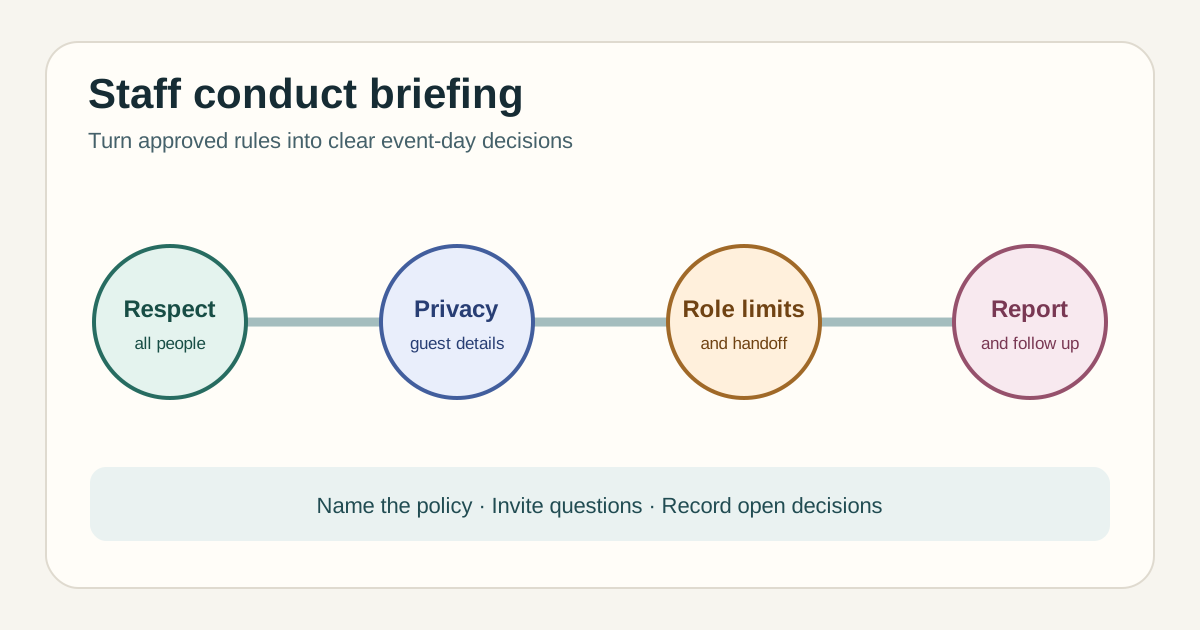
A code of conduct can be a long policy that nobody can recall at the gate. Before a shift, turn the organizer’s approved rules into a short two-way briefing: what respectful behavior looks like in this role, what information must remain private, who may speak for the event, and where concerns go. The editable card below records the actual policy reference, supervisor, questions and acknowledgement. It is a briefing aid, not a replacement for an approved policy or local employment advice.
Boletolibre editorial team
Published
Download the editable briefing card
Download the event staff and volunteer conduct briefing card (Markdown)
Fill the card with the event name, shift, current policy link and version, team lead, private concern route and a backup contact. Use one card per team or zone if duties differ. Keep any individual report outside the shared briefing sheet.
Translate the policy into observable conduct
Discuss how staff will welcome attendees, colleagues and suppliers without assumptions about access needs, language or identity. Use examples from the work: speak respectfully at a crowded entrance, do not joke about a guest’s request, and move a sensitive conversation away from a public queue. Explain what the team should do when it observes behavior that conflicts with the organizer’s policy. The event volunteer guidance from Nags Head pairs respectful behavior with an identified coordinator and shift briefing; its local rules are examples, not universal requirements.[1]
Ask for one realistic “what would you do?” example from the team. If the answer depends on a missing policy decision, record the question and owner rather than inventing a rule on the spot.
Name privacy, communication and role boundaries
Identify which attendee details staff may see for their assigned task, where those details may be discussed, and who approves photographs or public posts. An attendee’s ticket, access request or complaint is not content for a personal social account. Confirm who gives official schedule or ticketing updates, and what a staff member says when the answer is unknown.
Name the supervisor for each role and the handoff to ticketing, accessibility, security or medical teams. A volunteer should not promise a refund, change an access arrangement, investigate a report or perform an untrained safety task because a guest asks. HSE event guidance calls for defined organizer, venue and contractor responsibilities; confirm the actual arrangements for this event.[2]
Make reporting safe and specific
Point to the ordinary supervisor and an alternative contact if the concern involves that supervisor. Explain where urgent safety issues go under the venue’s approved plan and where conduct or harassment concerns go under the organizer’s reporting procedure. Avoid promising absolute confidentiality or a particular outcome. Record only the route in this shared card, not the details of an individual report.
Invite questions privately as well as in the group. Record the question, responsible decision-maker, answer or follow-up date, and whether the affected person needs a rebrief. Do not treat silence or a signature as proof that every scenario is understood.
Record the briefing and rebrief on change
Record who delivered and received the briefing, the policy version, the shift and any unresolved item. An acknowledgement means the briefing was received and questions had a route; it does not create a new disciplinary policy. If assignments, contacts or approved rules change, tell the affected people and update the card. For enforceable sanctions, employment terms or safeguarding duties, use the organizer’s reviewed policy and qualified local advice.
Sources and further reading
- Event Volunteer Information and Code of ConductTown of Nags Head · Accessed
- Set clear roles and responsibilitiesUK Health and Safety Executive · Accessed