Event transportation checklist: plan shuttles and arrival handoffs
A shuttle booking does not tell attendees where to stand, which trip reaches their session, or what happens if a vehicle is delayed. This event transportation checklist turns the venue, programme and transport supplier into one usable arrival and departure plan. It is an organizer coordination tool, not a vehicle safety inspection or a substitute for the operator’s route and legal obligations.
Boletolibre editorial team
Published
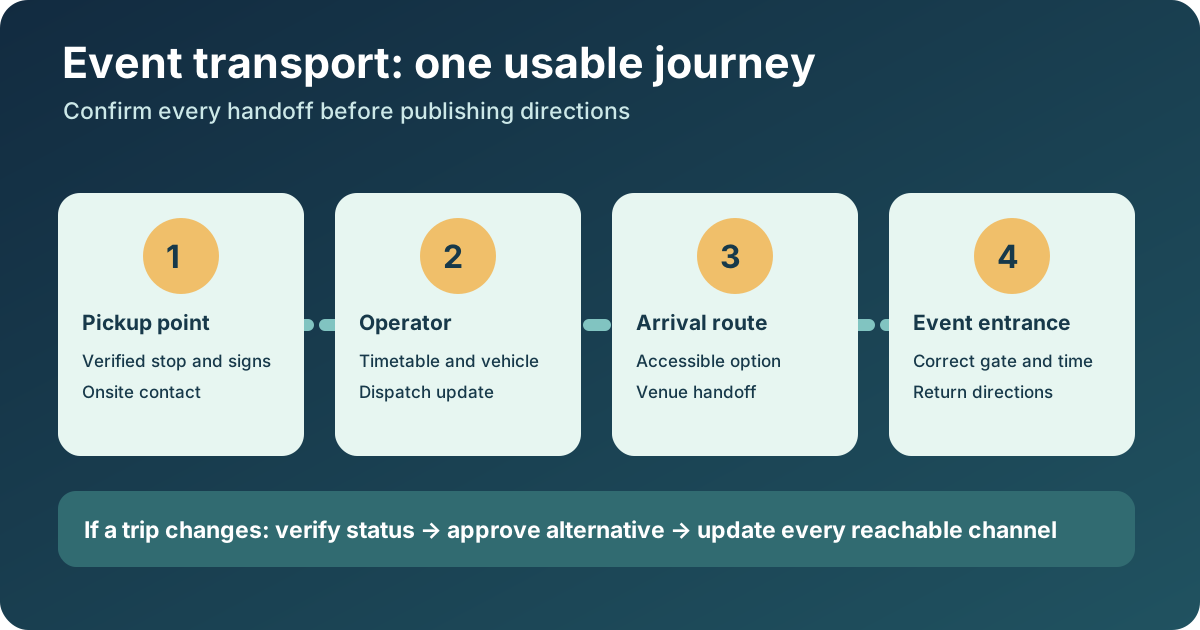
Define who needs transport and when
Download the editable event transport coordination sheet (Markdown, English)
Start with the event edition, venue entrance, session start and finish, expected traveller groups and the journeys the event will actually provide. Separate a contracted event shuttle from public transit, private parking and independent travel. Ask the supplier to confirm vehicle availability and service scope against your own demand assumptions. Do not turn a ticket count into a universal vehicle ratio: booking patterns, journey length, boarding time and accessible requirements differ by event.
Map the periods when people are likely to arrive and leave. A conference with several breakout sessions may need a different service pattern from a single performance. Record the evidence behind each planned trip, including expected riders, route, pickup point and the event activity it serves. The editable sheet keeps those assumptions visible when the programme changes.
Agree the pickup, arrival and accessible journey
Confirm pickup and drop-off locations with the venue, transport operator and relevant local authorities where needed. Walk the attendee route from the stop to the correct entrance, including signs, lighting, queuing space, step-free options and a place to ask for help. UK HSE guidance says arrival and departure planning should consider external transport, pedestrian routes and traffic conditions; use it as a planning prompt, then follow local requirements and the venue’s approved site plan.[1][2]
Do not promise an accessible vehicle or route merely because one was requested. Obtain the operator’s confirmed accessible service details, boarding arrangements and contact route, and publish only what can be provided. If a journey changes, update the stop description and the route to the entrance together.
Name the operator and onsite handoffs
Write down who owns the timetable, vehicle dispatch, pickup-point staffing, venue access, attendee questions and changes to published travel information. The supplier should own driver and vehicle checks under its applicable obligations. The organizer should own the attendee-facing facts and the handoff when the provider reports a change. Record one direct contact and a backup for each active pickup point.[3]
Before service starts, compare the approved timetable and locations across the supplier brief, venue map, event page, ticket email and signage. A mismatch between a printed stop name and the driver’s instruction can strand attendees even when the vehicle runs as planned. If Boletolibre.com carries the event listing, compare its venue and timing details with the travel instructions.
Prepare a truthful delay message and fallback
For each route, decide who confirms a delay, who approves an alternative and how people at the stop will learn what is known. Draft a short update with the affected stop and trip, observed status, next update time with time zone, and a contact or accessible alternative that has actually been confirmed. Do not invent an ETA or tell people to use a route that the venue or operator has not approved.
Choose channels based on what travellers can reach: stop staff or signage, website update, direct message through an authorized channel, and event staff briefing. If a transport problem changes admission or programme timing, route that decision to the event lead. Safety actions and public-road changes belong to the approved venue/operator plan and competent local review.
Check the published journey and record changes
Ask the supplier and venue to verify the final route, stop, timetable, accessibility details and escalation contacts. Open the published directions on a phone, follow them to the stop and entrance, and check the return journey. Record approval, version, owner and a trigger for re-review such as a road closure, venue access change, schedule revision or provider change.
After the event, compare reported delays and attendee questions with the plan. Record what should change next time without treating one event’s vehicle count, buffer or response time as a universal rule.
Sources and further reading
- Put crowd controls in placeUK Health and Safety Executive · Accessed
- Venue and site designUK Health and Safety Executive · Accessed
- FTA Major Event PlaybookUS Federal Transit Administration · Accessed