Event venue site visit checklist: verify the space before signing
A good venue photograph cannot prove that the event will work. Bring the same requirements brief you sent each venue and inspect the actual routes, rooms and operating conditions. The leading Google guide combines site selection with a long inspection checklist; this original version concentrates on the visit itself and a decision record you can compare across candidates.
Boletolibre editorial team
Published
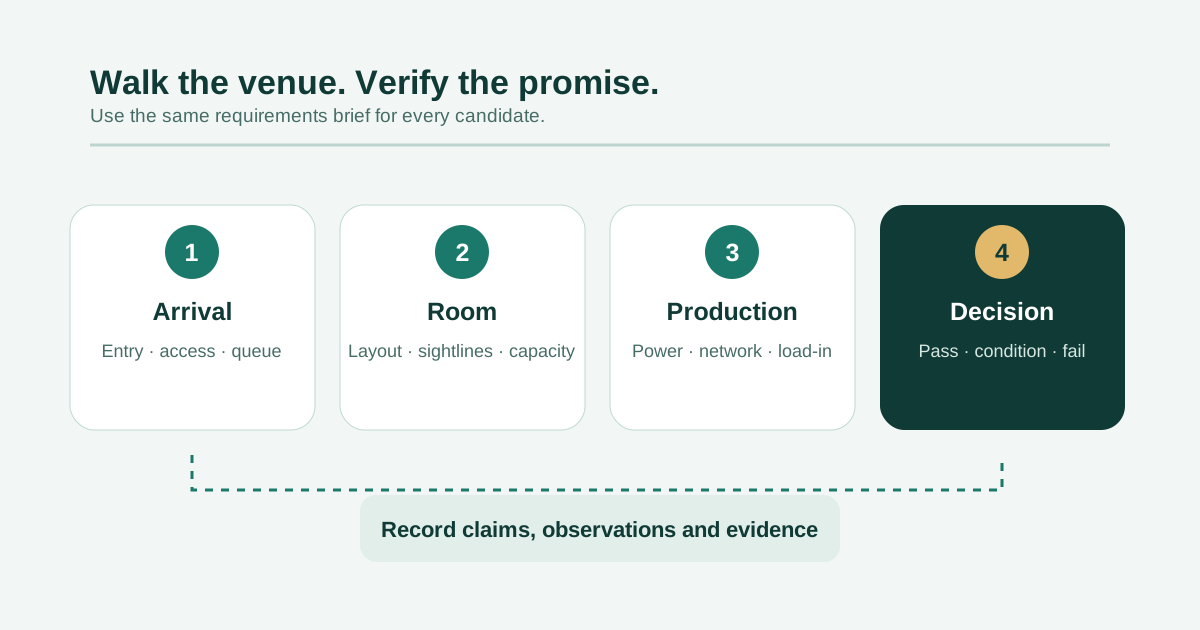
Prepare a visit route from your brief
Before arriving, mark each requirement as must-have, conditional or preference. Ask the venue to have the proposed room layout, access route and relevant staff ready. Visit at a time that resembles the event if possible; an empty hall at noon may hide arrival or noise problems at peak hours. Bring your event producer, accessibility lead and technical lead when their decisions matter. Ask what photographs and tests the venue permits. A site visit confirms visible conditions; it does not substitute for fire, accessibility or permit review by qualified local parties.
- Print or open the same requirements list for every candidate.
- Confirm proposed room layout, visit time, attendees and photo/test permissions.
- Bring a measuring method and note where a specialist verification is needed.
Walk the attendee and supplier journeys
Start where an attendee would arrive: transit or drop-off, street-to-door path, queue, check-in, toilets, main room and exit. Walk the step-free path rather than relying on a floor-plan icon. In each room, mark the actual footprint of stage, seating, aisles, interpreter positions and catering. Ask for the usable capacity in that exact layout, not the room's headline capacity. Then trace the supplier route from loading point to storage and stage, including lifts, door widths and restricted hours. If the event spans multiple rooms, time the movement between them.
- Arrival and step-free routes; queues and check-in.
- Actual room layout, sightlines, circulation and usable capacity.
- Load-in, storage, crew route and teardown exit.
Test the services your event depends on
Connect a device at the exact registration desk and production positions, with venue permission, and record the connection method and result. Locate power circuits and ask which loads are available to your team. Check sightlines and sound from the back and sides of the proposed seating plan. Ask who controls lighting, temperature, AV and internet during the event, and how faults are escalated. Inspect catering service points, water, waste flow and backstage access only to the extent your event needs them. Written specifications and a production test may still be necessary.
- Internet at check-in and production positions, where testing is permitted.
- Power, AV, lighting and control owners.
- Catering, water, toilets and waste only as relevant.
Record evidence and unresolved questions
Give each requirement one row in the worksheet. Separate the venue's claim from what you observed; add a photo or document reference, a named follow-up and a due date. Use 'verified', 'conditional', 'failed' or 'unknown' rather than a vague tick. Capture restrictions such as shared foyers, simultaneous bookings, noise limits, mandatory suppliers and setup windows. Photos should be taken only with permission and without collecting attendee or staff personal data unnecessarily. Confirm remaining claims in writing; a verbal assurance is not a contract term.
- Record requirement, claim, observation, evidence, verdict, owner and deadline.
- Mark unknowns honestly; request documents or a second test.
- Keep permitted photos and notes linked to the worksheet.
Make a conditional venue decision
Reject a candidate when an essential requirement clearly fails and no credible adjustment exists. For a conditional pass, record the remedy, who pays, the evidence you need and the date it must be confirmed before signing. Compare venues on the same must-haves and total delivery cost, then put the reason in the event decision log. Ask the venue to attach the agreed room plan, access arrangements, technical needs and operating windows to its proposal or contract. Seek qualified advice for local safety, accessibility and legal obligations; this checklist is an operational inspection, not certification.
- Fail a must-have only on evidence; document a credible remedy when conditional.
- Confirm unresolved terms in writing before commitment.
- Carry the final venue constraints into the production plan.
Sources and further reading
- Event Site Selection and Site InspectionExecutivevents · Accessed