Event volunteer expenses policy template and claim form
“Expenses covered” is too vague for a volunteer deciding whether they can afford a shift. A useful policy names eligible categories, limits or preapproval rules, evidence, payment timing and a person who can resolve a question before money is spent. Fill in those decisions for your organization and event, then share them with every volunteer before they accept a role.
Boletolibre editorial team
Published
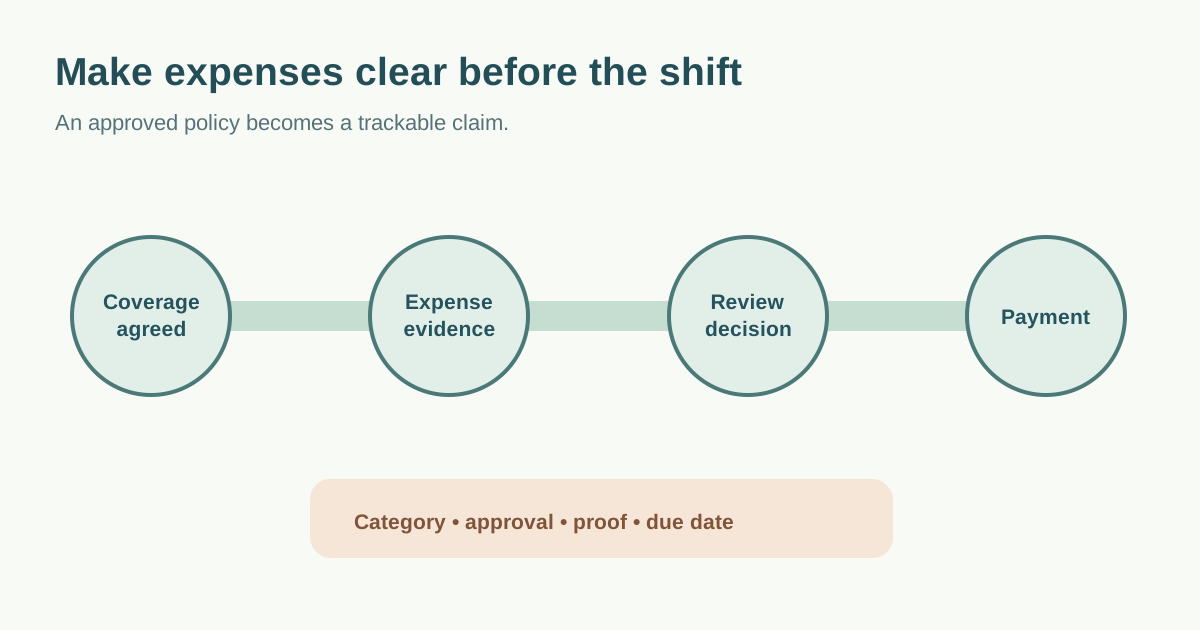
Agree the actual offer before recruitment
List each cost category the event may cover—such as travel, meals, essential materials or caring costs—only if your organization has approved it. Mark excluded categories and any amount limit in the local currency. State whether volunteers can request an advance or a direct booking when paying upfront would exclude them. Volunteer Ireland recommends making covered expenses clear at the start; its sample policy is a guide, not your organization’s promise.[2]
| Policy decision | Write the approved answer | Owner |
|---|---|---|
| Eligible category and cap | Exact cost, route, limit or preapproval rule | Volunteer lead + finance |
| Evidence | Receipt, ticket or approved alternative | Finance |
| Claim window | Submission deadline and contact | Volunteer lead |
| Payment | Method and expected processing date | Finance |
| Exception | How a volunteer asks before spending | Named approver |
Budget the likely reimbursements in the event plan and give the volunteer lead authority to answer practical questions. A category omitted from the policy should not be implied by a friendly recruitment message. If the organization cannot cover a cost, say so in the role listing rather than surprising someone after the shift.
Separate reimbursement from pay and promises
A claim should identify a real expense incurred for the approved role, the date, amount and evidence. Do not use an unexplained flat amount as a substitute for wages. UK government guidance distinguishes volunteer expenses from other payments and says status depends on the facts; these UK rules cannot be generalized to every country. Have the organization’s finance or legal adviser review the final policy for local employment, tax, insurance and benefit effects before publication.[3][4]
The leading Welsh template includes specific mileage, meal and caring rates and claims about benefits and tax. Those numbers and assertions are tied to its jurisdiction and organization. This article leaves them blank. It also avoids a universal “all volunteers will never be out of pocket” promise unless your organization has funded and approved that commitment.[1]
Make claiming simple and private
Offer one clear route: where to send the form, what proof to attach, who approves and who pays. Keep personal banking and caring information in a restricted finance channel rather than an event group chat. Decide how to handle a lost receipt, a volunteer who cannot pay upfront or an accessible alternative to an online-only form. Approvers should not be the same person claiming their own expense unless the organization has a separate review route.
A sample claim record has event and role, expense date, category, description, currency, amount, evidence reference, prior approval, claimant, approver, decision, payment date and any exception note. Avoid putting bank details in the article’s downloadable blank worksheet. Link to your secure payment process instead.
Reconcile and revise after the event
Track submitted, approved, queried and paid amounts separately so a volunteer knows whether a claim is still pending. Tell people when to expect an answer and whom to contact if the payment is late. Compare actual reimbursement spend with the budget and review whether the categories unintentionally made participation difficult. Volunteer Ireland notes the importance of a clear policy and a regular form-and-receipt process.[2]
Keep approved claims under the organization’s finance retention and access rules. Revise the template when venue, transport, shift length or the funding offer changes. Publish only the filled and reviewed policy; a blank sample should not be mistaken for an approved reimbursement commitment.
Download the volunteer expenses policy and claim form (Markdown, English)
Sources and further reading
- Reimbursing your volunteers: Model Reimbursement of Expenses Policy – TEMPLATEThird Sector Support Wales Knowledge Hub · Accessed
- Volunteer ExpensesVolunteer Ireland · Accessed
- Volunteer opportunities, rights and expenses: Pay and expensesGOV.UK · Accessed
- Calculating the minimum wage: eligibilityGOV.UK · Accessed