Website content ownership matrix for event teams
An event website changes quickly: dates move, ticket prices change, sponsors send new logos, and a registration form gains another field. If no one owns each public item, small errors can survive until visitors find them. This editable content ownership matrix gives a small team a single place to record who maintains each page, form, image and checkout link, where the approved information lives, and when to review it. Here, ‘ownership’ means responsibility for keeping content accurate; it does not assign copyright or grant account access.
Boletolibre editorial team
Published
Download the editable content ownership matrix
Download the event website ownership matrix (.xlsx)
The free workbook includes five fictional example rows and ten blank rows. Replace the examples with your site’s real pages, forms, assets and checkout links. For each item, record the public URL or system location, authoritative source, maintainer, reviewer, event that triggers a recheck, last and next review dates, current state and handoff notes. Keep passwords and attendee records out of this file.
The first organic Google result for this keyword offers a broader content matrix spreadsheet that combines site structure, URLs, content work, writer or owner, reviewer and publication details. Our version narrows that matrix to the ongoing maintenance of an event site rather than a full redesign or legal ownership register.[1]
Start with the visitor journey, then add supporting assets
Walk the site from the event page to registration or ticket checkout and confirmation. Make one row for each public element that can go out of date independently. Include key policy and accessibility information, ticket destination links, event images, FAQs and downloadable schedules. A single page may need separate rows for a form or checkout link when a different system and maintainer control it.
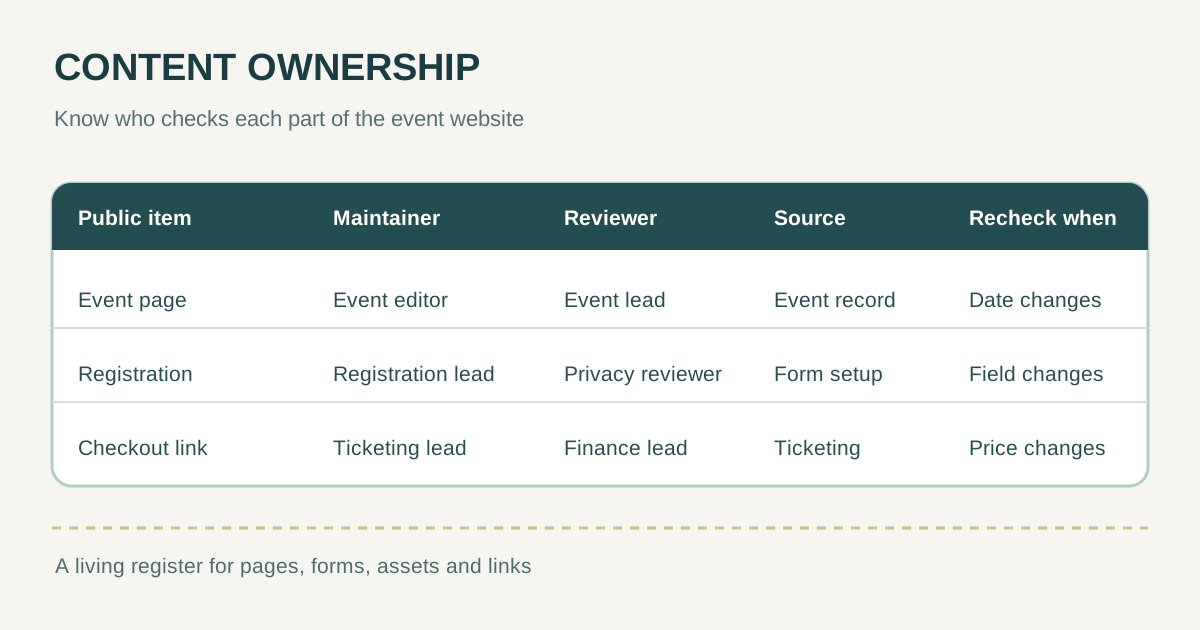
| Item | Maintenance question | Likely source of truth |
|---|---|---|
| Event page | Are date, venue, time zone and schedule current? | Approved event record |
| Registration form | Do fields and consent wording match the plan? | Registration platform and approved requirements |
| Checkout link | Does the destination show current price and capacity? | Ticketing platform |
| Poster or sponsor logo | Is this the approved version with appropriate rights and alt text? | Design library and partner approval |
| Refund information | Does the page match approved terms? | Current approved policy |
YaleSites describes a content matrix as a living map that can remain useful after a website project. Use the same principle here: an event team should keep this register current as information changes, not treat it as a launch-day inventory only.[2]
Assign one maintainer and a clear reviewer
The maintainer notices a change, updates the public item or routes the work, and confirms the result. The reviewer checks accuracy before a consequential change goes live. On a small team, the same person may fill both roles for routine content; ticket prices, policy wording or privacy-related form fields may need a second pair of eyes. Record the role or named person your team actually uses and a backup during absences.
A content RACI can map responsible, accountable, consulted and informed roles across an organization. This workbook deliberately stays narrower: each row names the maintenance and review contacts for a concrete public item. Use a separate roles or approval process document if you need to model multi-step governance across teams.[3]
- Avoid ‘everyone’ as the owner; name one person or function that will respond.
- Keep the source of truth specific, such as a CMS record or approved policy file, rather than ‘ask marketing’.
- Do not mistake access to edit a CMS for authority to approve a price, policy or sponsor claim.
- On handoff, update the maintainer, reviewer and open notes together.
Use triggers and dates so the matrix stays alive
An annual review is too late for a page about an event next week. Name the change that should trigger a check: venue confirmation, a ticket tier selling out, a sponsor asset update, a privacy notice revision or a schedule release. Add a last-verified date and a next review date when the item is time-sensitive. Before major announcements and the event start, scan the whole visitor path again.
The example workbook leaves dates blank rather than inventing a universal schedule. Each team can choose a cadence based on its event timeline and risk. Lullabot notes that the matrix can support content governance after launch by showing who owns and reviews material over time.[1]
Worked example: a ticket price change
Suppose a ticket tier changes from a fictional $25 to $30. The ticketing lead updates the price in the ticket platform, but the event page still says $25. The matrix shows two linked items: the ‘buy tickets’ link with ticketing as its source, and the event page with the approved event record as its source. The maintainer checks both, the finance reviewer approves the displayed price, and the handoff note records which pages and confirmation messages were checked.
This is a content maintenance example, not a claim about a real event. The spreadsheet does not change live systems, prove that a checkout works, or grant permission to edit anything. Use it to know what to verify, then complete the actual review in the site and connected services.
Sources and further reading
- The Content Matrix: Your Reorganized Closet of ContentLullabot · Accessed
- Using a Content MatrixYaleSites · Accessed
- How to use a RACI chart to define content roles and responsibilitiesContent Strategy Inc. · Accessed