Event website incident ownership plan and template
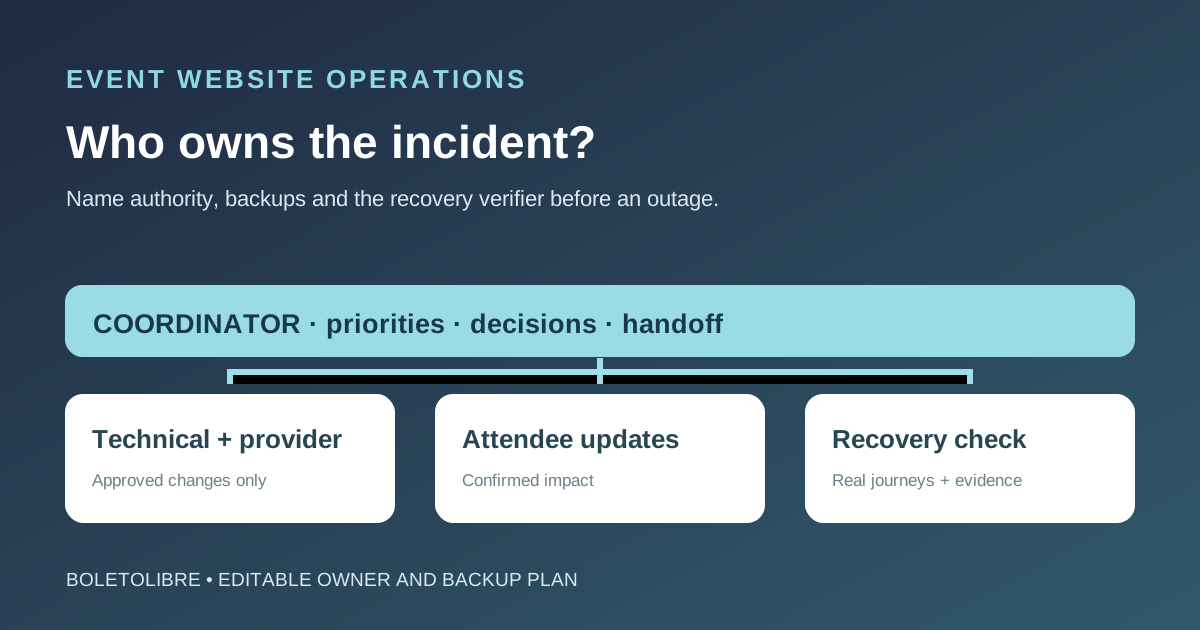
When an event website breaks near an on-sale or live event, the expensive delay is often deciding who is in charge. Write down roles before the incident: who confirms attendee impact, who may change production, who talks to providers, who updates attendees, and who signs off recovery. One person can hold multiple roles in a small team, with a named backup.
Boletolibre editorial team
Published
Name the coordinator and decision authority
Download the editable incident ownership plan (Markdown, English)
Choose a primary incident coordinator and backup for every active event. State when they may declare an incident, pause unrelated changes, authorize a workaround, escalate to the event owner and convene the team. Keep one live record of facts, unknowns, decisions, owners and timestamps. Google SRE describes an incident commander who coordinates work and roles rather than editing every system personally.[1][2][3]
Assign technical and provider response
Assign an operator for hosting, DNS/CDN, forms and ticketing paths, plus the person who can open each provider case. Record account or contract reference location without copying credentials into the public plan. Name the person authorized to change production; parallel uncoordinated fixes can make recovery harder. If fraud, exposed data or unauthorized changes are suspected, branch to your security/privacy response owner instead of treating the event as ordinary downtime.
Keep attendee communication independent
The communication owner should publish confirmed impact, a safe alternative and the next update time through a channel that still works if the event domain or its email fails. Coordinate wording with the event owner and technical lead; do not invent a root cause or recovery time. Include who answers attendees, venue staff and ticketing support. A separate message template can supply wording, but it cannot decide who has approval to send it.[1][2][3]
Verify recovery and hand over explicitly
Define recovery as the attendee journey working, not merely a green homepage: check current event details, registration, checkout or official ticket link, confirmation and queued messages. Record verifier, time and evidence. If work crosses a shift, the incoming coordinator explicitly accepts the current state, open actions and next update duty. Assign post-incident review after the live response ends.[1][2][3]
Sources and further reading
- Website Outage Incident Response Playbook for AgenciesPingvera · Accessed
- Managing IncidentsGoogle SRE · Accessed
- Create an incidentAtlassian Statuspage · Accessed