Late arrival policy for live performances: a front-of-house run card
A person who arrives after a performance begins still needs a clear, humane answer at the door. Some venues seat people at a suitable break; others use a different rule for each production. The organizer should agree the policy with the venue, stage manager and front-of-house lead before tickets go on sale, then give both buyers and ushers the same information. This original run card helps make that handoff concrete.
Boletolibre editorial team
Published
Agree the policy with the production and venue
Download the editable late-arrival policy and front-of-house run card (Markdown, English)
Decide whether entry continues after curtain, which moments are suitable for movement, who can authorize an entry cue, and whether a late guest temporarily sits elsewhere. Do not invent a universal number of minutes or assume every show has an interval. Hart House says its front-of-house staff decide when to seat latecomers and that rental producers may set their own policy; that is one venue’s rule, not a standard. Record the actual decision for each performance date, including exceptions for a delayed start, a changed interval or a sold-out house.[1][2]
Prepare the holding point and routes
Choose a staffed place where late arrivals can wait without blocking the box office, accessible entrance, audience circulation or emergency access. Have the house manager coordinate with stage management on a safe cue, and show ushers the approved route to temporary or assigned seats. Check lighting, steps and visibility with the venue; do not direct a person through a dark auditorium merely because a seat is empty. Arrange an accessible way to join the performance that offers comparable information and service, with the local accessibility lead reviewing the plan.[2][3]
Give staff one decision sequence
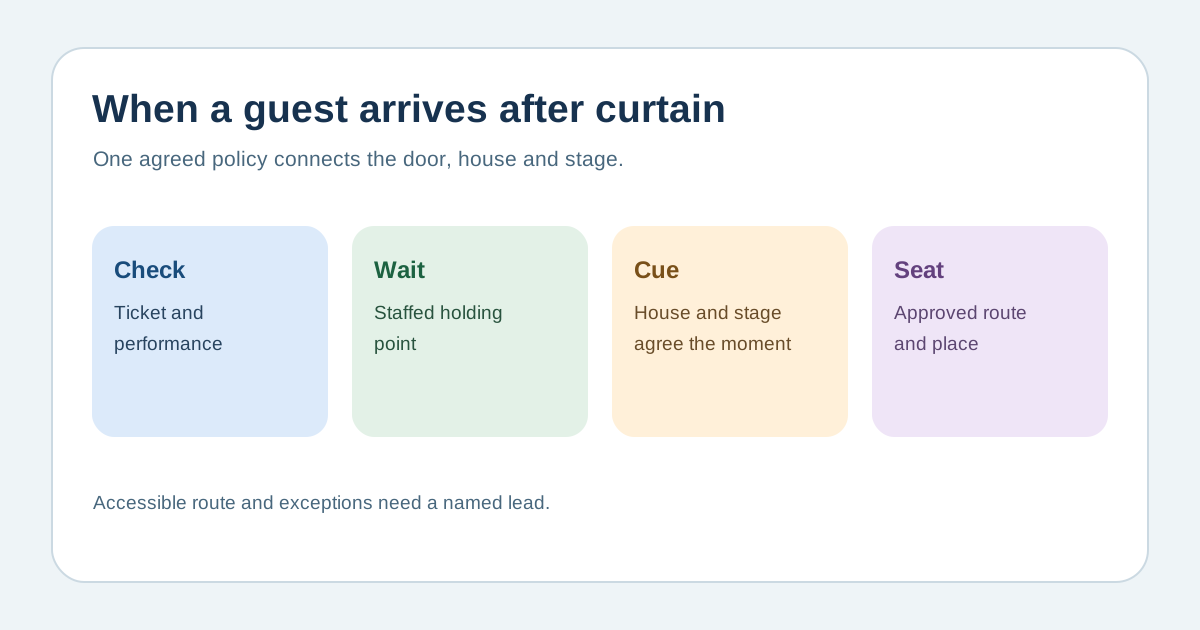
At arrival, verify the ticket and performance, explain the current seating status, and guide the guest to the agreed waiting place. The usher does not promise an immediate seat: they ask the house manager, who follows the stage-manager cue. If a temporary seat is used, record how and when the guest may move to an assigned seat, if allowed. Escalate seating conflicts, accessibility requests, missed entry opportunities and any dispute over entitlements to the named lead. MIT’s front-of-house guide assigns a house manager coordination with stage management and latecomer handling, but its clock times are specific to that production.[1][2]
Publish a truthful buyer-facing rule
Place the late-arrival statement beside start time, door-opening information and ticket conditions, then repeat the key line in confirmation and pre-event messages. Say who decides when entry is possible, whether seating may be delayed or moved, and how to request an accessible route. Avoid stating that a paid seat is automatically lost, or that no refund is ever available, unless a qualified review and the actual event terms support that wording. If the policy changes, update the page and front-of-house briefing together.[1][2]
Rehearse and record the handoff
Before doors, walk the late-arrival route with an usher and the house manager; test both an ordinary guest and someone using the accessible route. Confirm the holding point, radio contact, seating chart, cue owner and service-desk escalation. Brief staff on what to say if the show has no suitable late-seating moment. After each performance, note confusing cases and revise the next briefing, rather than allowing ad hoc promises at the door.[2][3]
Sources and further reading
- Theatre Rules & Etiquette: late seating policyHart House Theatre, University of Toronto · Accessed
- Front of House GuideMIT Musical Theatre Guild · Accessed
- Crowd controls inside the venueUK Health and Safety Executive · Accessed