Measure event registration form abandonment without confusing it with sales
A visitor can open registration, submit a form, begin checkout and still never receive a confirmed ticket. Calling all of those losses “form abandonment” hides the stage that needs work. The first organic Google result recommends tracking starts, submissions and field errors, but it treats generic lead-form recovery as the main goal. For events, define a privacy-conscious stage funnel and compare like with like before changing copy or sending reminders.
Boletolibre editorial team
Published
Download the event registration funnel worksheet
Download the editable measurement worksheet (Markdown, English)
The worksheet records one event, date range, attempt definition, each stage’s event source and owner. The worked numbers are illustrative, not a benchmark. Keep real visitor identities and payment details out of a shareable planning sheet. The leading guide discusses field-level drop-off; start with aggregate stage counts because they may locate the gap without recording private answers.[1]
Separate form behavior from a paid ticket
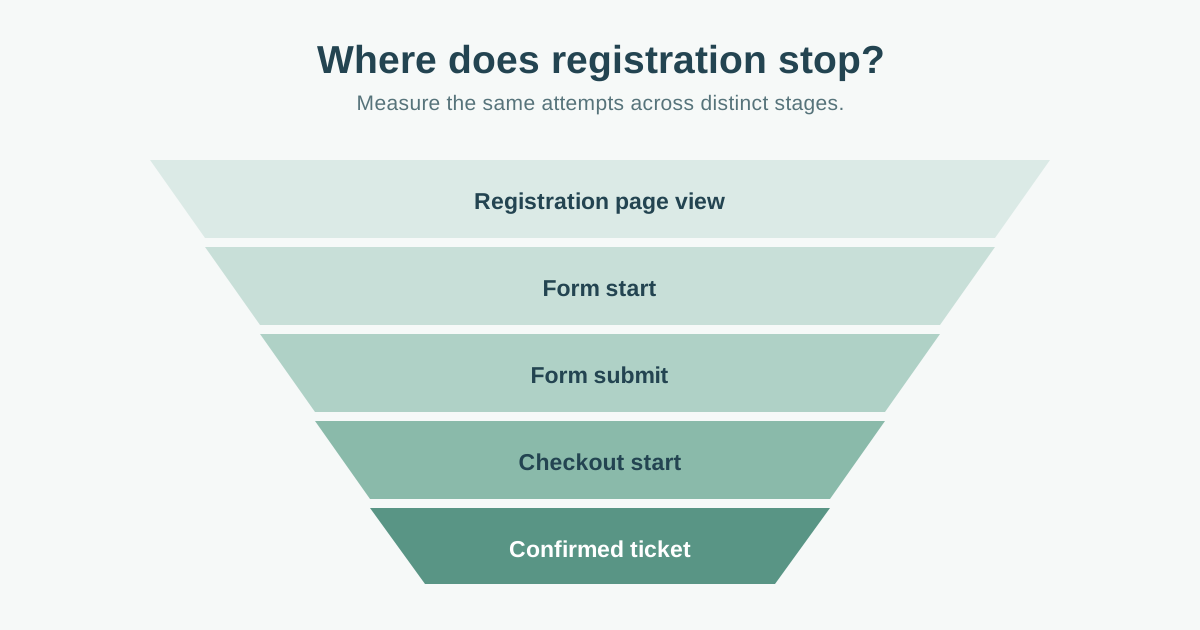
| Stage | Observed action | Not proof of |
|---|---|---|
| Page view | Registration page loaded | Form interaction |
| Form start | First meaningful interaction under your rule | Submission |
| Form submit | Submission event fired | Payment or ticket confirmation |
| Checkout start | Order/payment flow began | Successful payment |
| Confirmed order | Authoritative ticketing record completed | Confirmation email read |
GA4 enhanced measurement defines form_start as the first interaction with a form in a session and form_submit as a form submission. Those events may differ from a ticket platform’s success state. Google recommends begin_checkout for checkout and purchase for a completed purchase. Reconcile with the organizer’s own confirmed order record before claiming a completed paid registration.[2][3]
Choose one cohort and denominator
Define event ID, form version, date range, observation window and whether you count people, sessions or unique registration attempts. For a consistent attempt cohort, form-stage gap = (started attempts − submitted attempts) / started attempts. A post-submit gap can compare submitted attempts with confirmed registrations only if the same attempts, identifiers and time window make the stages comparable. Retries, second sessions and later completion invalidate a naive subtraction.
Free RSVPs and paid checkout need different downstream stages. Group orders, imported registrations and box-office sales may bypass the form; exclude them from this funnel or show them separately. Label uncertain cross-domain links rather than filling the missing count with a guess.
Investigate the verified gap
For an early form gap, inspect required questions, labels, errors and mobile completion. For a gap after submit, inspect validation, inventory expiry, payment handoff and order creation. The leading guide proposes time-per-field and session replay, but a long pause does not prove confusion and recordings can expose sensitive details. Begin with aggregate errors and controlled usability observation; justify any deeper capture.[1]
Compare periods with similar inventory, price, campaign source and event timing. A sellout or last-minute traffic can change the rate even when the form remains identical. Record context beside each count.
Measure friction without collecting answers
Analytics should carry non-sensitive stage names, form version and error codes. Do not send names, email addresses, free-text answers, accessibility requests, ticket tokens, payment details or URLs that contain them. Have the privacy and technical owners check the actual analytics configuration before enabling field or session instrumentation.
An unfinished form is not an approved marketing list. Any follow-up needs a separate recipient and permission review. This worksheet exists to find a failing stage, not to harvest partial responses.
Make the next change measurable
Write a precise observation, such as “the confirmed-order gap rises on mobile after payment handoff.” Assign a technical or content owner, record the change date and recheck the same stage definition. Do not declare improvement from a tiny sample or unmatched before/after periods. Keep a support route for people who paid but lack a ticket.
Sources and further reading
- Ultimate Guide To Form Abandonment TrackingReform · Accessed
- Enhanced measurement eventsGoogle Analytics Help · Accessed
- Recommended eventsGoogle Analytics Help · Accessed