Who is responsible for event website backups?
The answer depends on the service agreement and the systems involved. A host may create snapshots, an agency may manage the application, and the organizer may own the ticketing account. Do not infer a complete recovery plan from the word “backup” on an invoice. Assign every handoff in writing.
Boletolibre editorial team
Published
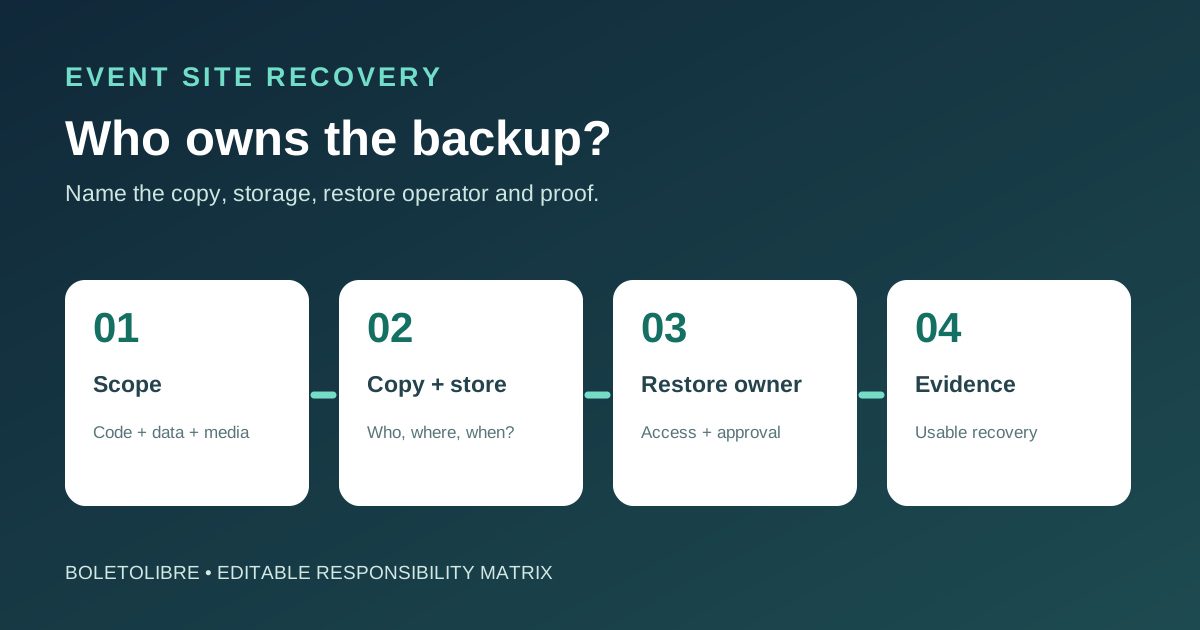
Download the backup responsibility worksheet
Download the editable backup responsibility matrix (Markdown, English)
The first organic Google result is a site owner who discovered that the available backup was months older than expected. The useful lesson is to check the actual restore point and service scope, not to assume a universal legal duty. Use the worksheet before a renewal, launch or provider change.
Split the site into recoverable parts
| System or data | Questions for the named owner |
|---|---|
| Website code and configuration | Who can rebuild or restore the deployed version? |
| Pages and media | Are editable content and original assets included? |
| Registration data | Where is the source of truth, and who may export it? |
| Ticketing and payments | What does the external provider retain and restore? |
| DNS and domain | Who preserves the zone and account access? |
An event site may have code, CMS pages, images, registration responses, configuration and domain settings in different systems. The ticketing provider may hold orders separately. Record whether each item is backed up, exported or recoverable from another source. Never assume a website host can restore third-party payment or ticket records.[2][3][4]
Ask who creates, stores and monitors each copy
For every item, name the backup operator, storage account, schedule or trigger, retention, access controls and person who notices a failed job. A provider snapshot may be inaccessible after account closure or may omit a separate media store. Ask the provider what its product actually includes; do not equate a backup job with an independent copy.
Name the person who can restore it
Separate responsibility for making backups from responsibility for deciding when and how to restore. Record who authorizes the recovery, who can access the backup, where a safe rehearsal can run, and how new registrations or sales are reconciled. The organizer should own the business decision about acceptable data loss and downtime; technical teams can estimate what their design can deliver.
Confirm the agreement with evidence
Request a dated example of a completed backup and a recent test restore that checked real content. Read the contract or statement of work for exclusions, restoration charges, notice and handover on exit. If the scope is vague, ask for a written clarification before an incident. This matrix is an operating agreement, not a substitute for local contract advice.[2][3][4]
Sources and further reading
- Who is responsible for backing up a website?Reddit r/Wordpress · Accessed
- Back up data — Reliability PillarAWS Well-Architected · Accessed
- Perform periodic recovery of the dataAWS Well-Architected · Accessed
- BackupsWordPress Developer Resources · Accessed