Domain vs. hosting: what each service does
A domain is the name people use to reach a website. Web hosting serves the content they see. Buying one does not, by itself, give you the other. For an event page, separate the name, the DNS settings and the service that publishes the page.
Boletolibre editorial team
Published
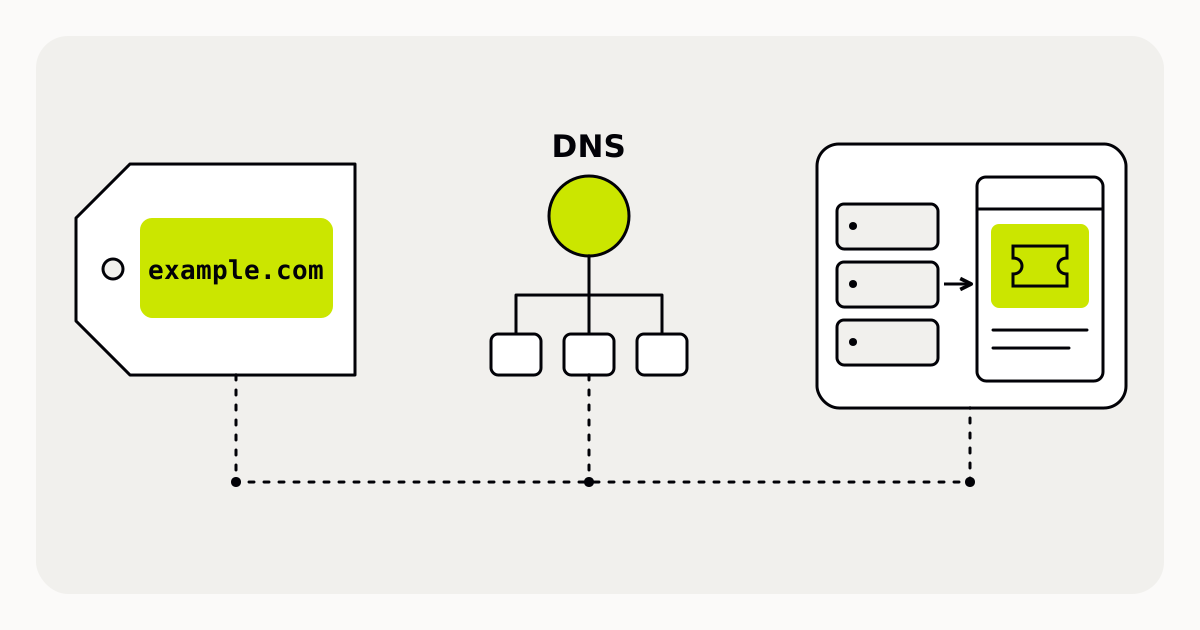
One website, three responsibilities
People often use “domain hosting” for services around registering and managing a name. That is different from web hosting, which stores and serves website content. A registrar and a web host can be different companies, even when a package sells both together.[1]
| Service | What it does | What you should identify |
|---|---|---|
| Registration | Maintains your right to use the name for a renewable period | Account holder and renewal arrangements |
| DNS | Provides records used to locate services for the name | Where the authoritative settings are managed |
| Web hosting | Serves the pages, images and other website content | Who publishes and maintains the site |
How the address reaches the page
When someone enters a domain, DNS helps their device find the relevant server address. The browser then requests content from the web service. The name is not a copy of the website: changing the service it points to does not move your text, images or page configuration.[2][1]
Registration is also not permanent ownership. You register the right to use a name for a period and renew it. Keep that renewal separate in your planning from a website subscription or content-update agreement.[2]
A hypothetical event-site decision
Suppose an organizer already has example.com and wants a page for an annual concert. They may keep their registrar while choosing another hosting service. Before making that choice, they should ask whether the new service accepts their chosen address and obtain its actual connection instructions. No destination is supplied in this example.
If the goal is only to update the concert schedule, the work belongs in the website publishing service, not the registration account. If the name is due for renewal, editing the page will not renew it. Identifying the responsible account avoids treating every problem as “the hosting.”
Questions before committing
- Who controls the registration account, and who receives renewal notices?
- Where are DNS changes made, and who can approve them?
- Which service publishes the page, and who maintains its content?
- Are email, HTTPS setup and support included or separate? Confirm the specific terms rather than assuming.
Use the answers to make a small service-and-owner list. You can then discuss a website move without accidentally treating registration, DNS and content hosting as a single purchase.
Sources and further reading
- Web hosting and domain servicesSquarespace · Accessed
- Domain names, registration and DNSMDN Web Docs · Accessed