What is a domain name? The name is not the whole website
A domain name is a readable name in the internet’s naming system. Instead of asking visitors to remember a server’s numeric IP address, you can give them a name such as example.com. For an organizer, it can provide a consistent public address while individual event pages change.
Boletolibre editorial team
Published
What the name identifies
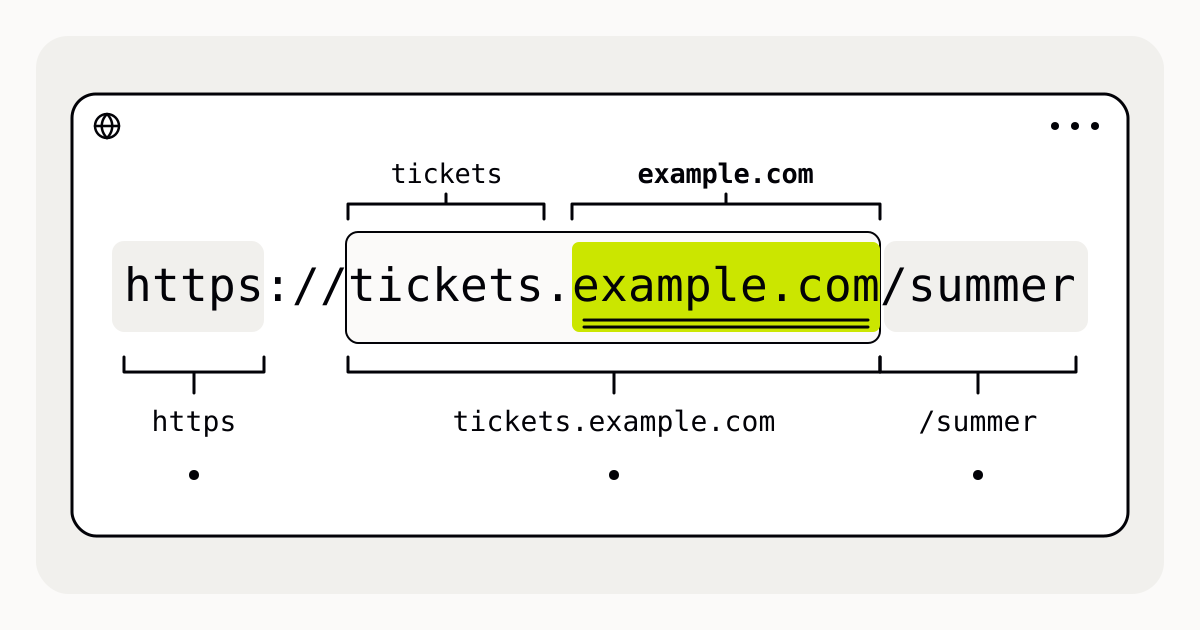
Domain names are arranged hierarchically, with labels separated by dots. In example.com, com is the top-level domain. In tickets.example.com, tickets adds a name beneath example.com. DNS can associate these names with the network resources needed to reach services.[1]
Do not assume every registered name consists of exactly two labels. Naming structures vary; the important question is which registered name you control and which names sit beneath it. A subdomain may serve a different site without being an unrelated registered domain.[1]
Read an event URL in parts
Consider the illustrative URL https://tickets.example.com/summer. These parts have different jobs:[2]
| Part | Meaning in this example |
|---|---|
| https | The scheme: the browser uses HTTPS. |
| tickets.example.com | The full hostname used to find the web service. |
| example.com | The registered domain in this example. |
| tickets | A subdomain label beneath example.com. |
| /summer | The path requested from the website. |
Changing /summer to /winter changes the requested path, not the domain registration. Adding tickets before example.com changes the hostname; the DNS and website configuration must support that name. Typing either version does not create the corresponding page or service.[2]
Registration is renewable, not a finished website
People commonly say they “buy” a domain. In practice, registration provides time-limited use under the registration terms. You need to renew it to keep using the name. Expiry can affect the website and other services associated with it, so renewal belongs in your operational calendar.[3]
A registration is not the same as a published website. You still need content, hosting and the settings that connect the name to the right service. An email address using the name also needs an email service; the name alone does not create a mailbox.
Choose a name you can keep using
For a recurring event, consider whether the public name should describe one edition or the organization behind every edition. A lasting name with separate event paths can reduce the number of printed addresses you need to replace. That is an editorial and operational choice, not a promise of better search rankings.
- Read the proposed address aloud and ask a colleague to type it.
- Check the precise spelling before registering or printing it.
- Record who controls the registrar account and receives renewal notices.
- Decide which complete URL belongs on posters, emails and social profiles.
Keep one simple distinction in mind: the domain is the name; the URL identifies the resource you want someone to open; the website is the content and service they reach.
Sources and further reading
- Domain names and their hierarchyMDN Web Docs · Accessed
- The parts of a URLMDN Web Docs · Accessed
- Keeping a domain registration renewedICANN · Accessed