Subdomain vs. domain: choose the right address structure
A subdomain is a domain name beneath another domain in the DNS hierarchy. In tickets.example.com, tickets is the added label beneath example.com. It is not the same as example.com/tickets: the part after the slash is a URL path, not a subdomain.
Boletolibre editorial team
Published
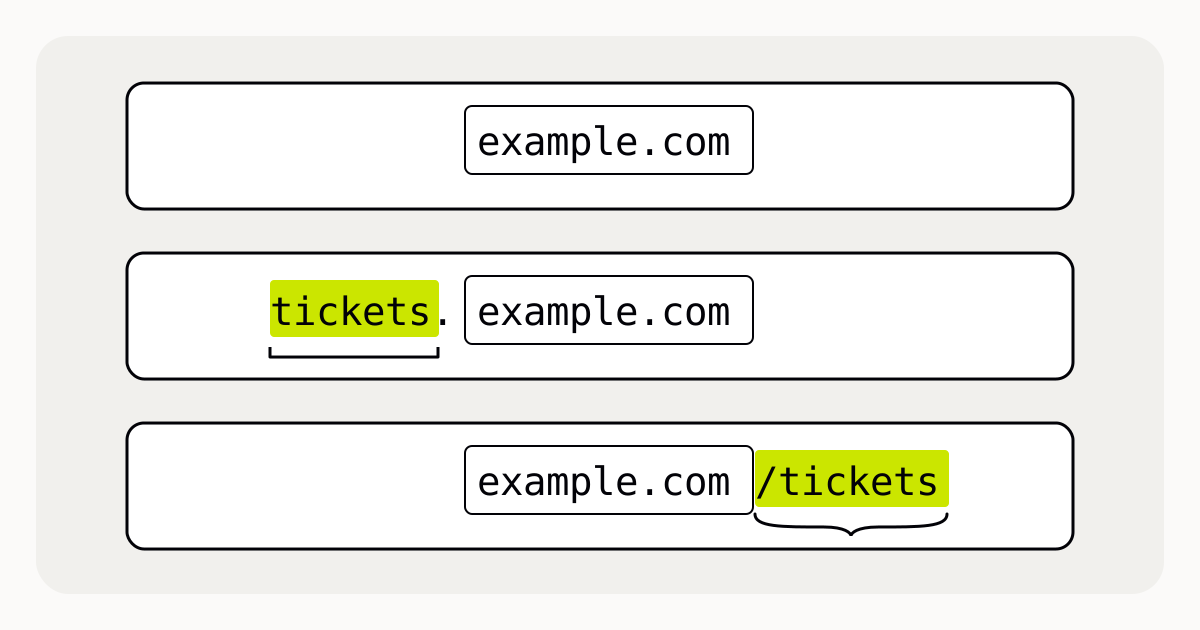
Read the name and the path separately
| Example | What it represents | Where the distinction matters |
|---|---|---|
| example.com | The parent name used in this example | Registration and the domain’s DNS settings |
| tickets.example.com | A subdomain beneath example.com | DNS and the service configured for that hostname |
| example.com/tickets | A path on the same hostname | How the web service handles that resource |
“Domain” and “subdomain” are not mutually exclusive categories: a subdomain is itself a domain name. In everyday website planning, “the domain” often means the main registered name, while “a subdomain” means an added name beneath it. The hierarchy is read from right to left; dots separate labels.[1]
Do not assume that every registered name has exactly two labels. Domain structures can contain more components. For the practical choice here, identify the name you control and the additional name you want to create beneath it.[1]
What changes operationally?
Subdomains can have different content and can be configured for different services. A path instead tells the web server which resource is requested under the hostname. Creating a DNS record cannot, on its own, make example.com/tickets appear inside your website: the web service must support and handle that path.[1][2]
Neither structure publishes content by itself. You still need a service that accepts the chosen address and serves the intended page. Ask the service owner about address support and setup responsibilities before choosing a name for posters or email.
A hypothetical event-address choice
An organizer keeps general information at example.com. For a new event page, a path may suit a page maintained within the existing website. A subdomain may suit a separate page service while retaining the visible parent name. These are planning options, not a guarantee that either service can implement them.
If the organizer wants a distinct name unrelated to the existing parent, that is a separate registration decision rather than simply adding a label. By contrast, creating a subdomain beneath a name you control does not mean registering another independent parent name.[1]
Choose by responsibility, not a ranking promise
- Confirm which exact address the page service accepts.
- Identify who can change DNS and who can publish the page or path.
- Check the chosen hostname’s HTTPS setup rather than assuming the main site covers every address.
- Keep the public link consistent across the event page, messages and printed material.
This comparison does not establish an automatic search-ranking advantage for either structure. Make the decision around clear navigation, supported configuration and a named person responsible for maintenance. Write the full proposed address first: that makes a domain, subdomain or path decision much easier to discuss.
Sources and further reading
- Domain hierarchy and subdomainsMDN Web Docs · Accessed
- URL components and resource pathsMDN Web Docs · Accessed