Event merchandise supplier timeline: a backward-planning template
The merchandise deadline is the moment stock must be counted and ready for the event team, not simply the date a supplier says production will end. The first Google result for an event merchandise checklist covers creative choice and delivery logistics, but its sample four- and eight-week calendars cannot apply to every product, supplier or venue. This guide works backward from the real in-hand deadline and includes an editable item-by-item handoff worksheet.
Boletolibre editorial team
Published
Download the merchandise timeline worksheet
Download the editable merchandise timeline worksheet (Markdown, English)
Make one row for each product, variant or separate shipment. Record quantity, supplier and order ID, artwork owner, proof or sample approval, production dates, carrier and tracking, receiving slot, person who counts the stock and the next exception decision. Add the event time zone and the latest in-hand date at the top. The sample row is deliberately uncommitted: replace it with dates confirmed for your order.
A printed worksheet can travel with the event operations pack; the Markdown file can also be edited in any text editor. The responsibility line matters as much as the date. A carrier status saying “delivered” does not prove the correct sizes and quantities reached the right storeroom.
Start with the receiving window
Ask the venue or hotel which dates and hours it will accept parcels, the exact loading or reception point, labeling requirements, storage arrangements and the person authorized to sign. If the team needs stock sorted or distributed before doors open, set the in-hand deadline before that work begins. Do not use the event start time as a substitute for a receiving booking.
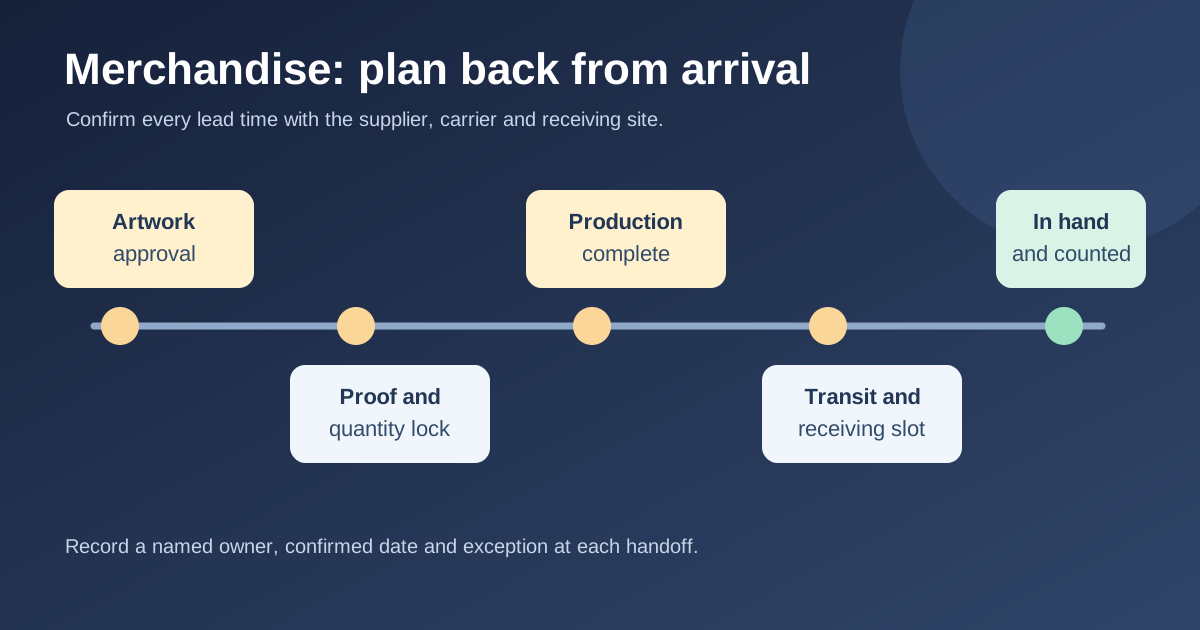
Work backward through estimated transit, dispatch, production, final proof and artwork preparation. Each stage needs its own owner and source of evidence. Broidr’s conference merchandise guide highlights the receiving contact and venue window; verify those details with your actual site instead of repeating its example timetable.[1]
Lock product, artwork and quantity with the supplier
Send a precise brief: item and variant, material and decoration, approved logo files, sizes or colors, quantity by variant, packaging and destination. Ask what must be approved before production begins, whether a physical or digital proof is included, what changes restart the clock, and whether stock is reserved. Keep the approval decision and timestamp with the order.
The supplier should provide its current production estimate after final approval and the expected handoff date to the carrier. Printful, for example, distinguishes fulfillment time from shipping time and notes that file or stock problems can delay an order. Its numbers are specific to its own service, not a lead-time rule for every event supplier.[2]
Track dispatch and accept the stock
Confirm the carrier service, destination, recipient details, package count and tracking reference before dispatch. Ask the carrier or supplier for the estimated delivery window. FedEx presents its tracking date as an estimate; treat the real shipment status as an update, not a guarantee. For cross-border goods, obtain advice on the actual route and paperwork rather than assuming a generic transit period.[3]
At receipt, compare boxes and variants with the purchase order, note damage and shortages, and assign a person to resolve each difference. Move accepted units into the event inventory or issue-and-return record. Keep spare stock, attendee allocations and sponsor commitments explicit so the site team knows what may be distributed.
Make a late decision before a late delivery makes it for you
If an approval deadline has passed, a sample fails or tracking slips, ask the supplier for a revised feasible date in writing. Consider an in-stock alternative, smaller order, different distribution plan or a clear change to a promised giveaway. Record the new cost, approver, owner and attendee or sponsor communication required. Do not quietly keep the old date in the launch plan.
Update the record when art, quantity, receiving window or carrier changes. A single universal “order six weeks ahead” rule can hide a deadline that has already passed for one item and overstate the risk for another. Use confirmed working days and local holidays for each supplier and route.
Sources and further reading
- The Ultimate Event Merchandise Checklist for Conference OrganisersBroidr · Accessed
- What’s the estimated delivery time, and how is it calculated?Printful Help Center · Accessed
- When Will My Package Arrive?FedEx Customer Support · Accessed