Best domain extension for an event website? Choose for the whole brand
Searching for the “best” event website extension usually leads to a list of attractive endings. The leading Google result offers 25 hospitality, event and tourism options, including .events, .live and .wedding. A list is a useful starting point, but the full address—not the ending alone—must work when an attendee hears it, types it, receives a ticket email and returns next year. Use this guide to choose an extension for an event brand or program, then check the specific candidate before buying.
Boletolibre editorial team
Published
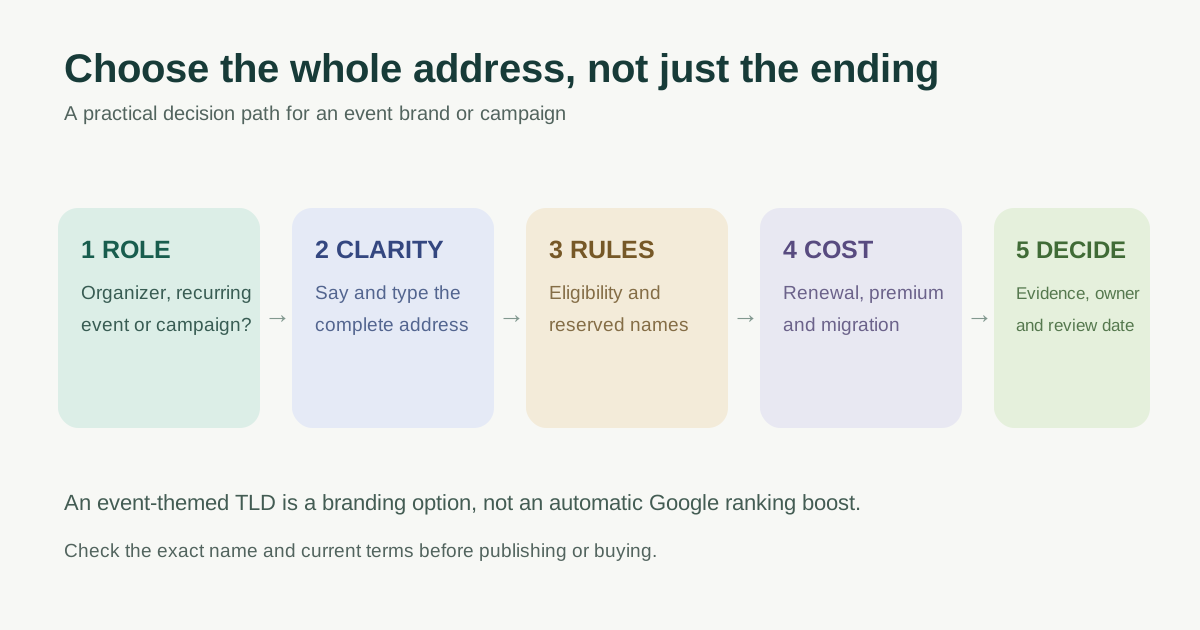
Decide which address needs to last
Name the asset before comparing extensions. An organizer brand that runs many events needs an address that still fits the next venue, city and format. A single festival or wedding can use a narrower campaign address, but its ticket emails and QR codes may circulate long after the date. If the organizer already has a recognized domain, a new event-themed ending does not automatically justify moving the primary site or email.
| Address role | Useful test | Common mistake |
|---|---|---|
| Organizer or venue home | Can the same name serve next season and another event type? | Picking an ending tied to one temporary format |
| Recurring event brand | Will returning attendees recognize and type it next year? | Changing it with each campaign |
| One-off promotion or redirect | Will printed links and ticket emails remain understandable later? | Treating a short campaign domain as the permanent account identity |
Compare complete addresses, not TLD labels
Write each candidate as a complete domain, such as a fictional Harbor Lantern name before .com, a relevant country-code extension, .events or .live. These are categories to test, not ranked winners or availability claims. A broad extension may leave room for future formats; an event-themed one may explain the offer quickly. A country-code extension can signal a local audience, but verify its current registration rules and whether your event will expand across borders. IANA identifies which TLDs are generic or country-code; current registry and registrar terms decide whether your exact name is registrable.[4][3]
Read each address aloud to someone who has not seen it. Ask them to spell it, distinguish singular from plural, enter it on a phone, and repeat the email address after the @ sign. Check how it looks on a poster, social bio, ticket confirmation and sponsor deck. A short name paired with a longer extension can be clearer than a long name paired with .com; measure the complete result instead of assuming.[1]
| Candidate type | Potential fit | Question to verify |
|---|---|---|
| Broad generic (.com example) | Organizer with several event formats | Is the complete name memorable and available? |
| Country-code | Primarily local event audience | What are current eligibility rules and future market plans? |
| Event-themed (.events, .live example) | Recognizable event program or campaign | Is the wording natural to attendees and durable after the event? |
Separate branding from search performance
Google Search Central says keywords in new generic TLDs do not create a ranking advantage or disadvantage. The 2015 explanation notes that some information may age; its current regional guidance still distinguishes country-code TLDs from generic TLDs for international targeting. Do not buy .events because you expect an automatic ranking boost. Choose it only if the address helps your audience recognize and recall the brand. Content, useful event details and sound site structure still need their own work.[2][3]
If you are replacing an established domain, that is a site and email migration, not a cosmetic extension swap. Plan old-to-new redirects, canonical URLs, analytics, email continuity, printed materials, payment and ticketing integrations before changing the primary address. If the new domain only serves a campaign, decide whether it should redirect to one stable event page instead of hosting a duplicate site.
Verify eligibility, real cost and control before purchase
Confirm the exact name at the registry or an accredited registrar. A search result can be unavailable because the name is registered or reserved; some TLDs have policies or eligibility requirements. Keep a dated link to the applicable policy rather than assuming every event-themed ending is open to everyone. Availability is also separate from rights to use a brand; escalate a conflicting-name concern for qualified review.[6][4]
Compare the first-year registration price with the standard renewal, premium-name status, taxes, transfer terms and any required bundle. ICANN says retail prices and terms are set by registrars and introductory promotions can be cheaper than renewal. Record the actual quote for your name and account, not a generic price chart or the discounted first year alone. Set a responsible organization-owned account and renewal reminder so a freelancer’s login does not become the only control point.[5]
Before committing to a public launch, check that you can configure DNS, HTTPS and the intended email domain through the chosen providers. These are implementation checks, not reasons to assume one TLD has better technical performance.
Common questions before choosing an event domain
Should a new event choose .com or .events? Neither is a universal winner. Compare the complete available names with the same attendee test and a dated renewal quote. .events can describe the offer; .com can remain a flexible home for a broader organizer. The stronger choice is the one your audience understands and your organization can keep. If a desirable name is reserved or premium, record that condition rather than assuming the other extension is inferior.[1][6]
Can one domain cover several events? Yes, if the brand and site navigation make each event easy to find. A stable organizer address can host separate event pages. A short secondary campaign domain can point people to one canonical page, but its renewal and redirect must have an owner. Multiple live copies of the same page on different domains create avoidable maintenance and search confusion.
Is a local extension right for international attendees? It may still be understandable, but test recognition with each audience and check current country-code policies. Google uses country-code TLDs as one signal of country targeting, while generic TLDs are treated differently. Language versions and local event information remain separate decisions; changing the extension alone does not translate or localize the website.[3]
Use the event-domain decision worksheet
Download the editable worksheet and compare no more than a few serious candidates on the same date. It captures address role, audience, read-aloud result, policy evidence, first-year and renewal quote, email fit, existing-domain migration work and an accountable decision. Mark missing answers “unknown” and revisit before purchase or an announcement.
Download the event-domain extension worksheet (Markdown, English)
A fictional example: an established organizer with several annual events keeps its known primary address while testing a short .events redirect for one program. This is a workflow example, not a recommendation for any real brand. The chosen extension depends on attendee comprehension, documented policy and actual renewal terms.
Sources and further reading
- 25 best domains for Hospitality, Events & Tourism industriesEuroDNS · Accessed
- Google's handling of new top level domains (2015; see current regional guidance)Google Search Central · Accessed
- Managing multi-regional and multilingual sitesGoogle Search Central · Accessed
- Root Zone DatabaseIANA · Accessed
- FAQs for Registrants: Domain Name Renewals and ExpirationICANN · Accessed
- About Reserved Names and Name Collision Occurrence ManagementICANN · Accessed