Choose rel attributes for outbound website links
A sponsor card, a reader comment and an editorial reference can all lead to another website, but they do not express the same relationship. The link's visible words and destination help the visitor; its rel attribute can tell Google how the publisher relates to that destination. Make that decision from evidence about who placed the link and why. This guide gives a small audit a site editor can repeat after a sponsor agreement, moderation change or template update.
Boletolibre editorial team
Published
Inventory the actual links
Download the outbound-link decision worksheet (English Markdown)
Start with a small, representative set of outbound links: a sponsor card, an editorial resource, a public submission if the site permits one, and a footer or reusable card. Record the public source URL, visible link wording and final destination after redirects. Include image-only links and links produced by a shared component. A CMS field name such as ‘partner link’ does not prove the actual relationship or the markup visitors receive.[1]
For each link, ask who supplied the destination, whether money or another placement benefit was involved, whether the link was submitted by a user, and who approved it. If the relationship is unknown, leave the decision open for the owner; do not infer it from a logo, URL or old page. Fix or remove a broken or unsafe destination rather than treating a rel token as a repair.
Choose the qualifier from the relationship
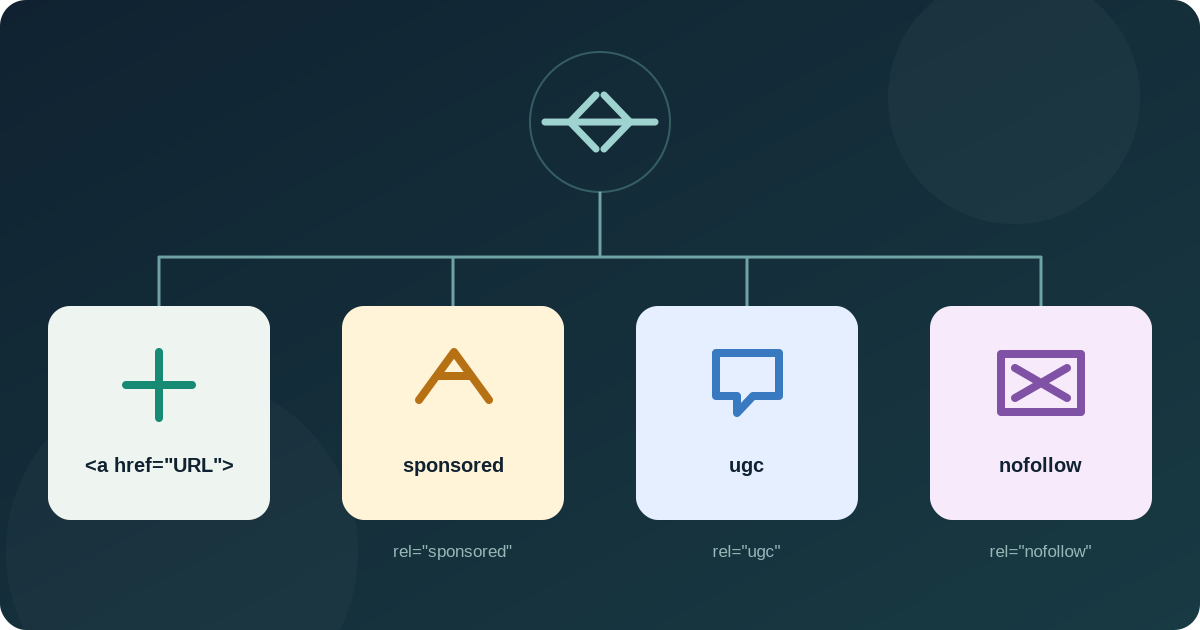
Google says an ordinary link that needs no qualification can have no rel attribute. For an advertisement or paid placement, Google prefers rel="sponsored"; rel="nofollow" is still an acceptable way to flag a paid link. For a link in user-generated content such as a comment or forum post, it recommends rel="ugc". Use rel="nofollow" when those other values do not apply and the publisher would rather Google not associate its site with, or crawl from it to, the linked page.[1]
Classify the particular placement, not the whole domain. An editorial link to a useful outside guide does not become sponsored just because the guide's organization sponsors something else. A user-submitted paid placement can warrant both ugc and sponsored. Ask the commercial or editorial owner to resolve a mixed case; this worksheet records that decision but does not decide advertising-disclosure obligations.[1]
Do not blanket every external link with nofollow. The reader may still need the link, and Google explicitly distinguishes regular links from links that need a relationship qualifier. Keep the visible label accurate and verify the destination independently of the search annotation. If no safe, useful destination is approved, remove the link rather than publishing it with a token.[1]
Inspect the rendered anchor
Inspect the published page's rendered HTML, not only the editor's saved value. A qualifying link should be a real anchor with href and the intended tokens, for example <a href="https://example.org" rel="sponsored">Visit the sponsor</a>. The HTML Standard defines rel on anchors as unique space-separated tokens; write a combination as rel="ugc sponsored". Google's page also describes comma-separated values for its own processing, but space-separated examples follow HTML syntax.[1][2]
A theme, plugin or component may strip, duplicate or override a rel value after the editor saves it. Compare the expected value in the worksheet with the actual anchor on an anonymous public page. Check a repeated component on more than one page when the template generates many links. Do not confuse an anchor's rel value with a sitewide robots meta directive, a CSS class, or target="_blank".[2]
Know what rel cannot do
Google says these qualified links will generally not be followed, yet the destination may still be discovered through a sitemap or another site's link and may still be crawled. The annotation is not an indexing block, a guarantee about rankings, or a way to hide a page. If the page is yours and should not appear in Google Search, decide on the appropriate page-level controls with the site owner; an outbound rel value on one link is not that control.[1]
The token also does not check whether the destination is secure, current or appropriate for visitors. A paid-link qualifier does not replace a visible sponsorship disclosure, a working URL, or any contract review. Keep link wording, accessibility, new-tab behavior and destination checks in their own release checks. If the actual site relationship cannot be established, mark it unresolved and hold that placement.[1]
Work through one mixed page
On a fictional event resources page, a staff-selected transit authority page is a regular editorial reference and needs no qualifier. A contracted sponsor card is a paid placement, so the rendered anchor uses sponsored. If readers can post comments, an outside link in a comment uses ugc. A compensated submission placed in that same public area may need both ugc and sponsored. These examples describe relationships, not a rule that every event site has comments or sells placements.[1]
Imagine the sponsor agreement ends but the link remains as a genuinely editorial resource. Do not automatically remove the qualifier on the end date: ask an editor to approve the new reason for keeping the link, verify the destination, and then update the recorded relationship and rendered markup. Conversely, an editorial link that becomes paid needs a fresh classification before the new placement goes live. The worksheet makes each change visible instead of silently inheriting an old template value.[1]
Release with a record and a retest
Before release, open the public page without editor access, follow each sampled link and record the final destination. Compare the actual anchor's rel tokens with the owner-approved decision. Check that its visible text still tells a visitor where it goes; the rel token is not a substitute for a clear label. Assign one person to correct template-generated errors and another to approve an unresolved commercial relationship if those roles differ.
Retest when the sponsor list, moderation policy, CMS template or destination URL changes. Keep a dated record of the source page, link text, final target, relationship evidence, expected and observed rel values, reviewer and outcome. A successful markup check establishes only what this published page rendered at that time; it does not prove how Google will rank a page or whether a linked URL can be found elsewhere.[1][2]
Sources and further reading
- Qualify your outbound links to GoogleGoogle Search Central · Accessed
- HTML Living Standard: Links created by a and area elementsWHATWG · Accessed