Conference speaker briefing pack template and checklist
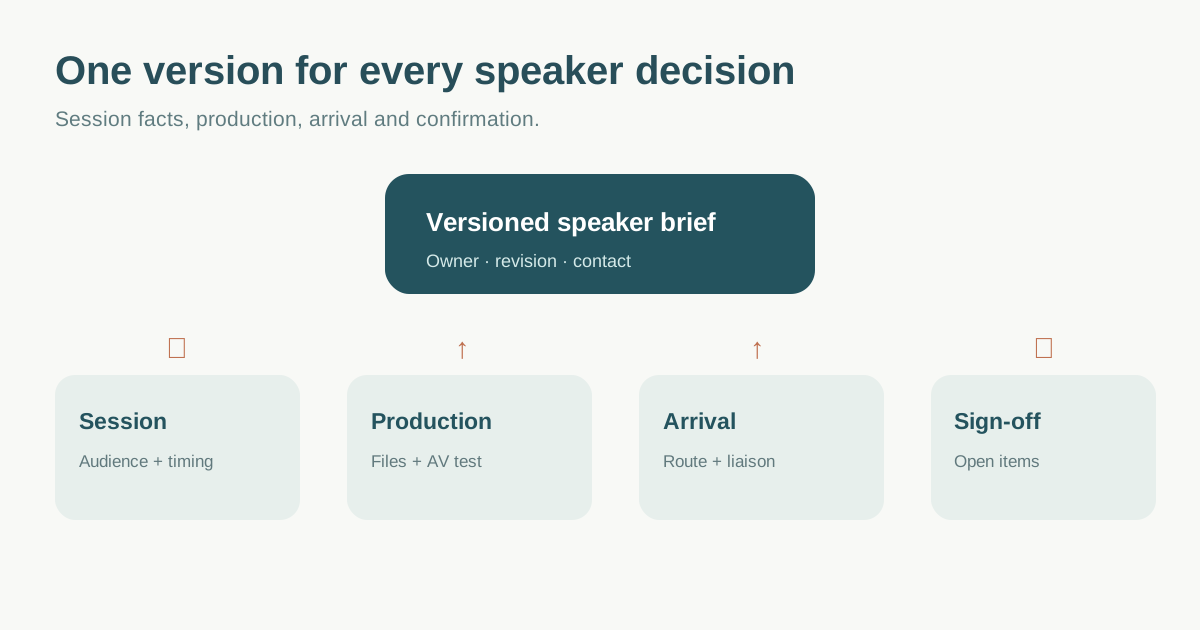
A confirmed speaker should not have to reconstruct their session from scattered emails. Give each presenter a short, versioned pack with the confirmed session facts, what you need from them, and who answers questions. This pack follows invitation and agreement; it does not replace either.
Boletolibre editorial team
Published
Separate the speaker brief from the coordination tracker
The first-ranking CheckFlow speaker coordination checklist spans outreach, agreement, logistics, content, event day and follow-up. A speaker-facing pack is narrower: it contains only information that helps one presenter prepare and arrive. Keep internal budget, other speakers’ private details and unresolved legal terms in the appropriate controlled record. Agnes Scott College’s speaker packet shows that event planning and recording/usage documents may be separate; do not assume a slide submission grants recording or distribution rights.[1][2]
Put decision-ready facts at the top
Start with event name, date, local time zone, address or secure joining link, room, arrival/check-in point, on-site and backup contacts. Then give audience type, event purpose, confirmed session title and format, start/end times, speaking minutes, Q&A owner, moderator, accessibility and interpretation arrangements, and how a schedule change will reach the speaker. MIT’s run-of-show template illustrates the value of named roles, contacts and timing fields; publish only the speaker’s relevant slice.[3]
| Pack section | What the speaker needs to know or supply |
|---|---|
| Session | Purpose, audience, approved title, format, duration, Q&A and moderation |
| Production | Microphone, screen ratio, video/audio/demo needs, file format and test contact |
| Materials | Bio, headshot permission, slide submission path, due date and revision process |
| Arrival | Entrance, check-in, green room if any, accessible route and named liaison |
| Change control | Version/date, who approves changes and how urgent updates arrive |
Use event-specific dates rather than an unsupported universal lead time. Ask the AV team which formats they can actually test and which upload channel is approved. Do not put personal accommodation requests or sensitive travel documents in a broadly shared pack.
Get an acknowledgment and close open questions
Send the brief after the core participation terms are settled. Request acknowledgment of the session facts and ask the speaker to flag conflicts, AV needs and accessible participation needs through the approved private channel. Track each requested item with an owner and due date. Before the event, compare the speaker’s copy, moderator cue and production run of show; update version and notify everyone affected if a time, room or format changes.
Make the speaker’s day-of contact easy to reach. A rehearsal or sound check can expose problems, but a pack alone does not verify the room, devices or files. Keep those checks in the event production workflow, and record the final accepted version.
Download the editable speaker briefing pack and sign-off checklist (Markdown, English)
Sources and further reading
- Conference Speaker Coordination Checklist TemplateCheckFlow · Accessed
- Speaker Event Checklist and Speaker PacketAgnes Scott College · Accessed
- Run of Show — Virtual EventsMIT Alumni Association · Accessed