Event accreditation zones: build an access matrix
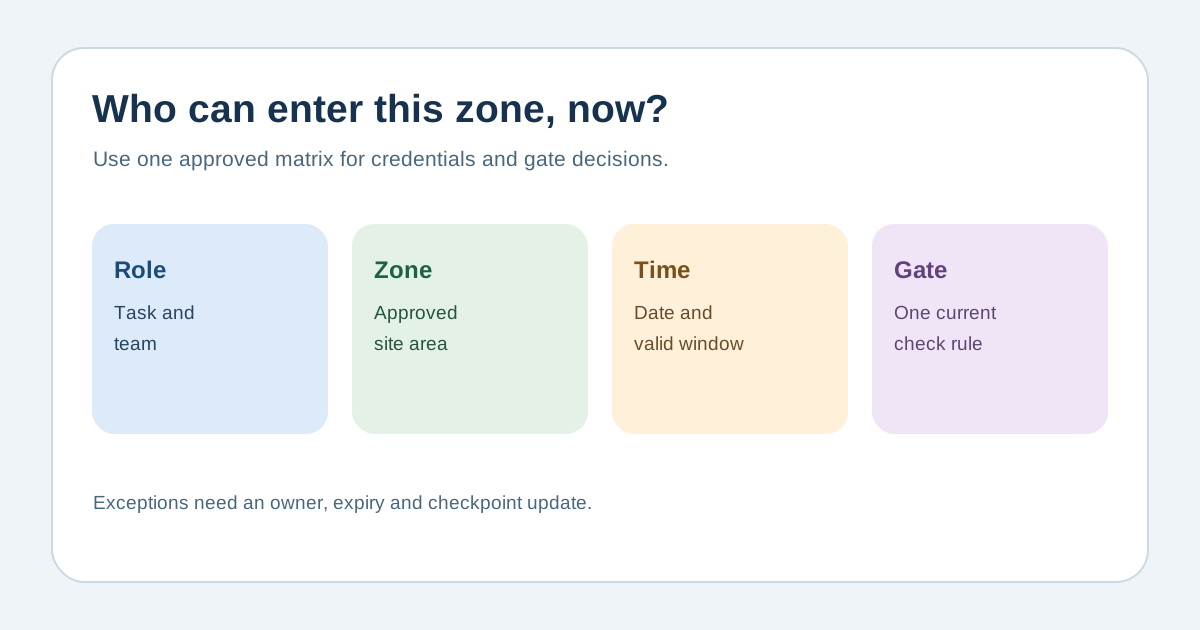
An accreditation badge should answer a practical question at each checkpoint: may this person enter this place now? Start with the approved site plan and the work people actually need to do. The editable matrix below keeps role rights, exceptions and gate instructions together without assuming a particular badge color or software.
Boletolibre editorial team
Published
Define zones from the real site plan
Download the editable role-by-zone access matrix (Markdown, English)
Name each venue and zone in words that staff can identify on a map: public area, production corridor, stage, press room, catering, vehicle gate or another event-specific space. Mark actual entry points and the person responsible for each. Have venue and safety leads approve the boundaries, circulation and emergency arrangements separately; an access badge never authorizes an unsafe route or overrides evacuation. Olympic event guides show how zone codes can be specific to one event, so do not copy a color or number scheme without checking it fits your site.[2][3]
Give roles only the access their tasks require
Create rows for staff units, vendors, performers, speakers, media, sponsors and invited guests only where relevant. For each zone, record allow, deny or conditional access, plus the dates and hours. A production supplier may need a load-in window but not a public-show pass; a speaker may need a green room but not the whole backstage. Include vehicle and equipment access separately when applicable. The matrix is a planning decision, not proof that a printed card, QR scanner or steward will automatically enforce it.[1][3]
Control exceptions and changes
Name who approves a one-person exception and how it is recorded, time-limited, issued and revoked. Avoid informal “all access” upgrades at a gate. When a role changes or someone leaves, update the source matrix, credential and checkpoint instructions together. Provide a denied-access escalation path that keeps guests away from restricted areas without asking stewards to improvise. Keep the smallest practical set of personal details in the working matrix and store identity records in the controlled accreditation system.[1][2]
Rehearse every gate against the same rule
Walk the site with the current matrix and test common and edge cases: correct role and time, wrong zone, expired pass, temporary exception, missing badge and an offline scanner. Confirm gate staff can read the credential, find the current rule and contact the right supervisor. Brief stewards on signage and safe routing; HSE guidance emphasizes clear direction and preventing entry to prohibited areas. Test that accessible routes, emergency access and crowd movement remain intact when a checkpoint is staffed. Record the version and date used at each gate.[1][2]
Sources and further reading
- Zone access matrix for venues and gatesAccredZone · Accessed
- Crowd controls inside the venueUK Health and Safety Executive · Accessed
- Accreditation pocket guideOlympic World Library · Accessed