Event backstage access and green room checklist
Backstage planning has two connected jobs: keep public circulation separate from production and give performers a practical place to prepare. A well-stocked room cannot compensate for a confusing entry route, and a secure door cannot compensate for inaccessible or unready facilities. Use the current venue plan and the performer brief to agree both.
Boletolibre editorial team
Published
Map people and zones before assigning passes
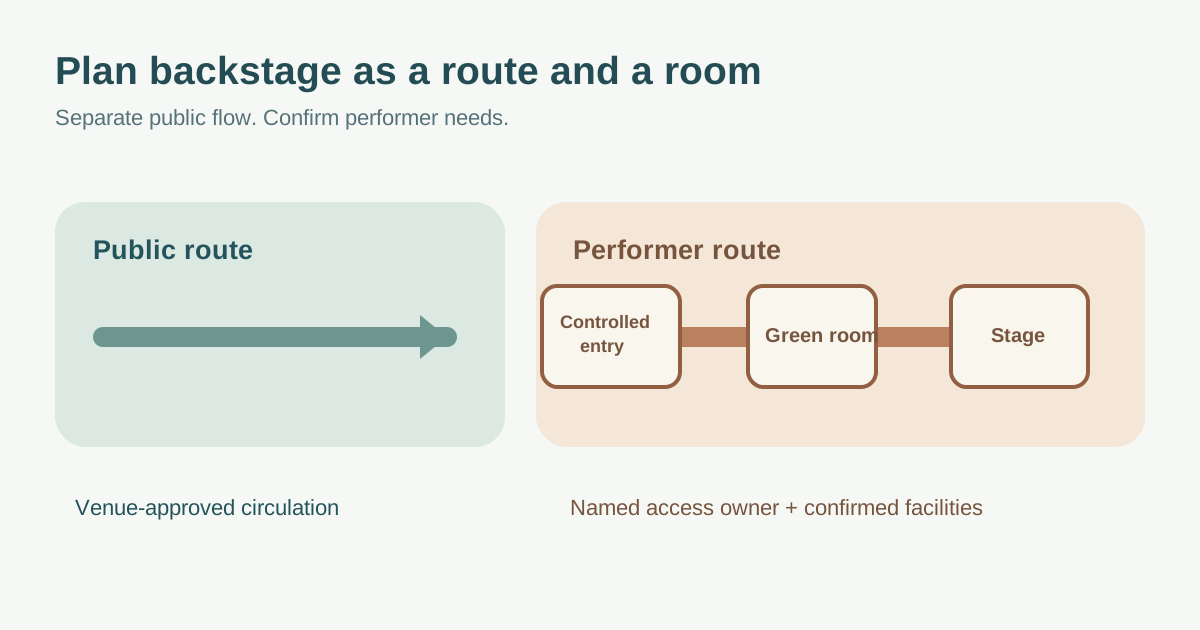
On the approved venue plan, label public arrival, performer arrival, green room or dressing room, stage access, production control, service route and exit. Trace the route each group actually uses. Identify places where a public queue could cross a performer or equipment route; resolve those with the venue and production lead. HSE advises site design that supports safe access and avoids crowd pinch points.[2]
| Zone | Who needs entry | Boundary and owner |
|---|---|---|
| Performer arrival | Booked performers and escort | Check-in contact and route to room |
| Green room | Performer and agreed support roles | Room host and door rule |
| Stage/technical area | Cue team and authorized production crew | Stage manager or technical lead |
| Public corridor | Attendees and public-facing staff | Keep backstage door off the guest route |
Define access by task and event phase
List the specific roles allowed into each zone, the period of access, who issues and retrieves credentials, and who handles a missing or disputed pass. Do not give every staff member backstage access merely because they work the event. Brief door staff on the approved list, escorted visitors and escalation contact. Physical passes are one possible control; a staffed check-in and named list may suit a smaller event.
Do a route walk with the venue: can a performer find the correct entrance, reach the room and move to the stage without entering a public queue? Confirm any step-free path and usable backstage facilities with the venue and the individual rather than assuming a public accessible route also serves the performer area. US ADA rules discuss performers and production staff reaching stage areas; applicable obligations depend on the venue and jurisdiction.[4]
Specify the room from real performer needs
Ask performers or their representatives about preparation, privacy, seating, lighting, mirrors, clothing changes, water, food and dietary needs. Record what the venue already provides, what must be hired, and who will set it up. The leading Google result covers welcome, schedule, seating, lighting, dressing, refreshments, quiet, connectivity and a room attendant; turn these into confirmed requirements rather than a universal shopping list.[1]
Provide the current call time, stage cue, rehearsal point and named contact where useful. Decide whether the room needs Wi-Fi, power or a live cue feed; verify each on site. Keep any personal dietary or access request with the smallest appropriate group and avoid posting it on a public wall. Do not leave medicines in an informal shared kit or make staff dispense them without an approved policy.
Run the boundary and room on event day
Before arrivals, check that the approved route is open, the door rule is understood, the room matches the brief, signs do not send attendees into restricted areas, and a host can answer performer questions. HSE calls for appropriate staff instruction and competent supervision around crowd controls; agree who can resolve a blocked route or pass exception.[3]
When a schedule, room or entrance changes, update the performer contact, door staff, stage manager and any printed or digital instructions together. At close, account for passes and shared equipment, remove temporary signs, and record unresolved items for venue handback. The worksheet below makes each boundary and facility decision auditable.
Download the backstage access and green room worksheet (Markdown, English)
Sources and further reading
- The green room checklistLive Group · Accessed
- Venue and site designUK Health and Safety Executive · Accessed
- Crowd controls inside the venueUK Health and Safety Executive · Accessed
- Americans with Disabilities Act Title III RegulationsUS Department of Justice · Accessed