Event assistive listening information checklist
“Assistive listening available” is too vague for an attendee choosing a session. This guide and editable room sheet connect the actual audio system to public information, equipment pickup, a sound check and an on-site contact. A listening system, live captions and interpretation serve different needs; describe each separately.
Boletolibre editorial team
Published
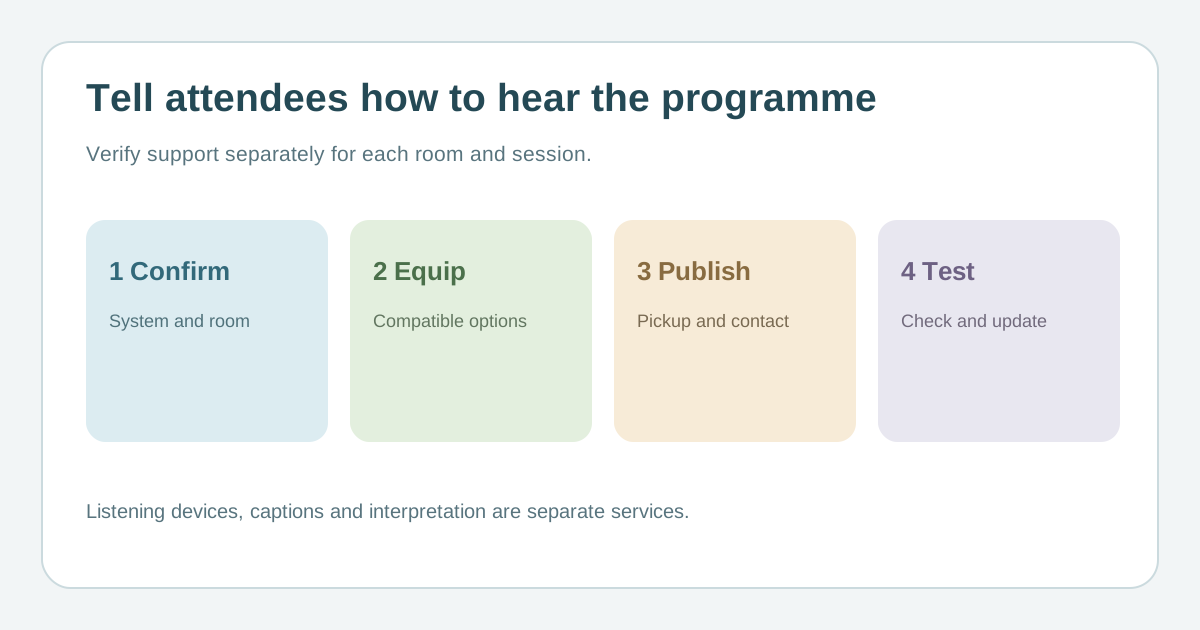
Confirm the system in each programmed space
Download the hearing-support room sheet (Markdown, English)
Ask venue and AV leads which rooms have a working hearing loop, radio-frequency, infrared or other system; identify the microphones and programme audio feeding it. Record the coverage area and whether breakout rooms differ. Never infer that a building-wide claim applies to every stage. Test the setup with the actual event configuration before announcing it.[1][2][3]
Check what a visitor can actually use
For each room, verify whether guests can use a compatible personal device or need a venue receiver, headphones, neckloop or another accessory. Compatibility depends on the specific system and hearing equipment, so avoid blanket promises. Confirm pickup point, staff owner, any reservation process, return route and what to do if equipment fails.[1][2][3]
Write a concrete attendee-facing statement
On the event and session pages, state the room, system type, available accessories, pickup location, whether advance notice is needed and a contact for questions. Put the same instructions in confirmation and on-site directions where useful. If a room has no verified system, say so and offer the event’s actual request route; do not hide the gap behind a generic accessibility label.[1][2][3]
Brief staff and update changes
Make the front desk and room lead aware of the equipment and troubleshooting contact. Include a pre-session check that the microphones and receiver path work. Track a room move, equipment fault or programme change and update public wording promptly. Captions or interpreters should be listed as separate confirmed services, not as an assumed substitute.[1][2][3]
Sources and further reading
- Accessible Event ChecklistUniversity of Southern California · Accessed
- Promoting Your Assistive Listening System, with ChecklistCenter for Hearing Access · Accessed
- Assistive Listening SystemsHearing Loss Association of America · Accessed