Sign-language interpreting for events: planning checklist
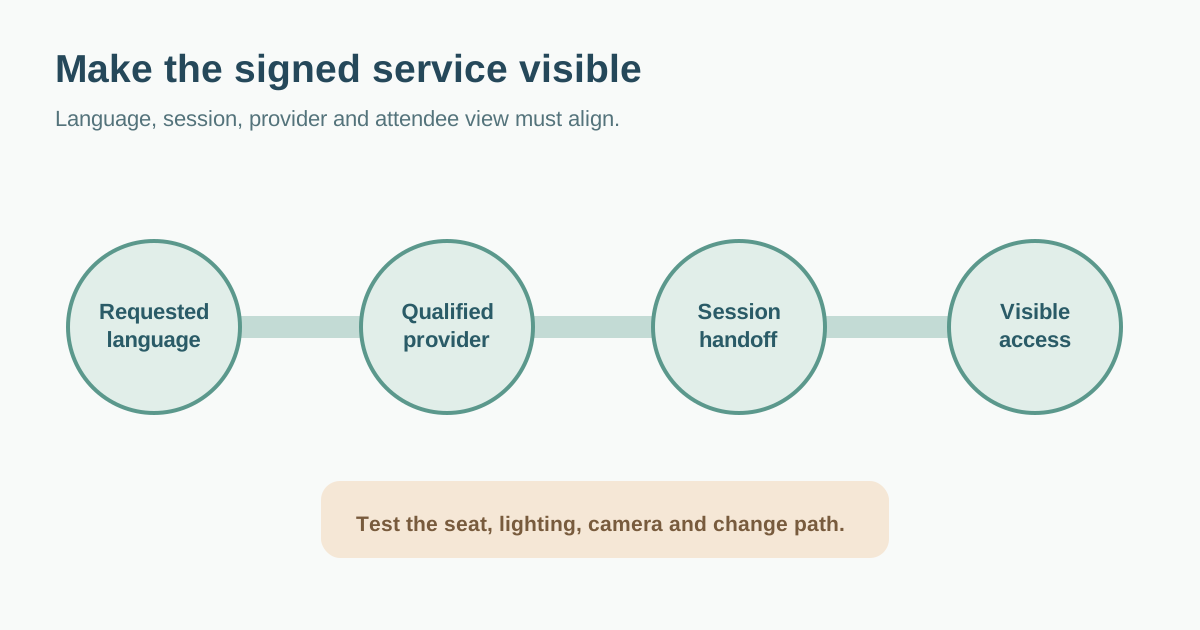
Booking an interpreter is only the first decision. The attendee must know which signed language will be provided, where to find the service, and whether they can see it from their seat or stream. The interpreter needs the run of show, terminology, access to speakers and a workable technical setup. Use the editable session matrix to connect those pieces before event day. Confirm individual communication preferences and the relevant local obligations with qualified accessibility staff; this is a coordination checklist, not a legal compliance certificate.
Boletolibre editorial team
Published
Confirm the language and access need
Name an accessibility contact on the event page and in registration. Ask what signed language and communication access the person uses, rather than assuming ASL, BSL or a national language from their location. Sign languages are distinct languages; W3C explains that captions and signed interpretation serve different needs. A request for one should not be silently substituted with the other.[4][3]
Map the actual sessions, Q&A, networking or stage movements that need interpreting. Do not promise coverage of a whole event if only one room or part of the schedule has been booked. The National Deaf Center encourages clear accommodation-request information and proactive interpreting and speech-to-text planning for large public events; adapt its U.S.-focused guidance to your audience and local requirements.[2]
Agree the service brief with a qualified provider
Give the provider the event date, venue, requested signed language, audience format, session schedule, spoken languages, room or stream, likely interaction, and point of contact. Consult the attendee about their language and communication preferences; the National Deaf Center cautions that provider skill and suitability vary. Confirm qualifications under the applicable local system rather than relying on a generic “certified” label.[3]
Ask the provider what preparation, team size, breaks, travel, remote connection, rehearsal and changes are needed for this assignment. Put those decisions in the quote and handoff. There is no universal number of minutes after which a second interpreter is required, or one lead time that fits every event. Agree coverage and contingencies with the provider well before you advertise it.
| Brief item | Write the event-specific answer | Owner |
|---|---|---|
| Language and format | Requested signed language; in-room, remote or stream | Accessibility lead + attendee |
| Session coverage | Exact rooms, times, transitions and Q&A | Program owner |
| Provider plan | Qualified interpreter(s), preparation, breaks and backup | Provider + accessibility lead |
| Access route | Seat/sightline, screen or stream view | Venue/AV lead |
| Changes | Who alerts interpreters and attendees | Stage manager |
Give interpreters useful content and a visible position
Send the agenda, run of show, speaker names, scripts or slides, acronyms, proper nouns and specialist terms as soon as they are ready. Tell interpreters when the speaker order or content changes. The first organic National Deaf Center checklist calls out agenda, scripts, speakers, placement, lighting and event contacts; this guide turns them into a session-level handoff so no room assumes another team has done the work.[1]
Walk the room with the interpreter and venue team. Check the view from the attendees’ seats, lighting on the interpreter, proximity to the speaker or screen, and where an interpreter moves for Q&A. For a stream or recording, test the camera framing and how the signed view remains visible in the actual player. W3C notes that small inset video can be hard to read, so test the real display size with the intended audience and provider.[4]
Rehearse the live handoff and fallback
At check-in, introduce the interpreter to the stage manager, AV lead and accessibility contact. Verify arrival instructions, backstage access, water and a place for belongings. Test the speaker feed, microphone or remote link, lighting, sightlines and stage cues before doors open. The National Deaf Center identifies each of these as coordination tasks; the precise technology and staffing depend on your event.[1]
Agree a signal for a late speaker change, a blocked sightline, a failed feed or a needed pause. Name the person who can stop or adjust the program and the person who tells attendees what is happening. Do not improvise a replacement communication service without consulting the attendee and qualified provider. Keep private accommodation details with the small team that needs them.
Explain coverage and check it during the event
Publish the signed language, covered sessions, how attendees request a suitable view, and the contact for questions. Avoid a vague accessibility icon with no language or schedule. If the interpreter is on a separate stream or screen, explain how to find it. Check from an actual attendee position that the service remains visible when people stand, cameras cut or lights change.
After the event, ask the provider and attendee contact what failed or changed, reconcile contracted hours, and update the next event’s brief. If the recording will be posted, decide separately how the signed view and captions will be preserved; a live arrangement does not automatically make the replay accessible. W3C treats sign-language presentation and captions as separate media features.[4]
Download the interpreter session and day-of handoff sheet (Markdown, English)
Sources and further reading
- Event Access Guidance: Sign Language InterpretingNational Deaf Center · Accessed
- Accommodations for Events & ActivitiesNational Deaf Center · Accessed
- Hiring Qualified InterpretersNational Deaf Center · Accessed
- Sign LanguagesW3C Web Accessibility Initiative · Accessed