Event catering requirements checklist and editable supplier brief
The caterer needs more than a guest count. The organizer needs to agree what food will be served, where and when, who supplies each piece of equipment, how special meals reach the right people and who can approve changes. A two-page catering checklist ranking for this query concentrates on event details and equipment quantities. This brief adds the organizer-to-supplier decisions that make those quantities usable on site.
Boletolibre editorial team
Published
Download the editable catering requirements brief
Download the event catering requirements template (Markdown, English)
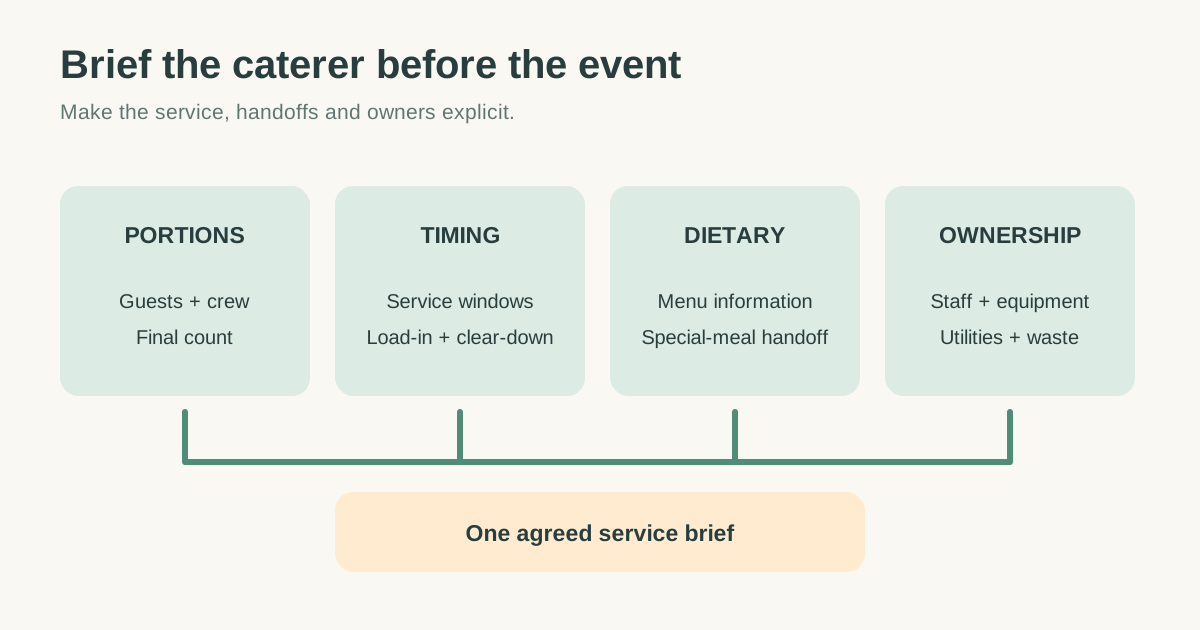
Copy the template for one event edition and complete it with the caterer. It provides five working tables: service facts; portions and menu; dietary and allergen handoff; ownership of staff, equipment and utilities; and final approval. It is a scope and communication tool, not a food-safety certificate.
Set the guest count, portions and service windows
Give the caterer the venue, service zones, format, arrival and food-service windows, last-service time, clear-down and loading access. Record the estimated guest count, who sends the final count and the actual deadline. Count staff or crew meals separately and state whether vendor meals are included. Do not assume one guest equals one portion for every course or station; agree the portion unit for each item.
| Decision | What to specify |
|---|---|
| Demand | Estimated and final quantities for guests, crew and special meals; who confirms changes. |
| Menu and format | Items or courses, plated/buffet/boxed service, beverage scope and substitutions. |
| Timing | Preparation, load-in, service, replenishment, last service and removal windows. |
| Place | Service points, back-of-house space, access and storage constraints. |
The leading printable checklist explicitly asks for event date, guest number, contact, address, start and breakdown time, and quantities for transport, service and cleaning supplies. Use those prompts, but assign an owner to each requirement rather than leaving an unowned packing list.[1]
Agree the dietary-information handoff with the caterer
Collecting an attendee request is only the first step. Agree when the organizer will send the minimum necessary dietary details, how the caterer will confirm the menu and ingredient information, who answers day-of questions, and how a special meal is identified and handed over without exposing a guest’s private details unnecessarily. Write down the fallback when a request cannot be met or a menu item changes. Do not declare a dish safe or allergen-free from an organizer spreadsheet.
The UK Food Standards Agency publishes allergen guidance for food businesses on information and handling, with an explicit England, Northern Ireland and Wales scope. Use it as an example of why the food operator must own its allergen process; local requirements and competent food-safety review govern the actual event.[2]
Put each service responsibility in one column
Specify whether the caterer, venue or organizer provides servers, a named service lead, tables, linen, crockery, hot or cold holding, power, water, cleaning and waste removal. Also record access credentials, loading contact and any equipment supplied by another vendor. If a responsibility is shared, define the handoff and acceptance point rather than marking both parties as owner.
Confirm who may authorize a changed menu, added portions, overtime or a price variation. Record the decision and changed quote before treating it as agreed. This keeps the catering brief aligned with the supplier delivery tracker and later invoice approval.
Confirm the final version and day-of acceptance
Send a versioned final brief to the caterer and venue contacts. Record the final count submission and acknowledgement with date and time zone, outstanding questions, day-of lead and backup. At setup, check service location, equipment and guest-facing menu information against the agreed brief; record deviations and who approved them. After the event, record the actual service and variations before reconciling the invoice.
This template does not set universal portion ratios, food holding temperatures, allergy guarantees or legal permit rules. The caterer and qualified local advisers must determine and document the controls that apply to the venue and food service.
Sources and further reading
- Catering ChecklistWebstaurantStore · Accessed
- Allergen guidance for food businessesUK Food Standards Agency · Accessed