Event creator partnership brief template: audience, deliverables and proof
An event creator partnership is a specific promotional assignment, not a follower-count purchase. The editable brief starts with who should attend and the action a viewer can take, then records the creator’s role, event-day access, deliverables, evidence and review owner. It does not decide contract terms or local advertising rules for you.
Boletolibre editorial team
Published
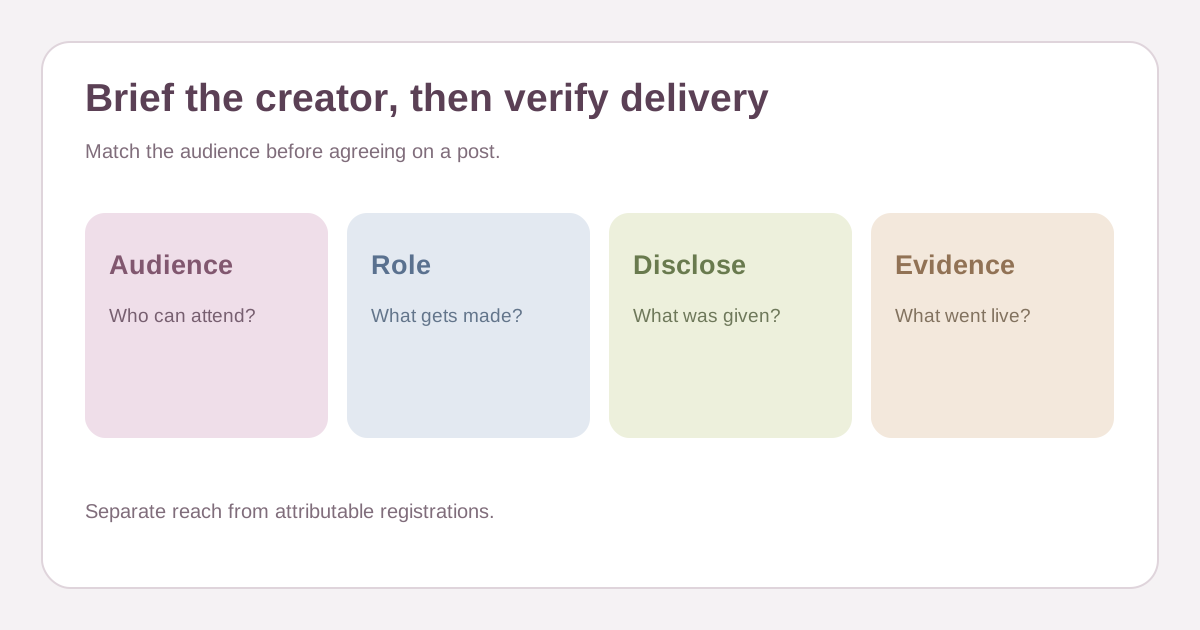
Start with audience and credible fit
Download the event creator partnership brief (Markdown, English)
Describe the audience that can actually attend: interests, location, language, accessibility needs and ticket decision. Ask for relevant audience and engagement evidence, examples of previous event coverage, and an explanation of why this creator is a credible match. A large audience outside the event’s region or interest may be less useful than a smaller relevant one. Do not equate views with registrations.[1]
Choose the role and on-site boundaries
Is the creator making assets for your channels, posting to their audience, or both? Record the approved event facts, access credential, arrival contact, restricted areas, filming expectations and attendee privacy process. Keep operational access separate from the promotional fee. If you want to edit, repost, advertise with or retain the work, have usage rights and third-party appearances reviewed in a written agreement.
Specify each deliverable and review point
For each post or asset, record channel, format, draft due time, publication window, event URL or trackable link, required accurate facts, accessibility needs, approval contact and correction path. Give creative latitude within factual and safety boundaries. Ask for draft approval only where the agreement provides it; do not quietly rewrite a creator’s independent opinion.[1]
Make the relationship visible to viewers
Paid fees, free admission, travel or other benefits can be relevant to how an endorsement is understood. US FTC guidance explains material connections and clear disclosure; requirements elsewhere vary. Agree on who checks each post and story for appropriate disclosure in its own language, and who requests correction. A tag, hidden bio or internal brief alone may not convey the relationship. Seek local counsel for the applicable rules.[2]
Compare delivered work with the agreed purpose
Collect links or screenshots as delivery evidence and a dated record of corrections. Ask for available reach, engagement and link data while noting measurement limits. Compare actual registration attribution only when the checkout tracking supports it, and keep that separate from estimated exposure. Close the brief with what was delivered, what was not, payment/rights questions for the contract owner, and what to change next time.
Sources and further reading
- Influencer Partnership ChecklistVirginia Tourism Corporation · Accessed
- FTC Endorsement Guides: What People Are AskingUS Federal Trade Commission · Accessed