Speaker promotion toolkit template for events
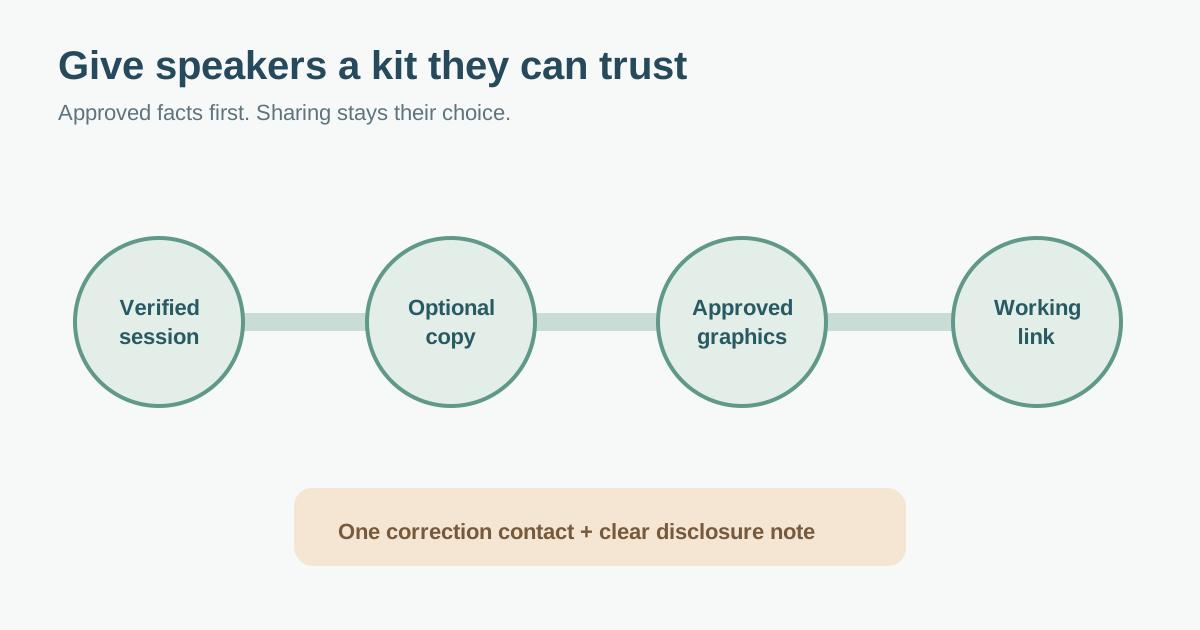
A speaker promotion kit is an optional, ready-to-use packet the organizer gives a confirmed speaker so they can share their session accurately. It is different from a speaker’s own bio or media kit. Make it easy to use without turning the speaker into an unpaid marketing channel: verify facts, offer editable copy in their voice, and make the ask and any commercial relationship clear.
Boletolibre editorial team
Published
Download the editable speaker toolkit
Download the speaker promotion toolkit and handoff sheet (Markdown, English)
The template has a speaker-specific fact card, links, sample posts and email copy, an asset list, approval and change fields, plus a distribution log. The direct Google first organic page bundles graphics, captions, a one-pager and timing; the organizer-owned Code for America Summit toolkit likewise offers graphics, templates and sample posts. Use those broad components, then tailor every item to the speaker and actual session.[1][2]
Prepare one accurate session card
Confirm the speaker’s preferred name, role, session title, date/time with timezone, room or viewing link, registration destination, price/eligibility if relevant, and contact for corrections. Ask the speaker to approve the bio, headshot, talk title and any attributed claims. Update the card when a slot changes and retire old graphics; a wrong date in a widely shared image is harder to correct than a webpage.
| Toolkit item | Organizer supplies | Speaker checks |
|---|---|---|
| Session facts | Approved title, time, timezone, location and link | Name, role, topic and availability |
| Copy | One short post, one longer note and editable email line | Tone, personal view and any claims |
| Graphics | Accessible dimensions, session name and alt-text suggestion | Photo permission and accurate identity |
| Tracking | Optional clearly labeled speaker link or code | Whether it is appropriate to share |
| Support | Contact, change alerts and withdrawal path | Preferred contact route |
Offer choices, not scripted endorsements
Provide a short announcement, a topic-first variation and a one-sentence email/newsletter blurb. Leave room for the speaker’s own reason to attend. Never put an invented “I am excited” quote in their mouth or require a positive recommendation. HeySummit’s summit template separates speaker-specific details, approved copy, assets and registration links; that structure is useful even for an in-person event.[3]
Example short post: “I’m presenting [verified session title] at [event] on [date and timezone]. We’ll cover [specific learning outcome]. Details and registration: [approved link].” Example topic-first post: “If you are working on [audience problem], join my [session format] at [event] on [date]. Here is the agenda and access information: [link].” Remove any sentence the speaker cannot stand behind.
Make graphics easy to adapt and safe to share
Provide a speaker card, a simple event banner and a logo or brand guidance only if you have permission to distribute them. Include both an image file and a text alternative with the key facts and destination link. Check that the image and the post do not disagree on date or title. Code for America’s public toolkit shows how sample social posts and graphics can sit together rather than being scattered across email attachments.[2]
Record the source and permitted use of headshots, photographs and sponsor logos. Do not assume a speaker gave broad rights simply by uploading a photo for the program. Give a contact for a replacement photo or an opt-out from promotional assets.
Send a small, current handoff
Send the packet after the session is confirmed, with one clear optional action and one link to the current toolkit. A reminder can follow when it is useful for the event’s schedule, but the first organic guide’s fixed posting weeks and reach targets are not universal benchmarks. Do not promise a particular impression or registration result.[1]
If you use tracked links, test that they lead to the same current event information as the public registration page. Explain what the link measures and avoid equating click or view counts with ticket sales. Track whether materials were delivered, corrected and used only to the extent speakers choose to share.
Handle paid or incentivized promotion openly
If the speaker is paid, receives perks or has another material relationship and their post is an endorsement, make the relationship clear in the post under the rules that apply to the audience and channel. The U.S. FTC says a disclosure should be visible and in the same language as the endorsement; that is U.S.-specific guidance, not a substitute for local review. Supply a disclosure note in the packet and ask qualified local counsel or the event’s advertising lead when the relationship or jurisdiction is unclear.[4]
Give speakers the final choice whether to post. A confirmed speaking slot is a program commitment, not automatic consent to publish promotional copy or a promise of social reach. If a speaker withdraws or the event changes, send a correction with the replacement link and ask them to update or remove old posts where possible.
Sources and further reading
- The Perfect Speaker Promotion Kit: Templates, Tools & Tactics for Maximum Event ReachI'm Attending · Accessed
- Speaker Promo ToolkitCode for America Summit · Accessed
- Speaker Promotion Kit Template for Online SummitsHeySummit · Accessed
- Disclosures 101 for Social Media InfluencersU.S. Federal Trade Commission · Accessed