Event emergency communication plan template: roles, channels and backups
An event needs a way to turn a verified incident into clear instructions for the right people. A generic search for this topic produced a family emergency plan; the focused special-event search led to the University of Houston’s venue-specific planning tools and sample PA scripts. This guide is a communications companion to your venue’s site-specific emergency plan. It does not decide whether to evacuate, where to shelter or when to restart—those decisions require the responsible local people and procedures.
Boletolibre editorial team
Published
Connect the communication plan to the actual site plan
Begin with the venue’s current emergency plan and the event’s risk assessment. Identify scenarios relevant to the actual event, such as severe weather, a venue incident, a controlled show stop or loss of the primary PA system. For each one, record the approved procedure and the person who can confirm its applicability. Do not paste a generic evacuation script into a venue you have not assessed. The University of Houston labels its venue emergency plan as venue-specific and supplies sample announcements; UK HSE likewise advises proportionate event emergency plans with clear roles, public information and a tested communications system. Their guidance is useful context, not a universal rule for every jurisdiction.[1][2]
- Use the current venue-specific emergency procedure.
- List only plausible scenarios for the event.
- Name local decision and responder relationships.
Assign authority and handoffs before an incident
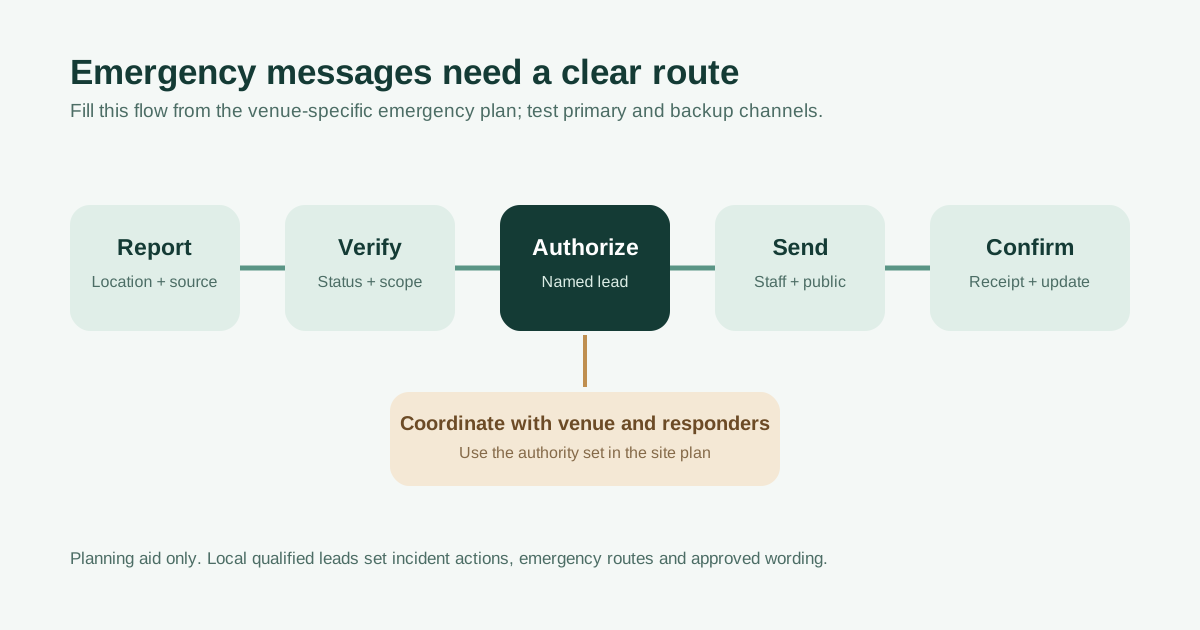
Give each step a named lead and substitute: who receives the first report, who verifies facts and location, who consults venue management and responders, who has decision authority under the site plan, who approves wording, and who sends it. The same person may hold several roles at a small event, but the handoff should still be explicit. Make an immediate emergency-services contact route available according to local arrangements; do not make urgent help wait for a routine communications approval chain. The downloadable CSV keeps scenario, authority, audiences, channels, acknowledgement, next update and open issues together. Confirm with venue and public-safety partners where their authority supersedes the organizer’s.
- Report → verify → authorize → send → confirm → update.
- A lead and substitute for each critical role.
- Urgent emergency contact route available.
Prepare message fields, not universal commands
Draft short fields for messages before the event: confirmed situation and location; action taken from the approved plan; audience affected; source or issuing authority; time of message; where to receive the next update. Have the venue and appropriate safety lead review any scenario-specific wording. A show-stop announcement may need to be pre-agreed with the performer, caller, PA operator and venue. Avoid speculation, promises about safety, or location instructions that have not been approved for that site. If facts are uncertain, say what is confirmed and when an update is expected. Keep separate versions for staff, public on site, and attendees who have not arrived.
- Verified facts and affected audience.
- Approved action and issuing authority.
- Time and next update point.
Provide primary and backup ways to reach people
Choose a staff channel and a public channel that actually work at the venue, then name backups. For example, radios might reach team leads while PA or trained staff relay a public message; if the PA fails, the venue may use another approved method. Do not assume SMS, social media or a mobile app will reach everyone or stay available during an incident. Record who operates each channel, its coverage, power needs and how recipients acknowledge receipt when that is practical. HSE recommends effective information flow among event staff and notes backup options such as spare batteries, additional radios and loud hailers, scaled to the venue. Coordinate public statements with responders where the site plan requires it.[3]
- Primary and backup channel for staff and public.
- Operator, coverage, power and receipt method.
- Coordinate changes with venue and responders.
Exercise the route and keep it current
Run a tabletop scenario with venue management, operations, front of house and the relevant safety or emergency-service contacts. Start from a report, then follow verification, authority, message approval, staff/public delivery, acknowledgement and the next update. Test actual radios, PA and backup methods before opening; check whether a substitute can take over when the primary decision lead is unavailable. Record the failed link and owner, revise the matrix, and brief all shifts. If the situation changes, issue a new verified message rather than allowing old wording to circulate. After an incident or exercise, compare intended and actual delivery and update the plan before the next event.
- Tabletop rehearsal and real channel checks.
- Record gaps with owners and due dates.
- Rebrief after changes.
Sources and further reading
- Special Event Emergency Planning ToolsUniversity of Houston Office of Emergency Management · Accessed
- Planning for incidents and emergenciesUK Health and Safety Executive · Accessed
- Crowd controls inside the venueUK Health and Safety Executive · Accessed