Event medical needs assessment template: brief the provider with facts
The organizer can describe the event, but should not invent the number of clinicians or the clinical response plan. Google’s leading result, guidance from East Midlands Ambulance Service, asks for an event-specific medical needs assessment and competent provider selection. This original worksheet helps an organizer gather the inputs a qualified provider needs. It is a briefing aid, not a medical staffing calculator or a substitute for local approval.
Boletolibre editorial team
Published
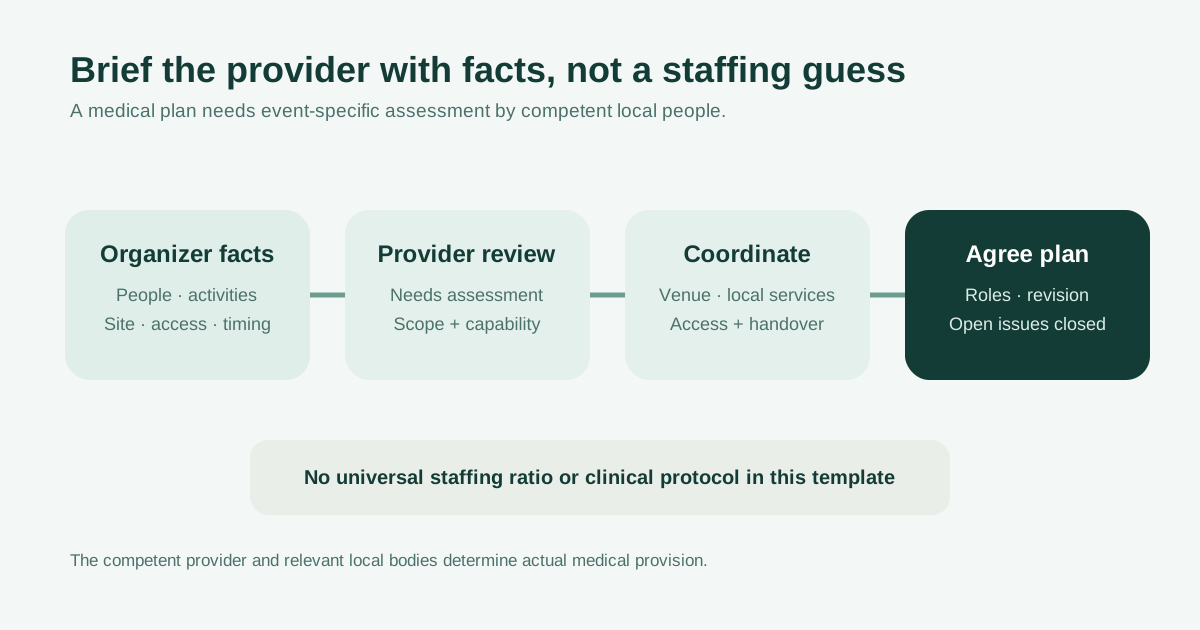
State the event and who makes the medical assessment
Record event type, location, dates, daily opening hours, build and breakdown periods, activities, expected audience profile and the organizer’s contact. Specify whether medical coverage is needed during setup and teardown as well as public hours. Give the provider the current event risk assessment and note what is still uncertain. East Midlands Ambulance Service’s regional guidance asks organizers to assess need, select competent cover, provide infrastructure and coordinate with local services. The UK HSE recommends including visiting members of the public in the first-aid and medical needs assessment. Both are UK sources; requirements elsewhere must be checked locally.[1][2]
- Event type, location, dates and all operating phases.
- Current risk assessment and open assumptions.
- Named organizer and provider contacts.
Describe people and activities at the busy moment
Give the expected peak number of people on site at one time, separately from total tickets sold across a day or weekend. Include staff, contractors and performers where relevant. Describe activities and foreseeable exposures: physical activity, age mix, alcohol, late hours, heat or cold, crowd density and site-specific hazards. Do not collect or transmit attendees’ individual diagnoses in a generic planning spreadsheet. Tell the provider what accessibility arrangements and language needs may affect finding and reaching someone who needs care. Record assumptions and uncertainty so the provider can challenge them.
- Peak concurrent attendance, not only total tickets.
- Activity and environmental exposures.
- Accessibility and language needs relevant to access.
Give the provider a usable site and access picture
Attach a current map showing public and staff entrances, medical space candidates, step-free routes, vehicle access, gates, remote zones, communications points and any traffic restrictions. Explain the venue’s existing equipment and services, who controls rooms and routes, and how incident reports reach the medical lead. Ask the provider to inspect difficult access points rather than relying on a pin in a map. Coordinate emergency vehicle routes and transfer arrangements with the venue and relevant local services; an organizer’s map does not guarantee a route is usable or approved.
- Current map and route constraints.
- Medical space, power, water and privacy questions.
- Emergency service liaison and transfer interface.
Ask for a provider proposal and local coordination
Request that a competent provider return its own needs assessment and proposed staffing, qualifications, scope of care, equipment, supervision, communications, recordkeeping and transfer interfaces. Ask for evidence of suitability, insurance where applicable, named operational lead and coverage across build, public event and breakdown. Clarify which party supplies space, water, power, privacy, access and transport support. The downloadable CSV separates organizer facts from provider assessment and open questions. Do not choose a fixed first-aider ratio from a general blog; clinical provision depends on the event and local system.
- Provider's assessment and proposed capability.
- Credentials, scope and named lead.
- Unresolved service/infrastructure responsibilities.
Agree the final plan, then keep it current
Review the proposal with the venue, qualified medical provider and relevant ambulance, health or permitting contacts required for the location. Resolve gaps in site access, transfer, staffing handovers and escalation before the event. Store an approved version with named leads and a method for updating it if attendance, activities, weather exposure or layout changes. Brief event staff on how to summon medical help without sharing unnecessary patient details. After the event, ask the provider for an appropriate operational debrief while respecting clinical confidentiality. This worksheet does not provide treatment instructions.
- Venue and local service review where needed.
- Version, sign-off and change triggers.
- Staff briefing without patient data.
Sources and further reading
- Guidance on Event Medical CoverEast Midlands Ambulance Service NHS Trust via Derbyshire Prepared · Accessed
- Planning for incidents and emergenciesUK Health and Safety Executive · Accessed