Outdoor event severe-weather decision matrix: set triggers before show day
Weather plans fail when teams wait until a storm is visible to decide who can pause the event. Google’s leading decision-matrix result recommends comparing hazards with key event moments and preplanned measures. This original worksheet makes that decision trail explicit, without inventing one wind, lightning, rain or heat threshold for every site. A qualified local team must set the actual criteria and protective actions.
Boletolibre editorial team
Published
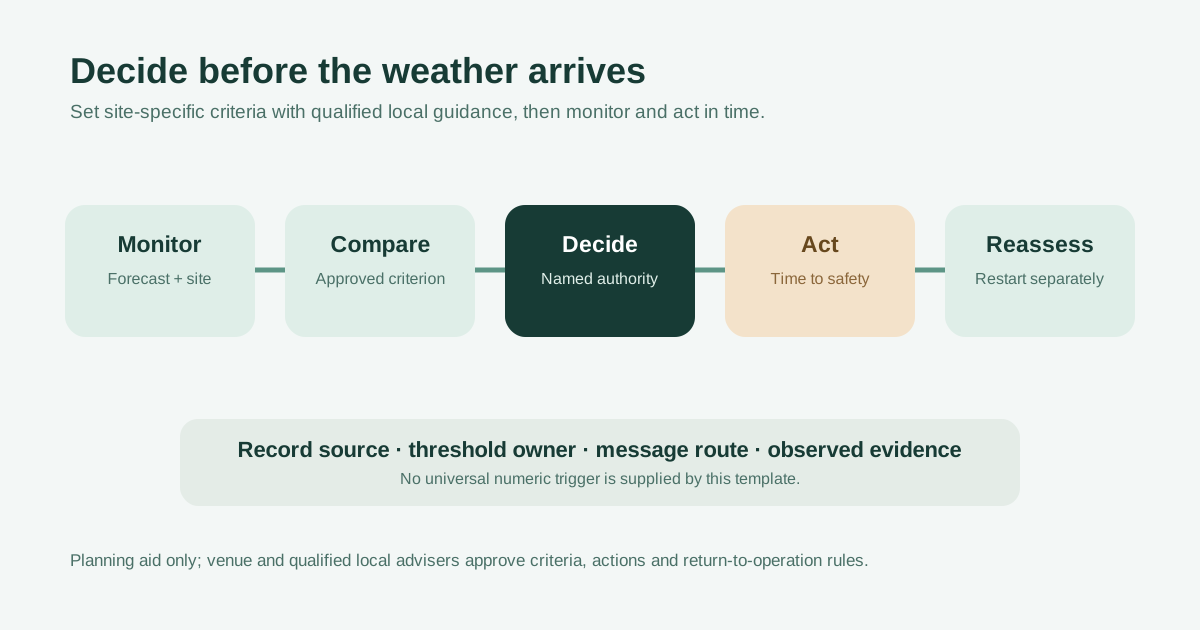
Identify weather hazards by site and event phase
Review the actual site, season, audience, temporary structures and approved shelter or evacuation options. List relevant hazards—lightning, wind, heavy rain or flooding, heat, cold, snow or other local threats—and the phases when each matters: before build, before doors, during the show and during load-out. Use official local forecast and alert sources as inputs, plus competent on-site observation. The Event Safety Institute describes a matrix across weather types and benchmark moments; the US National Weather Service Event Ready Guide asks which hazards can affect the event and how people can be alerted and moved to safety. Their examples support planning, not universal thresholds.[1][2]
- Assess hazards for build, doors, live event and load-out.
- Use local official alerts and competent site observation.
- Link each row to the current venue plan.
Get qualified approval for observable action criteria
For each hazard and phase, have the venue, appropriate weather adviser, safety lead, temporary-structure supplier and local authority or responder partners agree on a measurable criterion, its units, source, action and owner. A criterion could refer to an official alert, a forecast condition, an observed condition or an equipment limit, but its exact value must come from those responsible for the site. Record which plan version approves it and when it was last reviewed. Do not copy a number from another festival; structure ratings, shelter capacity and local geography differ. The downloadable matrix deliberately leaves threshold cells blank.
- Criterion, units, source and action approved by named parties.
- Structure and shelter limits checked locally.
- Blank values stay unresolved, not assumed safe.
Include the time needed to warn and move people
Work backward from the time needed to notify staff and attendees and get them to the approved place before conditions reach the unsafe state. Confirm realistic movement time on the actual routes and the capacity of the destination with qualified leads. Decide who continuously watches forecasts and on-site conditions, who covers that person, and how a changing alert reaches the decision-maker. The US National Weather Service urges outdoor organizers to identify shelter locations, monitor weather, define communications and decide how much advance notice people need. The action point may need to precede the peak hazard.[3]
- Measure communication and movement time.
- Name monitor and substitute.
- Test routes and channels before opening.
Assign the decision and record the evidence
Name who may postpone, pause, stop or cancel under the event and venue plans, and who coordinates with public authorities. The monitor reports the observed value, source, time and trend; the authorized lead records the decision and triggers the approved communications plan. If a source conflicts with on-site observations, escalate through the agreed process rather than quietly ignoring either. Keep the matrix accessible offline if network access is uncertain. For fast-developing threats, staff should follow the approved immediate-action procedure and contact emergency services under local arrangements; a spreadsheet must not delay urgent protection.
- Record source, observed time, decision and authority.
- Trigger the approved staff/public message.
- Escalate conflicting evidence.
Treat restart as a new decision
Do not treat a paused event as automatically ready to restart when one reading improves. Require a fresh assessment of weather, site conditions, equipment, routes, staffing and instructions from the responsible venue or authorities. Record who authorizes restart, the evidence and the message sent to staff and attendees. Rehearse the decision chain before the event, review false alarms and missed signals afterwards, and revise the matrix whenever the site layout, structures, forecast source or local requirements change. This worksheet supports a site-specific emergency plan; it is not a weather forecast or safety certification.
- Check conditions beyond the weather reading.
- Name restart authority separately.
- Rebrief after any change.
Sources and further reading
- Decision Support Matrix helps prepare for severe weatherEvent Safety Institute · Accessed
- Event Ready GuideUS National Weather Service · Accessed
- Weather Safety for Outdoor EventsUS National Weather Service · Accessed