Event production master schedule and handoff template
A planning timeline tracks decisions made months out; a run of show controls live cues. The production master schedule joins the work that must happen between first site access and accepted handback. It lets an organizer see which team is waiting for another, who releases each area and which version everyone is using. The editable worksheet is a coordination record, not approval to perform specialist work or open a venue.
Boletolibre editorial team
Published
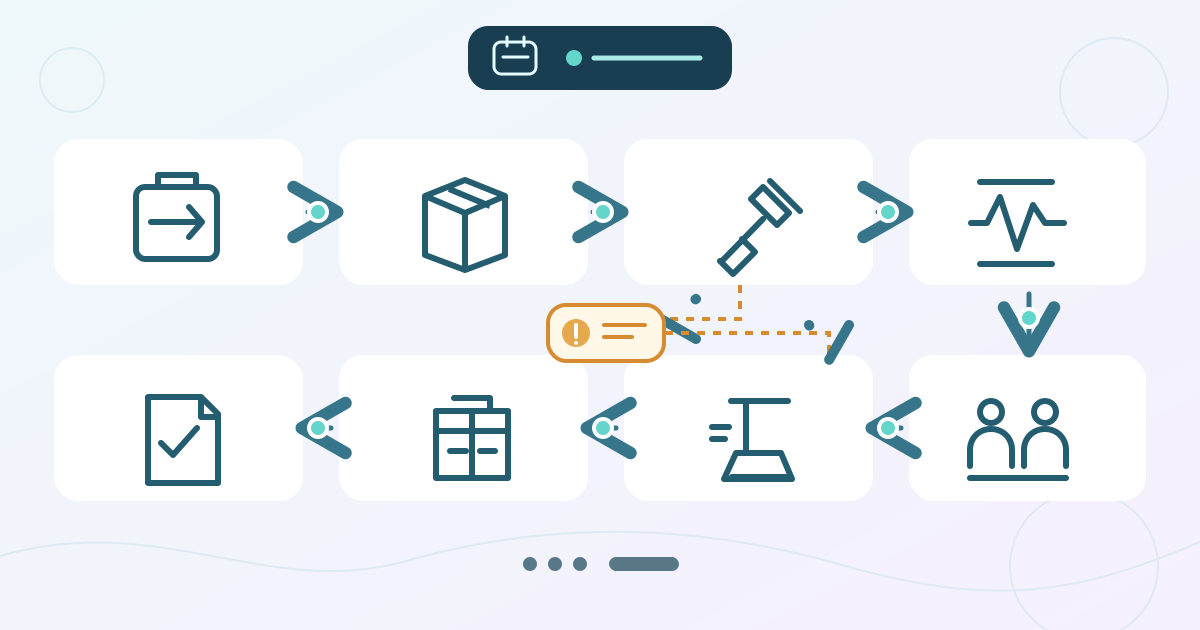
Give the master sheet one job
Download the editable production master schedule and handoff register (Markdown, English)
Use this sheet as the common index for on-site work, not as a replacement for a supplier method statement, dock appointment list, technical cue sheet or venue handback form. The long-term project timeline can point to it, but should not carry every truck, test and room transition. The run of show remains the detailed instruction for speakers, front of house and technical cues once the audience is present. Link those documents by title, owner and revision in the master register so a changed show cue does not silently rewrite a dock slot.
City of Perth guidance distinguishes a production schedule for bump-in and bump-out from an event-day run sheet, and lists dates, times, locations, actions and responsible people. Camden Council likewise describes a running sheet that joins production, event timing, locations and program details. Use that separation as a practical document boundary, while following the actual venue's required format and approval process. The worksheet adds dependency, receiving owner and release-reference columns because an organizer needs to know when a work area can pass to the next team.[1][2]
Collect the approved inputs before assigning time
Gather the latest venue access window, location plan, supplier delivery and installation plans, technical-check plan, rehearsal call, public opening time, live run of show, collection windows and handback agreement. Confirm the document owner and the person authorized to change each input. A supplier's proposed start is not automatically a confirmed slot; keep requested and approved windows distinct in the underlying plan. If a source document is missing or contradictory, mark it unresolved in the source register rather than filling the master sheet with a plausible time.
Choose one local time zone and include the full date on every row, especially when work crosses midnight. Name rooms and work zones as the venue does. The same word, such as 'lobby,' can refer to a different area in a catering plan and a security plan. Give the master schedule a source register showing each current plan's revision and owner. If the room plan changes, the editor can identify every dependent row and notify the leads who use that location.
Write work packages that can be checked
Write one row for an outcome another team must recognize: 'registration furniture placed in Hall B' is checkable; 'prepare registration' is not. Use a stable row ID, phase, date, planned start and end, exact location, action, performing owner, predecessor, required release condition, receiving owner, evidence reference and status. Keep the action at the level of a work package. The AV supplier's internal test sequence belongs in its own plan; the master row records the agreed completion signal and who receives it.
Add a row for a check, approval or transfer when that is a real prerequisite. For example, a room reset may finish physically while the incoming session lead has not accepted the new layout. Keep those states separate. Hastings Borough Council's event-plan template uses date, task, start, finish, resources or responsible people and notes for a production schedule; the additional columns in this worksheet are organizer prompts, not an official universal form. Do not prefill task durations from another event. Ask each performing lead for a realistic window and ask the receiving lead what they need before starting.[3]
Make the receiving team visible at each handoff
For every boundary between teams, identify the party releasing the work, the party receiving it and the evidence or reference they will use. A supplier saying 'done' may mean its crew has left; the next team may still need a clear work area, an approved inspection or a final asset version. Write the required condition in plain words approved by those parties. The organizer records the decision and reference, but the qualified venue or supplier lead makes any technical, safety or accessibility determination.
Use statuses that convey reality: planned, in progress, awaiting acceptance, released, conditional or held. If a handoff is conditional, name the open item, owner, next update and affected row IDs. An unanswered message is not acceptance. When a person changes shift, transfer the active rows and contact path to a named replacement, then record who acknowledged receipt. This avoids a schedule that still names someone who left the site while work remains open.
Find conflicts while the schedule can still change
Lay out the rows against the approved venue windows, then look for collisions. Two suppliers may require the same dock, lift, room, power check or escort at the same time. One task may assume an area is empty while another still occupies it. Highlight those conflicts rather than relying on a narrow time buffer to make them disappear. Have the venue and affected leads choose a revised order; the worksheet does not grant access or define safe occupancy.
Check the path into the public opening separately from the path into rehearsal. Ask which technical elements must be available for rehearsal, which guest-facing areas must be accepted before doors, and who owns each release. Backward-plan from those actual anchors and from the agreed venue handback time, without inventing a universal duration. If rehearsal finishes late, determine whether the next dependent check has its own time and owner rather than treating every remaining row as complete by implication. A simple visual lane by work zone can expose overlaps that a chronological list hides.
Review the draft twice: first by time, then by place and scarce resource. The time view catches a predecessor ending after its successor begins. The place view catches two crews assigned to the same room or lift even when their work packages appear in different phases. For a multi-room event, keep separate chains that meet only at shared milestones, such as a common door decision or handback. A room can be awaiting acceptance while another is released. Mark the boundary on the sheet rather than coloring the entire event green. During a review call, ask each lead three questions: What must be ready before your team starts? What result will you hand to the next team? Who can confirm that result if you leave? Record answers that remain uncertain as open inputs with a due owner. An empty dependency cell is not proof that a task can run independently.
Treat rehearsal and guest opening as separate releases
A rehearsal is a test of show content and coordination, not a declaration that the whole venue is ready for guests. Keep rehearsal complete, technical issue resolution, front-of-house setup and venue-approved pre-open checks as separate rows where the event needs them. The responsible leads decide whether each condition is met. The organizer then records the release decision and tells the teams who rely on it. If opening is conditional or held, make the status and next update visible in the master sheet and the event's approved communication path.
The run of show should link from the show-day block, not be pasted cue by cue into this sheet. Its caller may need a revised guest-opening time, while supplier leads may need a changed work-zone release. Tell each audience which version affects them. Keep personal contact information in the restricted crew directory if that is the approved practice; a broadly shared production sheet usually needs roles and agreed contact channels, not every worker's private number.
Walk one change through the master sheet
Imagine a conference with a plenary room and a breakout room. A staging supplier has a confirmed morning delivery to the plenary. The same lift is later booked for breakout furniture. The AV lead needs the plenary area released before a technical test; the rehearsal lead needs the completed test. Put each cross-team outcome on a row and link the predecessor IDs. The supplier's exact unloading sequence remains in its own delivery plan, and the AV test steps remain with the technician. The master sheet merely shows which agreed result releases the next team, at what location and who will receive it. A glance at the rows should expose that the lift cannot serve both deliveries at once.
Now suppose the staging delivery is delayed. Record the operator-confirmed status and actual arrival when known; do not replace the planned time with a guess. Follow the linked rows. The furniture supplier may still use its approved lift slot, but the technical test may need a different window, which could affect rehearsal. Ask the venue lead about lift access, the AV lead about test availability and the rehearsal lead about room use. Each lead confirms or rejects a revised window under their own authority. The editor issues a new master revision showing only the approved decisions and the rows still on hold. Tell the receiving teams which old version is superseded, and keep the current public schedule separate until any attendee-facing change is actually confirmed.
If a specialist check is still open at the next handoff, write 'awaiting acceptance' rather than 'ready' and name the person expected to answer. If the venue allows the breakout room to proceed while the plenary remains held, the sheet can show those two states at once. It should not collapse a multi-room event into a single all-or-nothing traffic light. The same method works during strike: one area can be released for its approved collection while another remains occupied, provided the venue and affected suppliers have accepted that separation. These are illustrative coordination decisions, not instructions to approve a specific route, electrical system, structure or room capacity.
Revise the whole chain when one row moves
Put a revision ID, issue date and time, editor and distribution list at the top. Before issuing a working version, ask the venue and each supplier lead to confirm the rows they own, the dependencies they receive, and the proposed handoff condition. Record a missing acknowledgment as open. Share a short change bulletin when a new version replaces the old one: changed row IDs, old and new windows, reason, decision owner and affected teams. Retire printed and saved copies according to the team's document-control method.
When a delivery or test slips, do not only edit that one timestamp. Trace its successor rows: work-zone access, other deliveries, technical checks, rehearsal, doors and strike if affected. Ask the relevant owners whether they can absorb the change or require a new decision. Record actual start and finish beside planned times so the team can distinguish forecast from observation. If the approved plan changes, link the new source revision. The master schedule is useful precisely because it shows the ripple effect before staff announce an unconfirmed new time.
Keep distribution useful to each lead. The venue needs the master sequence and current room or access decisions; a supplier needs its own rows plus the handoffs that affect it; the show caller needs the agreed guest-opening status and a link to the live cue sheet. Send the full controlled version to designated leads, with a short bulletin identifying the changed rows. Ask recipients to acknowledge the revision and say which copy they will use on site. If staff rely on printed sheets or have unreliable connectivity, agree where the latest version can be checked and how superseded pages are withdrawn. Do not bury a critical hold in a chat message that another shift will never see. Keep the master register and the detailed source plans synchronized through their named owners, rather than allowing one editor to silently rewrite a supplier's technical plan.
Close the working record after strike
Before guests arrive, ensure strike has real work packages rather than a single 'breakdown' row. Link the live-show close or guest-area release to the supplier-specific removal plans, pickup slots, inventory return, waste handling and venue walk. Let the responsible venue and specialist leads set the sequence and any technical release. The master schedule records when each plan's prerequisite is met and who has accepted the next stage; it does not direct dismantling or override a site rule.
At the end, record actual completion times, the handback reference, outstanding items, owner and agreed follow-up route. Do not mark the overall work 'complete' because the last truck has left if the venue still has open exceptions. Preserve the controlled final version and change notes where the organizer keeps operational records. For the next edition, compare planned and actual windows and discuss repeated conflicts with the responsible teams. The sheet is most valuable as evidence of what was communicated and accepted, not as a claim that every venue, supplier or safety requirement was satisfied.
Sources and further reading
- Event planning guidelinesCity of Perth · Accessed
- Preparing an event planCamden Council · Accessed
- Event management plan template and guidanceHastings Borough Council · Accessed