Event sanitation service checklist: brief a restroom supplier and manage the site
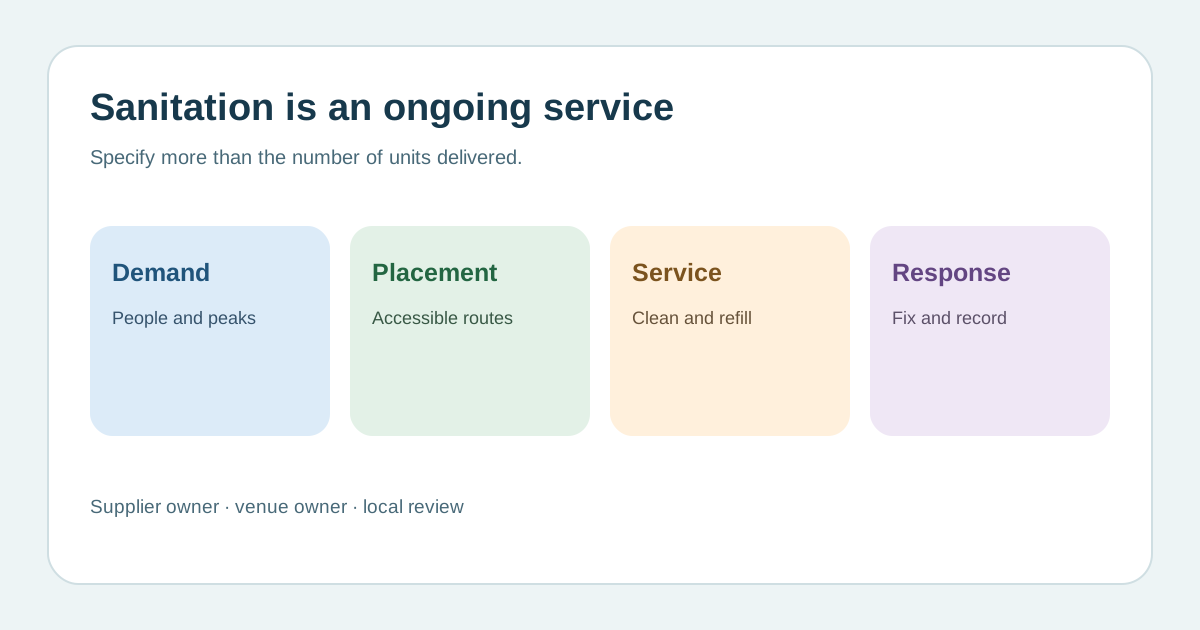
Restroom planning is a service that must work throughout the event, not just a delivery count. This original brief helps an organizer compare the venue’s existing facilities with temporary supply, assign upkeep and record what the local authority or competent venue lead actually approves. Attendance, duration, food service, access and placement all affect the discussion; no universal unit ratio replaces local review.
Boletolibre editorial team
Published
Describe demand and existing facilities
Download the editable event sanitation service brief (Markdown, English)
Record expected attendance by time block, event hours, staff and contractor periods, food and drink service, accessible needs and any overnight use. Map permanent toilets and handwashing before asking for temporary units. Ask the supplier and venue how capacity, peak queues, water, power, drainage and local requirements affect the proposal; do not apply a universal toilets-per-guest formula. Keep worker welfare in scope separately: UK HSE guidance identifies washing, toilet and rest facilities for workers.[1][2]
Check placement and access before approving a quote
Mark each facility on a site map with attendee and staff paths, lighting, wayfinding, level ground, servicing access and separation from sensitive areas. Check accessible toilets and continuous accessible routes with the competent local reviewer. The US DOJ temporary-event guidance illustrates how accessibility extends to portable facilities and routes, but its rules are jurisdiction-specific. Confirm the service vehicle can reach units without crossing an active audience route or blocking emergency access.[4]
Make cleaning and replenishment an operating service
Specify who opens, inspects, cleans, replenishes soap and paper, empties tanks, removes waste and closes the facilities. Agree a check frequency based on actual demand and supplier capacity, then increase checks when queues, spills or supplies warrant it. Give the crew a reachable supervisor and a record for location, observed issue, action and completion time. Do not let an “included maintenance” line in a quote stand in for named work and a fault response.[1]
Confirm local adequacy and rehearse faults
Ask the venue or authority responsible for the site what sanitary provision and waste handling are required, and record its decision or conditions. HSE notes that public toilets at events can fall under other local bodies, while its worker welfare guidance addresses employees; Dover council explicitly asks organizers to consult its local advisory group. Check a blocked accessible toilet, missing water, full tank and late servicing scenario with the supplier. Assign a temporary alternative and attendee notice route; revise the brief when capacity or site layout changes.[3][5]
Sources and further reading
- Sanitation Planning Checklist – InfographicMr. John Portable Toilet Rental · Accessed
- Employee welfare at eventsUK Health and Safety Executive · Accessed
- Event safety frequently asked questionsUK Health and Safety Executive · Accessed
- ADA Guide for Small Towns: Temporary EventsUS Department of Justice · Accessed
- Event Planning: Sanitary FacilitiesDover District Council · Accessed