Event scope change log template: review a request before it changes the plan
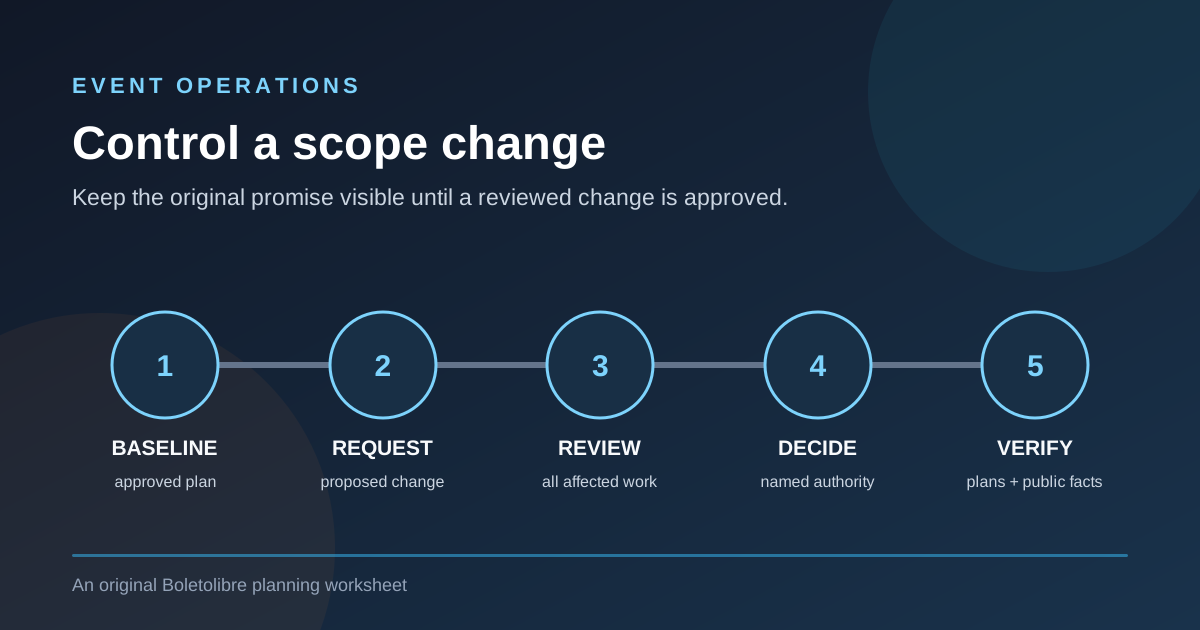
A new room, earlier door time or added ticket category can sound small in a meeting. Each can change what attendees were promised and what staff or suppliers must deliver. Use this free worksheet to compare the proposed change with the approved event plan, record the decision and verify the update.
Boletolibre editorial team
Published
Download the editable change log
Download the event scope change log (Markdown, English)
The Markdown worksheet contains a change register and a repeatable impact-assessment card. Copy it for one event, add a stable ID for each request and keep the current approved brief, budget, programme and public page version at the top. The fictional example is a prompt, not a recommendation to add a room.
A decision log preserves why a choice was made. This change log starts earlier: it records a requested departure from the baseline, the consequences of approving it and the work needed afterward. Keep contract terms and personal details in restricted files; link to them from a shared row.
Start with the approved baseline
Write the current commitment and proposed state side by side. Name who requested it, why it is needed, when a decision is required and what happens if the team does nothing. A vague entry such as “improve the programme” cannot be assessed. “Add a second simultaneous workshop in Room B” can.
Treat the existing plan as an option. Do not let a proposal silently become a supplier order, an attendee announcement or a website edit. Record a status such as requested, assessing, approved, rejected, deferred, implementing or verified.
- Stable change ID, requester, current commitment, proposed state and decision deadline.
- Named reviewers, evidence, unknowns and effects on attendees, operations, cost and timing.
- Decision authority, implementation owner, affected plan versions and final verification.
Assess every affected commitment
Ask the people who own the affected work to review the same request. Compare attendee information and ticket entitlements, access and venue operations, programme and staffing, supplier scope, cost, payment timing, schedule and dependencies. Record evidence and uncertainty, including an estimate that is still waiting for a written quote. The Association for Project Management describes change control as capturing, evaluating and deciding requests against an approved baseline.[1]
A change that affects site layout, crowd movement or another safety arrangement needs the venue and competent responsible people to review it under the approved local process. This worksheet does not approve a safety plan. Separate a commercial decision from the specialist signoff required to carry it out.
Decide, assign and communicate
Name the person or body authorized to approve the change. Record approve, reject or defer with date, reason and evidence link. Only after approval should the implementation owner revise the relevant brief, supplier instruction, budget line, run sheet and attendee-facing information. Tell each owner which version replaced the old one.
If event information is published on Boletolibre.com, update affected time, venue, ticket or access copy after the decision and verify the resulting public page and purchase path. Do not assume an edited draft has reached every channel. Urgent incidents follow the venue’s approved escalation procedure, then the change record can capture what happened.
Worked example: add a second workshop room
Suppose tickets are already on sale and a speaker asks for an extra simultaneous workshop. The baseline has one workshop room. The programme lead raises a request; the producer checks a second room, wayfinding, accessible route, staffing and AV. Finance obtains the amended venue quote. The ticket owner checks whether existing tickets promise access to a particular session.
The director may approve only after those dependencies are understood, defer until the quote arrives or reject the change. If approved, the programme, onsite signs, staff briefing and public agenda need a coordinated revision. A pending row is not permission to advertise the extra session.
Close the loop after implementation
After implementation, record the actual plan versions, who received the update and who checked the public facts. Leave open items visible until they are resolved. The UK HSE’s event guidance calls for coordination, relevant information to workers and contractors, and review of arrangements as conditions change; apply the equivalent competent local process for your venue.[2]
Keep the original request and decision history. If a further change reverses this one, add a linked request rather than overwriting the old row. Review open changes at each planning meeting and close the card only when the affected owners have verified their work.
Sources and further reading
- What is change control?Association for Project Management · Accessed
- Managing an eventHealth and Safety Executive · Accessed