Event ticket chargeback response checklist and evidence log
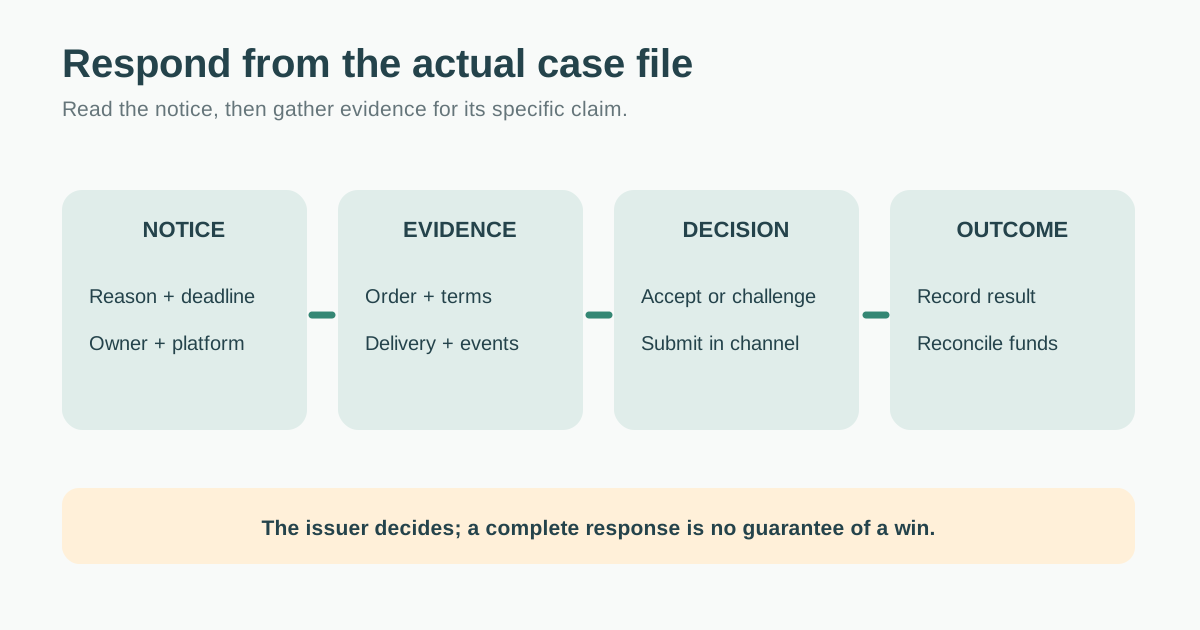
A refund request from a buyer and a formal card dispute are different workflows. When a chargeback notice arrives, identify who is handling it, the precise claim and the response deadline before collecting a single screenshot. This checklist helps an organizer prepare a factual case file and decide whether to accept or challenge through the authorized platform. It does not promise that evidence will win the bank's decision.
Boletolibre editorial team
Published
Download the organizer case-file worksheet
Download the editable chargeback response checklist (Markdown, English)
The worksheet captures the event, payment and ticket identifiers, the actual processor notice, case owner, due time, chronological events, evidence and final outcome. Keep it as an internal record; submit evidence using the ticketing platform or processor's prescribed channel and format. The leading event-ticket guide spans refunds, chargebacks and prevention, while this worksheet focuses on one formal case.[1]
Read the notice before choosing a response
Confirm whether your ticketing provider handles disputes or whether your connected payment account expects you to respond. Humanitix, for example, describes a different process for its own gateway than for events connected to Stripe, Pin or Airwallex. Do not assume the organizer can submit directly, or that the platform will act automatically.[4]
Record the dispute ID, payment/order, amount, reason category and exact deadline with time zone from the notice. Stripe says the response window depends on card network and shows the category and details in its Dashboard. The specific notice controls your case; do not use a generic number of days from a blog. Assign a primary owner and backup so absence does not consume the response window.[2]
Reconstruct the order and event timeline
| Record | Question it answers |
|---|---|
| Purchase and listing | What was bought, for which event/date, amount and terms shown at checkout? |
| Confirmation and ticket delivery | Where and when were order and ticket notices sent? |
| Change and support messages | What did the buyer request and what did the organizer actually promise or do? |
| Transfer, check-in or event status | Was the ticket transferred or scanned, and did the event occur as described? |
| Refund or credit | Was money returned, on which date and for which amount? |
Only state what records show. A QR code issued is not proof that it was scanned; a scan does not by itself establish who held the payment card. If the event was cancelled, a refund promised, or an order duplicated, include those facts rather than building a selective file. Humanitix identifies check-in history, buyer communications and event status as potential ticket-specific evidence.[4]
Match evidence to the claim
Stripe's response guidance says the dispute category changes the recommended evidence. A 'credit not processed' case needs the refund record; a delivery claim needs the relevant order and delivery history; a 'not as described' claim needs the original offer and what happened. Its examples are illustrations, not a universal winning packet. Summarize the issue in a short factual timeline and attach the records the processor requests.[2][3]
Check how the platform accepts evidence. Stripe states that banks do not review external links included as supporting files, and that its Dashboard submission cannot be edited after it is sent. Save URLs in your internal log, but submit the actual permitted files or fields through the authorized response form. Limit personal information to what is relevant and required.[2]
Record the decision and reconcile the outcome
An authorized owner should review the claim, the available proof and the platform's fee and response rules before choosing to accept or challenge. If the buyer's claim is valid, a factual acceptance may be appropriate; do not manufacture proof merely to contest it. Keep written buyer communications with the case. Neither the organizer nor the platform can guarantee what the issuer will decide.[2][4]
After submission, record the processor status and later bank decision. Assign accounting to reconcile any held or reversed amount and customer support to handle any necessary communication. Preserve the case file under the organization's applicable retention and privacy rules; do not invent a universal retention period, refund entitlement or dispute fee.
Sources and further reading
- Event Ticket Refunds and Chargebacks: An Organizer's GuideEventist · Accessed
- Respond to disputesStripe Documentation · Accessed
- Dispute sample evidence packetsStripe Documentation · Accessed
- Understanding chargebacks as an event hostHumanitix Help Centre · Accessed