How to handle difficult attendees at an event: a staff response card
An upset guest may have a missing ticket, an inaccessible route, a changed schedule or a complaint about another person. A single instruction to ‘stay calm’ does not tell a staff member what to check or who can decide. Brief the team on a short response path before doors open, then adapt it to the venue’s approved safety and incident procedures.
Boletolibre editorial team
Published
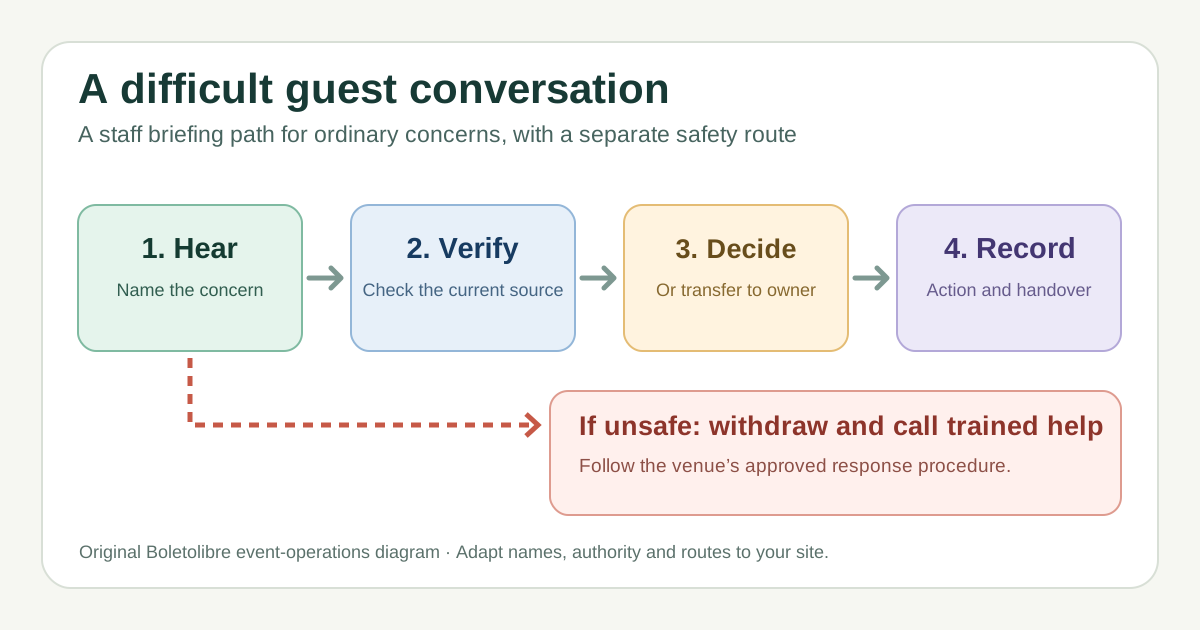
Prepare a decision boundary before guests arrive
Give each public-facing position an immediate supervisor contact, a backup communication channel and a route to the staffed help point. Identify which decisions that person can make: explain published information, look up an order, offer an accessible route, change a ticket, approve a refund or ask someone to leave. These are different permissions. A volunteer should not be expected to improvise a financial, security or safeguarding decision.
Brief three example situations: a ticket that does not scan, an attendee who says published access information was wrong, and a guest whose behaviour threatens a worker or another attendee. For each, name the record to check and the person who can decide. Give staff a way to withdraw and call for help. UK HSE guidance treats verbal abuse and threats as work-related violence and recommends training, clear controls and incident reporting; apply the venue’s actual local procedures rather than treating this card as a safety plan.[1][2]
- Who answers ordinary service questions and who authorizes exceptions?
- Where can a guest speak without blocking a queue or exit?
- How does a worker summon their supervisor or the approved response team?
Listen, name the issue and check a reliable source
Use a clear, respectful voice. Let the attendee explain the immediate problem, then restate it in one sentence: ‘You bought for Friday, but this ticket says Saturday—is that right?’ Avoid an argument about motives. Ask only for the information needed to find the relevant booking, policy or site update. Do not announce personal details or a payment dispute in a public line. HSE’s basic de-escalation guidance includes listening, acknowledging feelings, keeping personal space and offering a practical alternative where one exists.[2]
Check the current source of truth before promising a fix. For a ticket issue, that is the approved ticketing record and event policy, not a screenshot alone. For a changed room or accessible entrance, compare the published page with the latest venue instruction. For a harassment report, use the event’s confidential reporting route rather than asking a gate worker to investigate in the queue. If the facts remain uncertain, say what will be checked, who owns the answer and where the attendee can wait or return.
| What the guest reports | Check or route | Staff response boundary |
|---|---|---|
| Ticket missing or rejected | Order status and exception desk | No admission promise before authorized review |
| Access route does not work | Current venue route and access lead | Offer verified route or request assistance |
| Schedule or venue information conflicts | Current approved event update | State known facts and next update owner |
| Threat, abuse or harassment | Approved safety/reporting route | Withdraw and summon trained help when unsafe |
Offer only an authorized option, or transfer the case
A useful answer can be a verified route, an order lookup, a referral to a ticketing owner or a time and place for a follow-up. State what you can do now and what needs approval. Avoid guessing at a refund, replacement ticket, exception to a published rule or arrival time. If an attendee rejects the available options, bring in the named supervisor rather than repeating the same answer at the entrance.
A service complaint and an immediate safety concern take different paths. If a worker feels unsafe, de-escalation is not a requirement to stay in the interaction. Follow the venue’s response procedure and request trained support. OSHA also recommends backup from managers or security and training in nonviolent responses for workers who face difficult customer encounters. Staff should not attempt physical intervention unless specifically trained and authorized under the site plan.[2][3]
If the venue has a ticketing or event-information page on Boletolibre.com, use that page as one published reference for guests, then verify any disputed entitlement in the actual ticket provider and the organizer’s current policy. A website link does not itself grant admission or authorize staff to alter an order.
Record the outcome and support the worker
For unresolved complaints, log a minimal reference, the issue, source checked, decision owner, promised next action and handover time. Keep sensitive descriptions out of an open desk sheet and use the organization’s approved incident channel for threats or harassment. Update the ticket or guest-support record if a decision changes, so the next shift does not repeat the dispute. At shift handover, call out unresolved cases without broadcasting private details.
After an abusive or threatening encounter, check on the affected worker and follow the employer’s incident and support process. Review repeated complaints for a correctable cause, such as an outdated event page, unclear arrival instruction or broken help route. Do not treat an apology or a staff script as proof that the underlying problem was fixed. The card below is a briefing aid; rehearse it against the venue’s actual contacts, authority and emergency plan.[1][2]
Download the editable difficult-attendee response card (Markdown, English)
Sources and further reading
- How employers can protect workers from violence and aggression at workUK Health and Safety Executive · Accessed
- Control measures to prevent violence and aggressionUK Health and Safety Executive · Accessed
- Workplace stress: solutions for all workersUS Occupational Safety and Health Administration · Accessed