How to measure event success: build a plan before the event
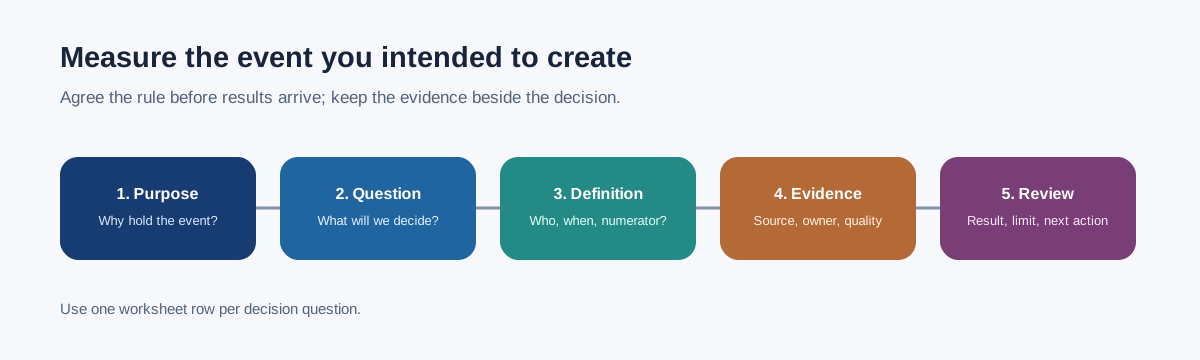
A sold-out event can miss its purpose; a small event can meet it. Before picking a dashboard, write down the decision you will make from the evidence. Then choose measures that fit the event's reason for existing: tickets, attendance, receipts, leads or experience may matter in different situations. This original worksheet is a pre-event measurement plan that fixes the rules before anyone writes a post-event report.
Boletolibre editorial team
Published
Start with the success question and decision
Ask the event owner what success would change: repeat the event, expand capacity, revise the program, renew a sponsor, or invest in a different audience? Write one question per row. 'Was it successful?' is too broad; 'Did local first-time attendees attend enough to justify another neighborhood session?' gives a population, evidence need and decision. Agree a target or threshold before results arrive. If no defensible baseline exists, label the first event a baseline and set the next target later.[1]
Do not collect every available metric. Ticket sales may matter for a paid show, while a free public workshop may prioritize attendance from its intended audience and learning feedback. A sponsor's qualified conversations can matter more than raw scans. Record the person who will accept the definition and make the final decision.
Choose measures that fit the event's purpose
| Success question | Candidate measure | Evidence source | Important limit |
|---|---|---|---|
| Did the intended audience arrive? | Unique attendees in the intended group | Registration fields and check-in log | Missing scans and incomplete audience fields may undercount |
| Did the program teach something useful? | Responses to a specific learning question | Post-session survey with response count | Respondents are not all attendees |
| Did the event cover its costs? | Recorded net position at a named cutoff | Settled income and cost ledger | Open invoices or refunds make the figure provisional |
| Did the sponsor reach relevant people? | Verified qualified conversations | Agreed lead form or meeting log | Define qualification and permission before collection |
These are examples, not universal KPIs or benchmarks. IBTM's event-success guide lists many possible measures; choose the few linked to the event's actual purpose. Avoid claiming a causal return on investment from social impressions, ticket sales or later leads unless you can explain the attribution method.[1]
Define each number before anyone exports data
Specify the population, unit, numerator, denominator, inclusion and exclusion rules, date range, timezone and system of record. 'Registrations' can mean orders, ticket holders or completed forms. 'Attendance' should say whether it means unique people, checked-in tickets, sessions entered or online joins. Eventbrite's check-in report includes only tickets recorded as checked in; a missed scan therefore creates a recording gap, not proof of absence.[2]
Keep website actions separate from confirmed transactions and attendance. A web analytics key event can be useful for campaign diagnostics, but Google's current documentation says attributed key-event totals may include modeled observations and change after processing. Reconcile purchase or registration claims against the ticketing source. Treat any cross-system difference as a documented limitation, not a hidden adjustment.[3]
Use the free measurement-plan worksheet
The original CSV has one row per decision question. It asks for metric and formula, population, source system, source owner, collection window, target, quality check, review date, decision owner and next action. It has illustrative rows and blank actuals. Replace sample questions and do not paste attendee names or personal contact details into a broadly shared planning file. CSV opens in spreadsheet software; save a working copy with your event's access controls.
Download the original event success measurement-plan worksheet (CSV, English)
Assign the data owner before registration opens. Confirm that the source can actually export the fields and that consent or access rules allow the proposed use. If a metric cannot be collected reliably, change the metric or explain the gap before the event instead of inventing it during the debrief.
Set a review rhythm and make the next decision
Schedule checkpoints that match the decision: registration pacing before the event, attendance after check-in closes, and survey or finance findings once responses and late transactions have settled. Freeze an explicit reporting cutoff for each source. At the meeting, show target, observed value, source, denominator and limitations together. Separate what the records show from why the team thinks it happened.
For example, 82 recorded unique check-ins from 128 valid registrations is 64.1% on that definition. It is not an industry benchmark and may undercount unscanned arrivals. If the goal was 90 attendees, the decision is to investigate the gap and test a change next time, not to conclude that one email or venue choice caused it. The committed post-event report template can turn the plan's verified results into a stakeholder narrative; this worksheet fixes the rules first.
Sources and further reading
- What Makes An Event Successful? Metrics, KPIs and ROIIBTM World · Accessed
- Download your Check-ins reportEventbrite Help Center · Accessed
- About modeled key eventsGoogle Analytics Help · Accessed
- Free Event Planning TemplatesSmartsheet · Accessed