How to monitor crowds at events: a zone and escalation worksheet
Counting tickets does not tell you whether one gate, queue or front-of-stage area is becoming unsafe. Google's leading result for 'how to monitor crowds at events' frames monitoring as part of a wider crowd-management plan: watch capacity, density, movement and changing conditions, then give a named decision-maker timely information. This guide narrows that into an original zone worksheet for organizers and competent safety leads. It is not a substitute for a site-specific crowd risk assessment or local approvals.
Boletolibre editorial team
Published
Start with the approved crowd plan and decision authority
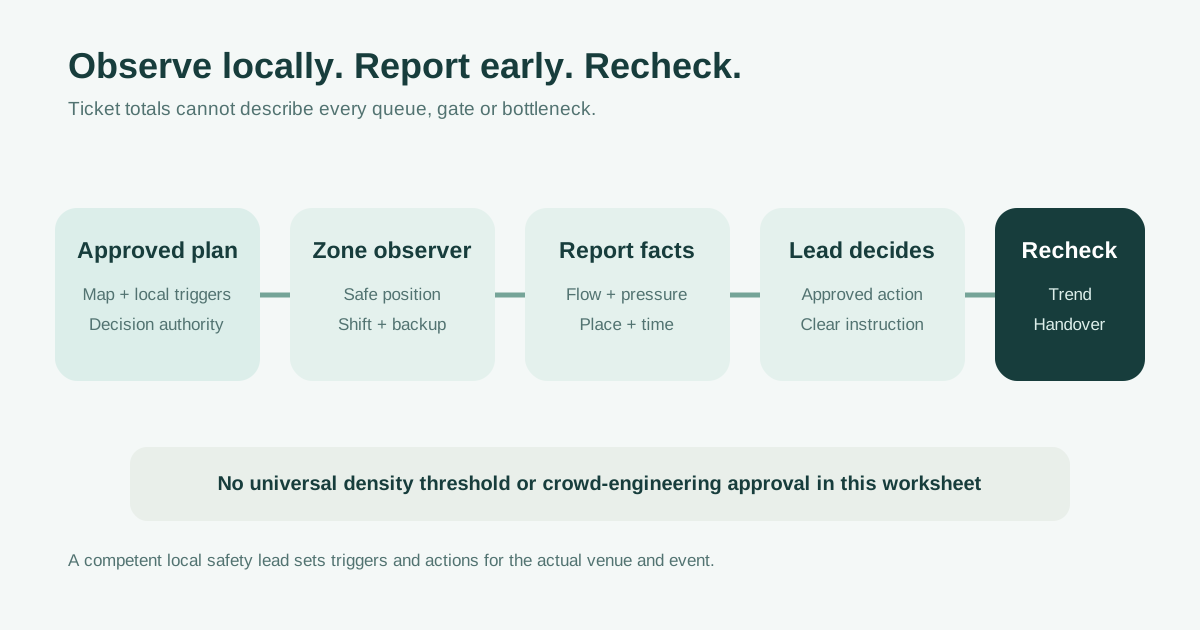
Use the current venue plan, event risk assessment and site map to agree the places and phases that need observation. Include arrival, entry, circulation, peak attractions, exit and dispersal; a single count at the gate misses local crowding. Name the person with operational authority to change entry, open approved routes, pause activity or involve emergency services, and record how observers reach that person. The UK's HSE asks organizers to assess risks, create a crowd management plan and review whether controls work. Its guidance is a useful model, but the actual duties and numerical limits must come from competent local review.[3][4]
- Current plan version and map.
- Named crowd safety decision lead and deputy.
- Agreed observation periods and handover between shifts.
Put observers where conditions can change
Mark entrances and exits, queues, standing areas exposed to surges, popular stalls, stairs, pinch points and enclosed spaces on the map. For each observation point, identify a staff member with a safe vantage, the reporting channel and a backup. A person checking tickets may not have enough time to watch a queue simultaneously; give monitoring its own capacity when needed. HSE notes that staff within a crowd can detect distress and tension first-hand, while cameras or elevated viewpoints can add a broader view. Neither replaces competent staff judgment and a reliable way to act on what they see.[2]
- Specific zone and safe observation position.
- Primary observer, substitute and shift.
- Direct communication path to supervisor or control.
Observe movement and distress, not just the headcount
Record the overall number relative to the approved site limit where it can be reliably counted, then inspect local distribution and movement. Look for stopped or reversing flow, a growing queue, crowd pressure against a barrier, blocked exits, people unable to move freely, distress or repeated requests for help. Note the time and location and what changed. Do not turn a rough visual estimate into a precise density figure or import an online 'safe persons per square metre' rule. The appropriate triggers depend on geometry, crowd behavior, access, weather, staffing and the competent event plan. American Specialty's leading guide similarly separates capacity, density, flow and behavior and calls for named monitoring responsibility.[2][1]
- Observed condition and trend, not only total attendance.
- Location and time, including what is unknown.
- Any immediate danger reported through the emergency channel.
Agree escalation and possible actions before doors open
Ask the competent crowd safety lead to define the site's warning and urgent-response triggers and authorize actions for each zone. The observer reports facts; the decision lead selects a measure from the approved plan, such as slowing entry, changing an approved route, pausing an attraction or requesting responder support. Record who receives the report, who confirms the decision, and how instructions reach stewards and attendees. If there is an immediate threat, follow the event's emergency procedure rather than waiting for a routine check-in. Practice a short scenario so the observer knows what to say and who is listening.[1][3]
- Site-specific trigger approved by the competent lead.
- Immediate report and acknowledgment channel.
- Authorized action owner and public-message owner.
Keep a live log and revise the plan when patterns appear
The worksheet has separate rows for planned observation assignments and live observations. Log the time, zone, factual condition, trend, report recipient, decision, action and recheck. Hand over unresolved conditions between shifts. After the event, compare observations with incident records and staff feedback so the competent lead can alter positions, staffing, signage or controls for the next event. Do not collect unnecessary personal details about attendees in a crowd log. HSE advises periodic checks of crowd management methods and debriefing after significant incidents or changes.[3]
Download the original crowd monitoring zone and escalation worksheet CSV
Sources and further reading
- Crowd Management for Events: 6 Steps to Reduce Risk and Improve SafetyAmerican Specialty Insurance · Accessed
- Monitor the crowdUK Health and Safety Executive · Accessed
- Assess crowd safety risks and identify hazardsUK Health and Safety Executive · Accessed
- Crowd Management - EventsCanadian Centre for Occupational Health and Safety · Accessed