Organizing live events in the Netherlands: an evidence handover runbook
A festival schedule says when work is proposed. An operational runbook also says who receives the evidence needed to act. For a Netherlands event, connect travel checks, site acceptance, suppliers, weather review and audience instructions without turning an unchecked assumption into a confirmed handover. The sources below were read October 14, 2026; the worksheet and example are original planning aids.
Boletolibre editorial team
Published
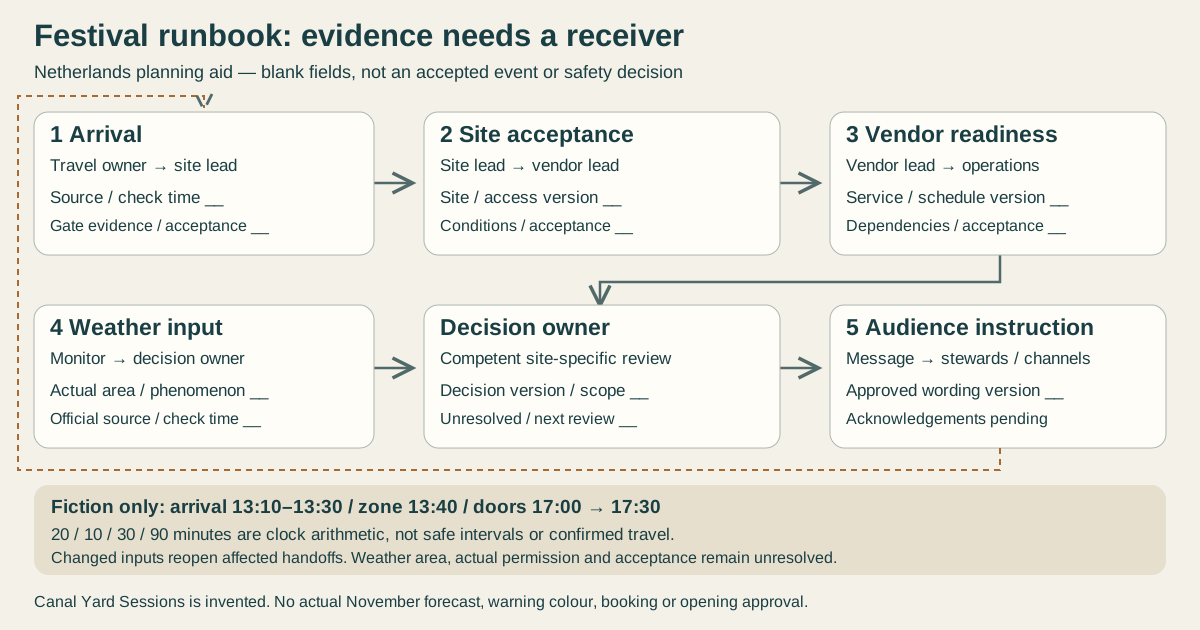
Start with a blank scope and a receiving role
Record festival/site/address ____; province as location metadata ____; date and local time-zone identifier ____; proposed arrival/doors/end ____; site/access/vendor schedule versions ____; actual venue, authority and qualified technical-safety contacts ____. Name who maintains the record and who can authorize each kind of change. This is not a permit application, an engineered safety plan or an instruction to proceed.
Use one repeated record for every handover: sender ____; accountable receiver ____; evidence reference and source/check time ____; version ____; what the receiver accepts ____; open conditions ____; affected team/message ____; next review or change trigger ____. A file being sent is not the same as its recipient accepting the stated action.
Write the operational relay before filling the example
Keep the table compact by putting the repeated fields above into a separate record for each row. Retain unresolved status until the responsible recipient actually confirms the limited handover.
| Handover and receiver | Evidence to obtain before acceptance |
|---|---|
| Arrival: travel owner → site lead | Checked transport source/time; separate provider route, site gate and receiving-contact confirmation. |
| Site zone: site lead → vendor lead | Current site/access version, named zone, conditions and actual recipient acceptance. |
| Vendor readiness: vendor lead → operations | Included services, accepted schedule version and unresolved dependencies; qualified feasibility review remains separate. |
| Weather: monitor → decision owner | Exact site/phenomenon/displayed warning area; official URL/check time; validity/version if shown; competent site contacts. |
| Decision: owner → site/vendor/message leads | Authorized decision and scope, affected versions, unresolved conditions and next review. |
| Audience instruction: message lead → stewards/channel leads | Approved wording, issue time/version and actual acknowledgements from the relevant operational recipients. |
A proposed vendor cue cannot grant site access. A weather observation without an accountable decision recipient is not an accepted action. A published message does not prove suppliers or stewards have received the revision. These are internal coordination rules proposed here, not a statutory universal workflow.
Separate a rail source from a confirmed site arrival
NS provides travel-planning links, disruption/works information and station/departure information. Use the relevant operator sources for the real journey and record the check time. The page does not establish an event-specific itinerary, arrival duration, last train, accessible last-mile route or coverage of every operator. No journey was submitted or booked for this guide.[3]
Keep visitor advice separate from crew or delivery access. Ask the actual venue recipient to confirm the gate, route, receiving contact and open conditions within their responsibility. A rail screenshot does not establish that a delivery gate is staffed. A change to an access route reopens the arrival record and any downstream audience or vendor wording that depended on it.
Record the displayed warning area, not a presumed provincial boundary
KNMI explains impact-based public warnings. Its guidance and its October 14, 2026 notice announce a move from province-based to flexible warning areas from November 2026, with location and weather-phenomenon distinctions. These are dated announcements, not proof of an exact rollout day or the map operating on a future event date. The guidance page’s own update date was not established.[1][2]
Fill an actual weather record only after a real check: precise site/location ____; phenomenon ____; actual displayed warning area ____; exact official URL ____; check date/time/zone ____; displayed validity/version if available ____; recipient ____; site-specific competent contacts ____. Province may remain location metadata but cannot substitute for the displayed warning boundary. Recheck the active official surface for the real date and location.
If a checked surface shows no applicable warning, record the actual checked scope and result rather than inventing an area. If it has not been checked, leave it unknown. Neither absence nor presence of a public warning is automatic permission to open, stop or reopen an event. The designated decision process needs the actual venue, qualified technical-safety providers and relevant competent authorities; no weather threshold or structural formula is supplied here.
Fictional Canal Yard Sessions: unresolved inputs stay unresolved
| Proposed fictional cue | State and receiving question |
|---|---|
| Arrival 13:10–13:30 | Proposed van window only. Real route/operator check and site gate/contact acceptance remain open. |
| Zone A 13:40, site plan v1 | Proposed handover, not granted access. Site/vendor recipient and technical conditions need confirmation. |
| Vendor review 15:00 | Proposed service/schedule v1; one delivery dependency remains unresolved. No all-ready conclusion. |
| Weather review 15:15 | Real site-specific inputs, displayed area, phenomenon, colour and source/check time remain unverified. No invented KNMI alert. |
| Decision v2: doors 17:00→17:30 | Suppose an appropriate reviewed decision allows a delay. The decision, scope and acceptance remain hypothetical/pending, not safe-opening permission. |
| Message draft v2 at 16:00 | Proposed release only after actual authorization and approved access wording; stewards/channels/vendors still need the relevant revision. |
| Next review 16:30 | Internal review cue, not a forecast of improvement; new changes reopen downstream handovers. |
13:10 to 13:30 is 20 minutes; 13:40 is 10 minutes after that window ends. 17:00 to 17:30 is 30 minutes; 16:00 is 90 minutes before proposed revised doors. These are invented clock differences, not minimum safe periods, unloading feasibility, journey durations or statutory lead times. No interval resolves the open evidence.
Carry the decision version through people and messages
For a real change, record who was authorized to decide, the evidence they considered, what the decision changes and what remains unresolved. The site lead, suppliers and communications lead each need the relevant revision and their own acceptance field. Preserve the previous version as history so a new message cannot silently overwrite a still-unaccepted operational instruction.
Draft the affected time, gate, route and status wording together. Record approval, release time, channels and acknowledgements from operational receivers; keep private contacts in their authorized location. A webpage edit alone is not completed communication. This is not permission to market to every attendee contact, and no automated messaging or ticketing capability is assumed.
Close the loop at the next material change
Reopen affected rows when transport information, access, a provider dependency, weather evidence or a competent decision changes. Name the recipient and next review for unresolved work rather than converting “sent” into “accepted.” Stop the affected action when its required authorization or evidence remains unresolved, using the actual responsible people’s process.
Keep permits and legal requirements with the real competent authority and the separate legal planning work. This runbook does not establish Dutch deadlines, safe capacity, technical compliance or permission for an individual event. Its useful result is an accountable evidence trail from a checked input to an accepted, versioned action.
Sources and further reading
- KNMI: public warning guidanceKNMI · Accessed
- KNMI: October 14, 2026 notice on flexible warning areasKNMI · Accessed
- NS: travel planning and operator informationNS · Accessed