Post-event attendee survey template: questions that lead to decisions
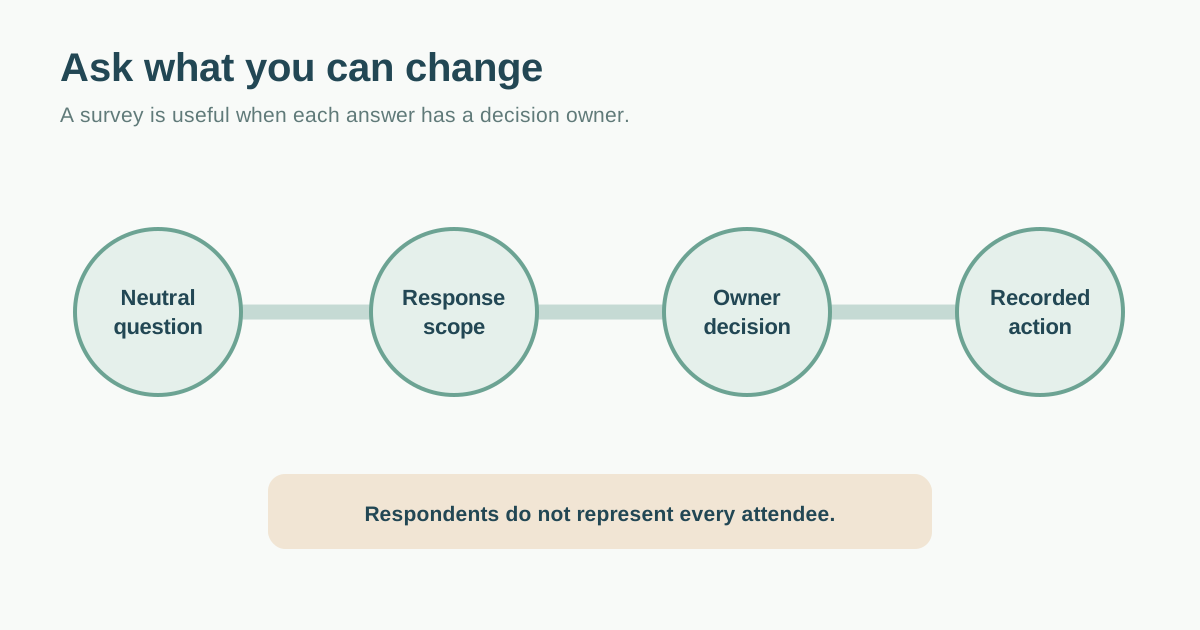
A survey earns its place only when the answers can change a future decision. The first organic Google result offers a large question bank for several audiences and formats. This original template stays with attendees, asks about moments organizers can improve, and connects each question to an owner and action. It does not assume that a fixed send time, question count or score proves the whole audience was satisfied.
Boletolibre editorial team
Published
Download the attendee survey and action log
Download the editable post-event attendee survey (Markdown, English)
The template includes a short introduction, a few selectable questions, one optional open answer and a decision log. Choose only the questions relevant to the event; do not send sponsor, speaker or staff questions to attendees. SurveyMonkey’s leading guide organizes its broad bank by audience. This version narrows the scope and leaves room to ask about arrival, program, information and access without demanding an identity or health disclosure.[1]
Choose the decision before the question
For each topic, write down the decision owner and the change they could make. If the arrival route was confusing, ask about ease of finding the correct entrance. If the event included sessions, ask about the usefulness of the ones the person actually attended. If a question has no owner or plausible action, omit it. Avoid asking whether people “loved” a feature; that wording pushes toward a positive answer. Pew Research Center explains that wording, answer options and order can change responses.[2]
| Decision | Possible attendee question | Owner to review |
|---|---|---|
| Improve arrival | How easy was it to find the correct entrance? | Venue/wayfinding |
| Improve program | Which part of the program was most useful to you? | Program lead |
| Improve information | What information was missing before you arrived? | Communications |
| Resolve access barrier | Was there a part of the event you could not use or reach? Optional details | Accessibility/operations |
Use neutral, answerable questions
State the event or session being rated, keep one idea per question and give response choices that include “not applicable” or “did not use” when needed. A person who did not use parking cannot fairly rate it. Put an overall question before a detailed list of possible problems if you want an unprompted impression. Keep the scale and wording stable if you plan to compare one edition with another; record any change rather than calling unlike questions a trend.[2]
Make open comments optional and explain that people should not enter payment details or private medical information. If an answer reveals an urgent safety or access issue, route it to the appropriate team promptly; a survey inbox is not a substitute for an active help channel.
Invite the right people and set expectations
Choose whether to ask confirmed attendees, checked-in guests or session participants, and state that scope in the results. If the organizer cannot verify attendance, do not label all respondents “attendees” without qualification. Explain how long the survey is likely to take based on an actual pilot, what the data will be used for, whether it is anonymous or linked to a ticket, and how long responses will be retained. Keep marketing signup separate from feedback. Have the communications/privacy owner check invitation eligibility and notice for the relevant audience.
SurveyMonkey suggests prompt post-event invitations, but its fixed timing and reminder counts are examples, not universal requirements. Send when the experience is fresh enough to remember and the team can actually review the replies. For a multi-day event, a session-specific question may work better near that session than at the end of the whole event.[1]
Interpret responses with their limits
Report invitations, responses, exclusions and the exact question wording alongside each result. Look at meaningful differences such as first-time versus returning guests only when those groups were collected appropriately and large enough to avoid exposing individuals. Open comments can explain a problem but are not a vote from everyone. A high satisfaction score among voluntary respondents does not prove all guests had the same experience.
Code comments into themes without quoting identifiable details in a public report. Confirm recurring issues against help logs, incident records and staff observations. Keep compliments too, but assign the next action to the issue that matters most for the event goal or attendee access.
Close the feedback loop
Use the action log to record finding, evidence, owner, proposed change, decision and follow-up date. Tell respondents what was changed when appropriate; do not promise to implement every suggestion. If the survey itself caused confusion, revise the wording and note that future results may not be directly comparable.
Sources and further reading
- Post event survey questions to ask: Examples, tips and best practicesSurveyMonkey · Accessed
- Writing Survey QuestionsPew Research Center · Accessed