What to do with an event domain when the series ends
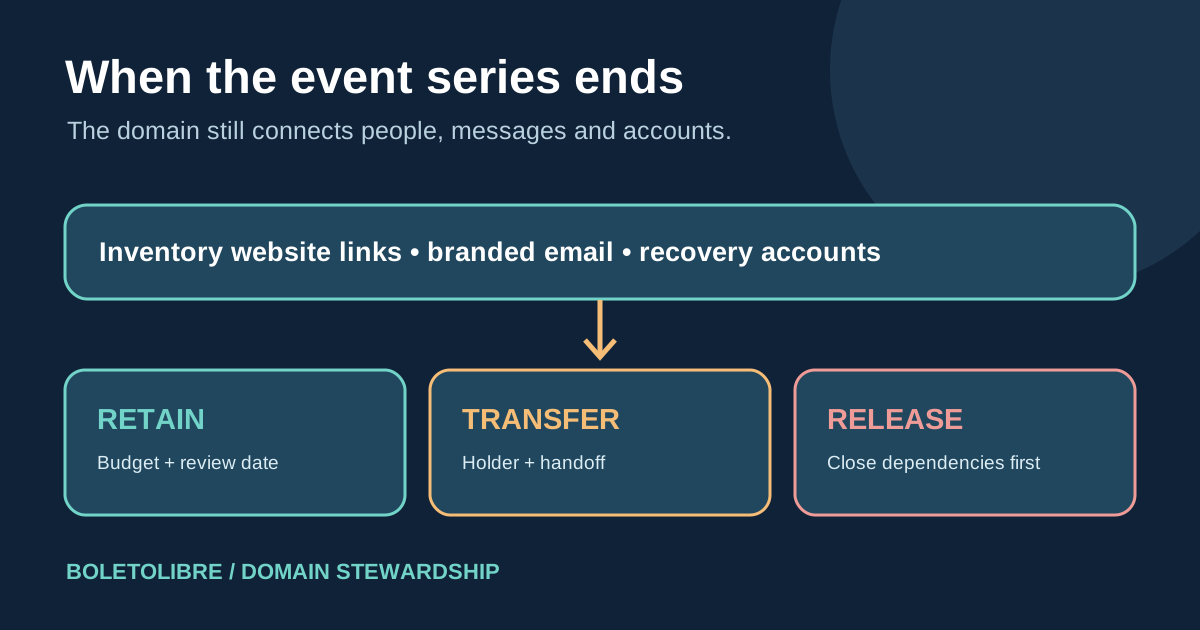
An event series can end while its domain still carries old links, attendee support addresses and account-recovery email. The right question is not simply whether the website should stay online. Decide who controls the registration, what the name still does, and what happens if it later belongs to someone else. A documented retain, transfer or release decision makes that choice reviewable.
Boletolibre editorial team
Published
Download the event-domain retirement decision sheet
Download the domain retention and release worksheet (Markdown, English)
Make one decision per domain, not one blanket decision for an entire event series. Record the name, registrant, registrar, renewal cost, dependent accounts, public links and decision owner. Do not include passwords or attendees' personal data in the shared sheet.
Inventory what the name still does
A series may stop selling tickets while its domain still appears in confirmation emails, past-event pages, press links, sponsor materials and staff logins. Check the website, redirects, subdomains, branded email, support inboxes, DNS verification records and any account that uses an address on the domain for recovery. Assign an owner to each dependency before deciding whether to keep or release the registration.
The first-ranked Google discussion reports a former business domain being registered by someone else after expiry, with old content and contact details appearing again. Replies speculate about motives and legal liability; the case is a warning to inventory dependencies, not proof that every released domain will be misused.[1]
Choose retain, transfer or release explicitly
| Choice | When it may fit | Decision to document |
|---|---|---|
| Retain and simplify | The series may return, old links need a trustworthy destination, or addresses still appear in accounts | Renewal budget, registrar owner, minimal page/redirect and review date |
| Transfer to a continuing organization | A successor event or partner will carry the brand and obligations | Authorized holder change, DNS/mail handoff and written acceptance |
| Release after retirement | No justified ongoing use or dependency remains and applicable rules permit release | Final notices, account changes, archive, release approval and monitoring plan |
A registry operator's closure article recommends continuing registration and changing email addresses linked to a domain before letting it lapse. Its .au eligibility discussion is specific to that namespace and its suggested term is not a universal retention period. Check the actual TLD and registrar rules, and choose a review date based on the organization's risk, budget and obligations.[2]
If a gTLD name is not renewed or restored, ICANN explains that it can eventually be released for someone else to register. Letting it lapse is therefore a transfer of practical control to an unknown future registrant, not the same as turning off hosting.[3]
Plan the public visitor path separately
If the brand continues under another name, map important old URLs to genuinely corresponding pages and use permanent redirects for moved content. If no replacement exists, keep a clear archive or closure page while the name remains under your control, or return an appropriate not-found response when content is truly gone. Avoid redirecting every historical page to an unrelated new home page. Google's redirect guidance is about URL moves; it does not decide how long to retain the registration.[4]
Update ticketing platform links, event listings, social profiles and partner references where the team has access. For published attendee information, state what is historical and where current support now lives. A DNS or website shutdown does not by itself change the registered holder or remove the domain from past emails.
Before release, close the identity and account paths
Move recovery email addresses for the registrar, payment, marketing, analytics and other accounts away from the domain; confirm the new addresses work. Export records the organization needs to retain under its policies, then decommission mailboxes and verification paths deliberately. If the domain is transferred, agree which party controls DNS and mail at each handoff point. If it is released, obtain a dated approval from the domain owner after checking for unresolved dependencies.
After the decision, keep the final record: registrar confirmation, new contact route, redirects or closure page checked, account migrations, renewal or release date and next review owner. If there are contractual, corporate or jurisdiction-specific obligations, get qualified review before transfer or abandonment. Do not promise that a released domain can be reacquired later.[3]
Sources and further reading
- Let a Domain expire for a closed Business, New owner using the same contentReddit r/webhosting · Accessed
- What Should You Do With Your Domain Name If You Close Your Business?Identity Digital .au · Accessed
- FAQs for Registrants: Domain Name Renewals and ExpirationICANN · Accessed
- Redirects and Google SearchGoogle Search Central · Accessed