How to track where event registrations came from
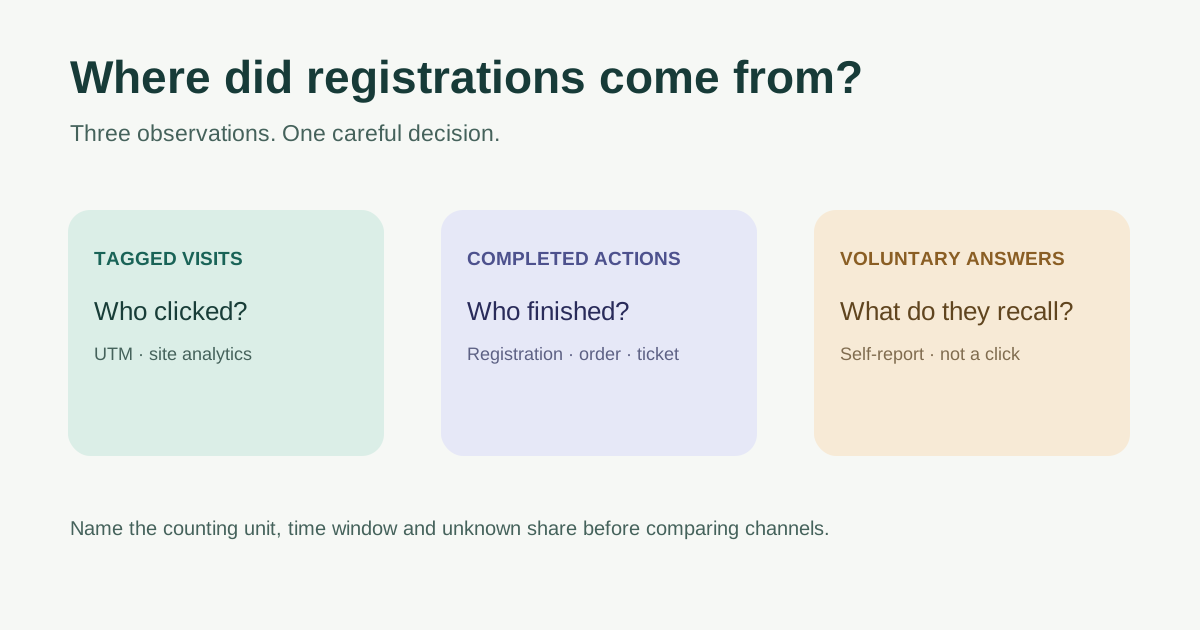
“Where did our attendees come from?” has more than one answer. A campaign link can identify a tagged visit, a ticketing system can count completed orders, and an optional attendee answer can describe what the person remembers. These are different observations. Use the worksheet to compare them without turning a page click into a ticket sale or treating an unknown source as direct interest.
Boletolibre editorial team
Published
Download the registration-source worksheet
Download the registration-source worksheet (Markdown, English)
Copy the worksheet for one event edition and reporting period. Record the exact metric, system, counting rule, time zone, source label and unknown bucket for each channel. Its example numbers are placeholders. Do not add website sessions, registrations, orders and tickets into one total.
Define the outcome before counting channels
Choose whether you mean visits, completed registrations, paid orders or admitted attendees. An order can contain several tickets; a registration can later be cancelled. Tagged links identify campaign source, medium and campaign on the receiving site. Untagged or stripped visits can be reported as direct or unknown; that is not proof the person typed the URL. An optional “How did you hear about us?” answer records recalled influence, not a measured click.[1][2][3]
Check the website-to-ticketing handoff
Follow a representative link from each major channel through the event page, registration and any hosted checkout. Confirm which system records the completed action and whether campaign information survives. For a Boletolibre.com event, compare the published event link with the ticket or registration record available in your actual setup; a Boletolibre.com page visit is not an order, and cross-provider attribution must be verified.
Make a decision with uncertainty visible
Report each channel with its evidence type and missing-data limit. If an analytics tool offers an attribution model, name the model and period rather than calling its credited channel a proven cause. Compare campaign cost with results only when both cover the same scope. Record one decision, its owner and what evidence would change it next time.[4]
Sources and further reading
- URL builders: Collect campaign data with custom URLsGoogle Analytics Help · Accessed
- GA4 Manual reportGoogle Analytics Help · Accessed
- Understand direct / none trafficGoogle Analytics Help · Accessed
- Conversion attribution modelsGoogle Analytics Help · Accessed