Truthful ticket urgency claims: event marketing evidence checklist
A real deadline or limited ticket allocation can help someone decide. An inaccurate claim can make the decision less informed. Use the editable claim log before placing urgency language in email, ads, event pages or a partner kit. This is a verification workflow, not advice on how much scarcity to create or a substitute for local legal review.
Boletolibre editorial team
Published
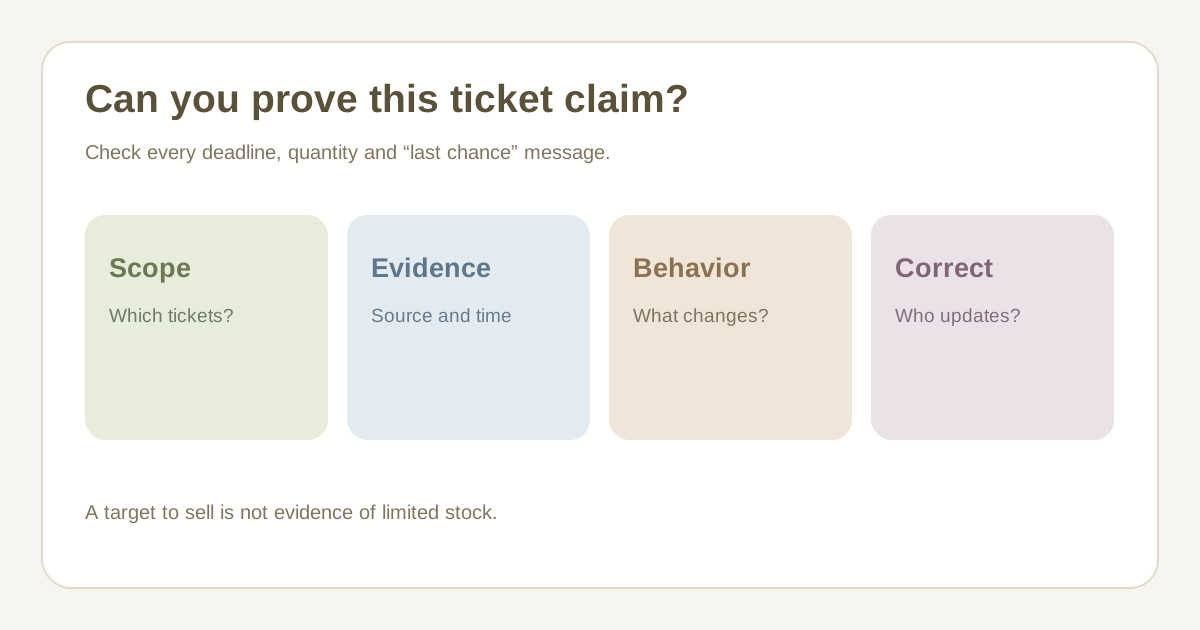
Write the exact claim and its scope
Download the ticket urgency claim log (Markdown, English)
Translate “only 20 left” into a question: 20 of which ticket type, price tier, date, channel and access group? A small presale allocation is not the whole venue. Distinguish a time-limited price from ticket availability and a registration cutoff from venue capacity. Record the exact public wording, audience and page or post where it appears.
Attach the live source and an owner
For a quantity claim, identify the inventory system, timestamp, held or reserved stock, unsold channel allocations and refund/release behavior. For a deadline, identify the configured offer end with time zone and what actually changes afterward. Assign an owner who can confirm the claim at publication and another who can correct it promptly when inventory or policy changes.
Check counters and countdown behavior
A countdown must correspond to a real event in the selling system. Test what happens at zero, after refresh, on another device and in another locale. If the offer automatically extends or a new cohort has separate access, explain that scope rather than continuing a broad “last chance” claim. Avoid “almost sold out” without a defined, supportable basis.
Keep all channels synchronized
Compare event page, ticket checkout, paid ads, email, speaker or creator copy and partner assets. A correct page cannot repair an expired claim still running in an ad. Put a withdrawal or correction time next to every volatile claim, and use durable alternatives such as “registration closes [date/time zone]” only when the cutoff is configured and owned.
Record the decision and correction
The US FTC has identified baseless countdowns as a deceptive design pattern; the UK CMA has separate guidance on online urgency claims. Requirements vary by market. Capture claim, evidence, approver, review time and any correction in a restricted log. If evidence is missing, remove or soften the claim until it can be verified; never invent stock counts, discounts or urgency from a marketing target.[1][2]
Sources and further reading
- FTC Report Shows Rise in Sophisticated Dark PatternsUS Federal Trade Commission · Accessed
- Using urgency and price reduction claims onlineUK Competition and Markets Authority · Accessed