How to verify green web hosting claims for an event site
A “green hosting” badge can be useful evidence about a provider, but it does not measure every service behind an event website or prove the event is carbon-neutral. Check the specific hosting, CDN, registration and email services, the geography and the reporting period. Ask what the claim actually covers.
Boletolibre editorial team
Published
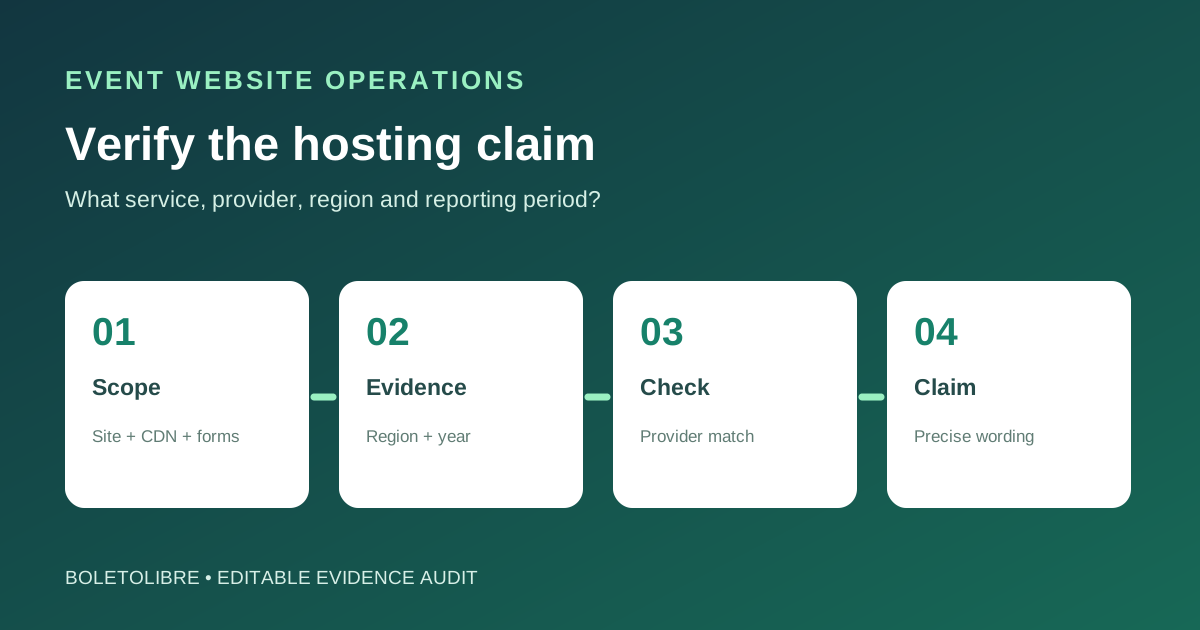
Map the services behind the claim
Download the editable hosting-claim audit (Markdown, English)
List the public site host, CDN, forms or registration service, checkout or ticketing provider, and sender of event emails. A vendor may resell another provider’s infrastructure. Ask which data center and regions serve each path; a claim about the website host does not automatically extend to ticket checkout, email or an in-person event. Record the provider and the evidence owner separately.
Check current evidence, not the slogan
Ask for the current or last-year disclosure, the region it covers, and the procurement method: self-generation, direct purchase, green tariff, unbundled energy certificates or another accepted basis. The Green Web Foundation’s current criteria require a public commitment toward hourly fossil-free energy by 2030 and accept annual matching for now. Annual matching is not evidence that every hour used fossil-free electricity. Its current criteria explicitly reject carbon offsets as a basis for hosting verification; do not equate an offset certificate with renewable-powered hosting.[2][3]
Understand what a green-site check proves
The Green Web Check connects a domain through DNS and IP information to a verified provider’s dataset record. A green result supports that specific association; a grey result can mean evidence or linkage is missing, rather than proving the host uses fossil power. CDNs and provider chains can obscure the origin, so compare the check with your actual contracts and ask the provider to clarify discrepancies. Save the check date and provider listing, because infrastructure and evidence can change.[2][3]
Record a supportable public statement
Describe only the verified scope: for example, “Our public event pages are served by [provider], listed as verified by [scheme] for [service/region] as checked on [date].” Confirm the underlying disclosure and ask a qualified sustainability reviewer before making broader emissions claims. Avoid “zero-carbon event,” “100% renewable every hour” or a total-footprint number unless you have separate, sufficient evidence for those statements. Use the editable audit to revisit claims when a provider or region changes.
Sources and further reading
- What you need to get verifiedGreen Web Foundation · Accessed
- What disclosures do we accept for verificationGreen Web Foundation · Accessed
- How does the Green Web Check work?Green Web Foundation · Accessed